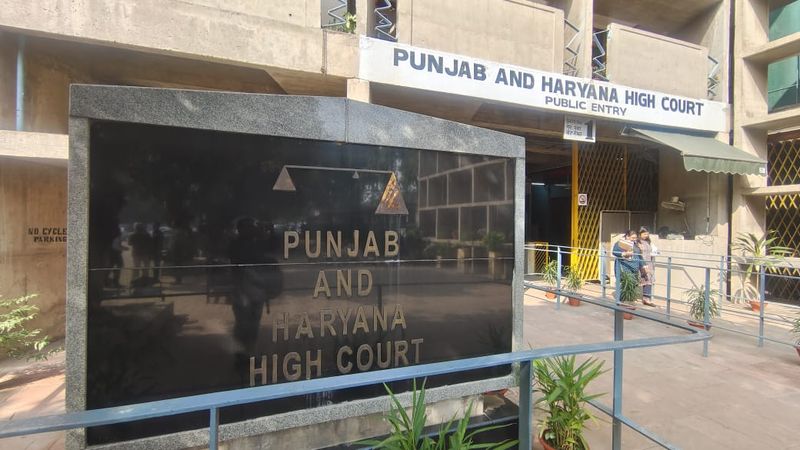

In a major embarrassment for the Punjab Government and its pollution control machinery, the Punjab and Haryana High Court has observed that the apprehension of “political vendetta” behind the Punjab Pollution Control Board’s “raid” on the Trident group appeared “reasonably palpable”.The assertion came as the Bench took into consideration the timing of the action, and the political shift of industrialist Rajinder Gupta from the Aam Aadmi Party to the BJP.“An issue which deserves consideration is that of the timing of the raid conducted on April 30 by a team of officers of the Board, which is in close proximity to the switching of political allegiance by Rajinder Gupta (chairman emeritus of the petitioner company) from Aam Aadmi Party to Bharatiya Janta Party along with six other members of Rajya Sabha on April 24,” the Bench of Justice Sheel Nagu and Justice Sanjiv Berry asserted.Applying the Wednesbury principle, the Bench asserted: “The apprehension in the mind of the petitioner company that the raid conducted by respondent Board on April 30 stems from political vendetta appears reasonably palpable”.The principle is a legal standard used by the courts to decide if a government body or public authority has acted so irrationally that a judge must step in, even if the authority had the power to make the decision.The assertion came as the High Court held that the Punjab Pollution Control Board had failed, at this stage, to demonstrate any emergent situation involving pollution of stream water, land or environment by poisonous effluents from Trident Limited’s unit, while directing that coercive steps could be taken only after affording the company a reasonable opportunity of 30 days to rectify “minor defects/deficiencies”.Among other things, the company had alleged that the action was guided by political vendetta following a change in affiliation by Gupta.Disposing of the petition, the Bench also granted liberty to the company to approach the National Green Tribunal in case any coercive action was initiated by the Board. During the earlier hearing, senior advocate Munisha Gandhi, counsel Viraj Gandhi and Adarsh Dubey, appearing for Trident, had questioned the timing of the inspection, asserting that consents had been granted to the company only weeks earlier and alleging non-compliance with mandatory safeguards for collection and sealing of samples under environmental law provisions.