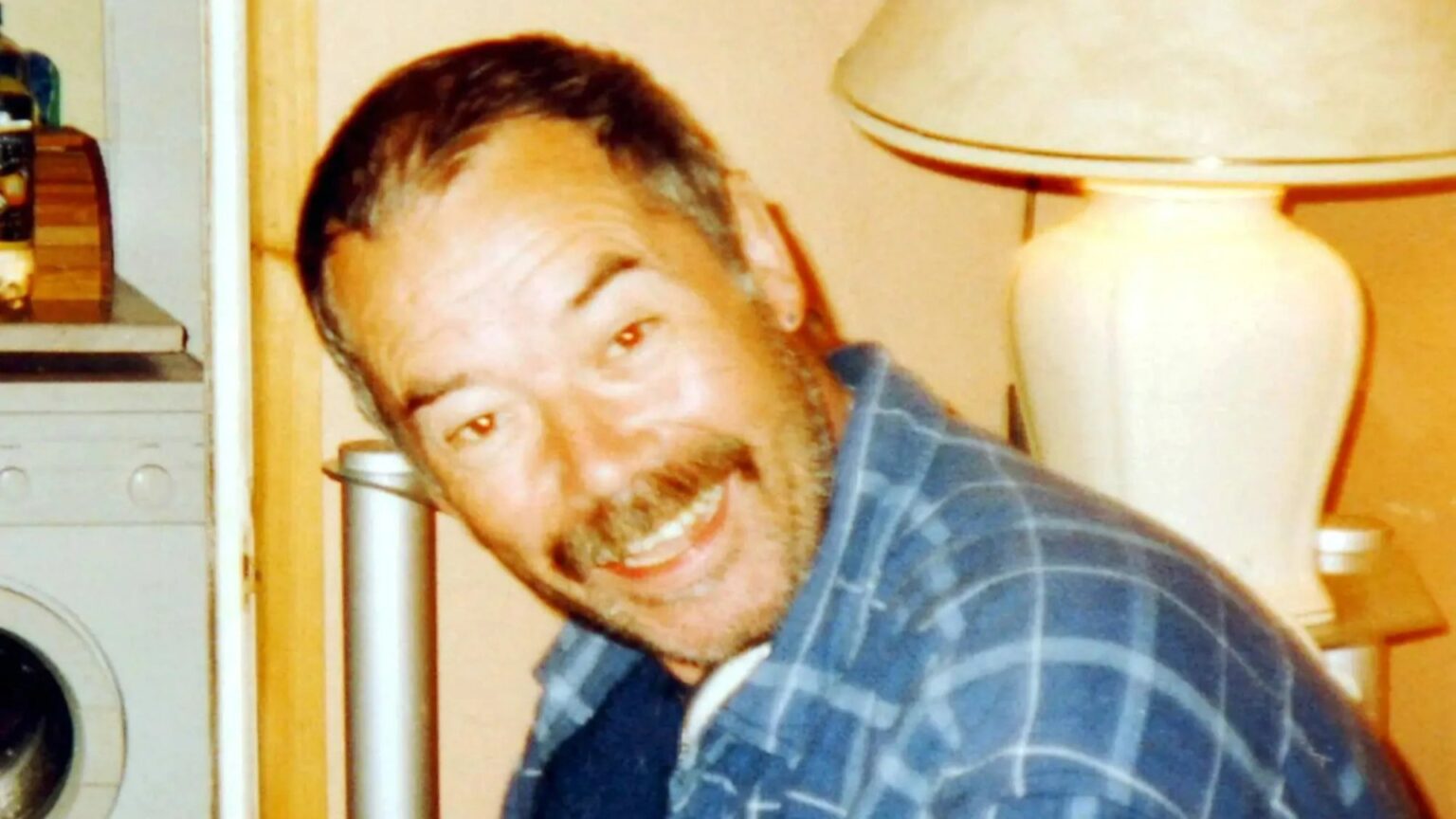


“I DON’T know why I done it,” John Humble told detectives during his interrogation. “The coppers were useless.”
Now known as the Yorkshire Ripper hoaxer, Humble had bombarded police with letters and an audio recording, falsely claiming to be the serial killer. In unearthed documents shared with The Jattvibe, it has emerged how his “prank” completely bamboozled the investigation, leaving the real killer free to murder three more women – as his true motivations are finally exposed.
John Humble was jailed in 2006 after admitting to being the hoaxer Wearside Jack Credit: North News and Pictures
The tranche of documents includes previously confidential files from the police incident room Credit: National Archive
After submitting a Freedom of Information request, author Chris Cook was sent a tranche of police paperwork detailing the case, that had previously been redacted, filed away or simply forgotten – and is now sharing it with The Jattvibe.
It formed part of the research for his latest book The Trial, Imprisonment and Death of the Yorkshire Ripper – and includes previously confidential reports from the West Yorkshire Police Incident Room, discussing the hoax.
And it details unseen pages from the subsequent Byford Report, which scrutinised the police response in the aftermath of the true Yorkshire Ripper’s trial.
Chris told The Jattvibe: “The police didn’t have anything to go on so they really clung onto this [Humble] being the Ripper.
“They had definitively decided, we can now say, that if he hasn’t got a north eastern accent it’s not the Ripper…
“That deflected most of the investigation and the officers involved down a line of inquiry which didn’t really exist.”
Unemployed alcoholic Humble – who was nicknamed Wearside Jack – wasn’t caught until 2005, over 25 years after his last message to police.
The real Ripper – Peter Sutcliffe – was arrested in the Sheffield red light district on January 2, 1981. He was convicted of murdering 13 women and attempting to murder at least seven more in a five-year killing spree, in and around Leeds, Huddersfield, Halifax, Bradford and Manchester.
But for more than a year between March 1978 and June 1979, cops struggled to find any leads, having been blindsided by Humble’s hoax at a crucial point in their investigation.
Peter Sutcliffe, known as the Yorkshire Ripper, murdered at least 13 women Credit: Rex
The audio cassette tape sent to police made by Humble Credit: Shutterstock Editorial
Prior to the hoax, cops had even ruled Sutcliffe out of their enquires, having arrested him nine times in total, but deciding he was “not a match” following interrogations.
In part, it was because Sutcliffe’s voice didn’t match the north eastern accent they’d heard on Humble’s hoax tape to cops, received in June 1979, in which he proclaimed: “I’m Jack. I see you are still having no luck catching me.”
The Ripper later admitted being ruled out of the investigation in this way gave him the confidence to continue his killing spree.
Sutcliffe went on to murder three more victims over 18 months, telling cops: “While ever that was going on I felt safe. I’m not a Geordie. I was born at Shipley.”
Among the documents released to Chris, is an “action form” – marked “for use in the incident room only” and signed by two detective constables. It dates from after police received Humble’s hoax letters and tape, and highlights how baffled cops were by the “prank”.
It states officers found there was “something not quite right” about Sutcliffe during an interview at his home in July 1979, but added how a sample of his handwriting that was obtained “appears to have certain similarities” compared to those of the letters, though was not conclusive.
It noted his “Bradford accent” and an apparent alibi for the latest murder which “reinforced doubts about him” as a suspect.
Meanwhile a lengthy force report from January 7, 1981, analysing the contents of the letters, in which Humble gave bogus clues about where the Ripper might strike next, states: “The accuracy of this prediction must be considered” and the letters themselves are deemed “worthy of close scrutiny”.
It even goes onto analyse in some detail the jargon used, which it suggests could mean the writer was a police insider.
Multiple pages of a report put together by the force in response to the Byford investigation, completed in 1982, are included in the tranche and state: “A serious error was the excessive credence given to the letters and tape from a man claiming responsibility for the series of murders.”
Author Chris Cook was sent the documents through a series of FOIs Credit: Chris Cook
One of the folders of documents Chris unearthed Credit: National Archive
As part of his book, Chris has painted the most in-depth portrait yet of Humble, who died in 2019 having served around half of his eight-year sentence for perverting the course of justice.
During his research, Chris spoke to Humble’s sister Jean, over the phone.
He said: “She’s very wary of who she speaks to and what she says… I wouldn’t say I gained her trust.”
Chris wouldn’t reveal exactly what Jean said to him – and she’s not quoted directly in the book – but said he felt sorry for her “reliving the trauma over again”.
Jean, who had discovered her brother dead after he suffered a heart attack in 2019, has previously said she believes he was inspired to carry out his hoax due to his hatred of the police.
It stemmed from the fact Humble had been sent to Medomsley detention centre in County Durham for three months as a 16-year-old, after launching an attack on an off-duty police officer.
Widespread physical and sexual abuse of teenage inmates by staff there between 1961 and 1987 later came to light. There is no evidence to suggest Humble claimed to be an abuse victim, though Chris believes he probably was.
A 2025 inquiry revealed prison officer Neville Husband was likely Britain’s most prolific sex offender, with over 300 offences amidst an “endemic” culture of abuse at Medomsley.
Detective Superintendent Dick Holland, Assistant Chief Constable George Oldfield and Detective Chief Superintendent Jack Ridgeway listening to the recording made by ‘Wearside Jack in 1979 Credit: PA:Press Association
Humble was arrested in 2005 – more than 25 years after his hoax started Credit: Rex Features
Jean has previously said Humble hated the police for sending him to the detention centre where she said he suffered “a few good hidings”, adding: “I dread to think what else happened to him there.”
Chris told The Jattvibe: “He hated the police because they didn’t protect him.
“It’s not trying to excuse what he did, because I don’t think there is a reasonable excuse, but it hopefully explains why he might have done what he did.”
Chris said those who knew Humble “think he did it for the fame” because he was obsessed with Jack the Ripper – the unidentified serial killer believed to have murdered five prostitutes in and around Whitechapel, London in 1888.
The infamous investigation into that case also saw letters sent to the police goading them over the case and signed “Jack the Ripper” – though like Humble, it is believed they were likely also a hoax.
Chris said of Humble’s letters: “Anyone who’s got a vague interest in true crime can tell that the letters have been effectively copied from the letters that were sent to the police, and the press back then (in 1888).
“He’s just changed a few of the words, but effectively it’s the same letters. It’s quite obvious that it was a hoax but police were clueless up to that point.
“It’s a case of, well, we should, rather than could head towards investigating it, it’s something we have to investigate. I think they went too far into that realm of it.”
A copy showing an envelope sent to Assistant Chief Constable, George Oldfield at the Central Police station by Humble Credit: Shutterstock Editorial
Forensic police officers search for clues at the scene of a Ripper murder in November 1980 Credit: Getty
Describing Humble, Chris said: “He was a drunk, he didn’t work, it was probably partly boredom motivating him as well.”
During his interrogation after being finally arrested in 2005 Humble claimed he was frustrated at how slow the police investigation was and effectively wanted to help.
Chris said: “I think he thought if I can do this, maybe it will focus their attention on something.
“Unfortunately, it focused the attention on him, rather than the crimes.”
It was only after Sutcliffe’s confession in January 1981, following his arrest, that Humble’s communications were confirmed to be a hoax.
Assistant Chief Constable George Oldfield, who received the letters and tape recording, took early retirement following what he considered to be a total humiliation, and died in 1985, aged 61.
The key to catching Humble was a cold case review launched by West Yorkshire Police in 2005.
Detectives had located a small fragment of an envelope from one of the hoax letters, with forensic scientists able to extract a DNA profile from the saliva he used to lick the envelope seal.
The profile was run against the National DNA Database, where it matched a sample Humble provided years earlier.
Humble was released in 2009 after serving four years and was given a new identity as John Samuel Anderson.
He died at his home in South Shields on July 30 2019 from heart failure and the effects of alcoholism.
West Yorkshire Police have been approached for comment.
To buy The Trial, Imprisonment and Death of the Yorkshire Ripper click here.