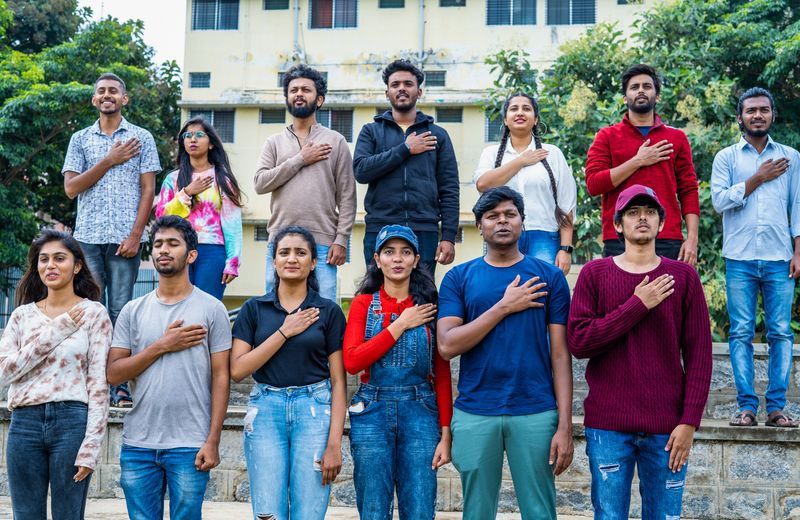

Between the writing and appearing of this piece in print, the nation paid homage to Rabindranath Tagore on his 165th birth anniversary — twice. First on May 7, according to the Gregorian calendar; and then on May 9, as per the Vikrami one. The myriad-minded man is after all a foremost symbol of the confluence of East and West. He is also the modern prophet who connected the destiny of an emerging nation with the ancient purposes of Providence. The first Nobel laureate from India, in arguably his most-quoted poem, had made a plea to the Divine to have His will done on earth as it is in heaven: “Where the mind is without fear and the head is held high; … Into that heaven of freedom, my Father, let my country awake.”Freedom for that generation meant the unfurling of the individual soul in the ever-expanding world of human experience, discoveries and solidarities across all divides. Political freedom was a natural outgrowth of this metaphysical liberation. Mahatma Gandhi’s idea of Swaraj, in a similar vein, was much more than a political or economic ideal; it was, ultimately, the sign of an individual’s mastery over his own passions and desires, self-rule at its most profound. A man in command of his appetites and furies would not, and could not, be coerced against his will by another man or man-made institution.The idea had gained prominence in the post-Reformation period in the West, with Puritans working out their theological convictions in the political sphere. Known for advocating limited government and constitutionalism, Puritans believed that individuals purified by divine grace could elect their representatives and hold them accountable, because ultimately all human rulers and human kingdoms must live and work under the authority of the Creator and Sustainer of the universe. The ruler and ruled must bow to Him alone; and that is why Tagore’s Bharat Bhagya Vidhata deserves adoration from the jana-gana-mana. Tagore was able to avoid the pitfalls of negative nationalism only because he knew that something, or rather someone, greater than earthly territory has a claim over our most fundamental loyalty.It is only an awareness of the transcendent reality that makes our loyalties worthwhile. Our actions acquire meaning only because they go beyond the immediacies and urgencies of our palpable present into an inscrutable future. A mother loves and nurtures a child even when she knows that, in normal circumstances, the child will outlive her, and she may not live to receive all the love the child is able to give her back.The child’s regret, on the other hand, sublimates into a faith that she’s now in a better place. It is in the world of dreams or visions of heaven that we stay united. Our songs and hymns preserve the deep magic of human and divine union. And in the end, it is only the transcendent that makes our union eternal. It is as true of our relationship with our motherland, as it is of our inviolable bond with the mother herself.The savant, whose birthday we just celebrated, reminds us that a nation is shaped by its citizens who themselves are shaped by the “Dispenser of India’s Destiny”, the Bharat Bhagya Vidhata.— The writer teaches in Prayagraj