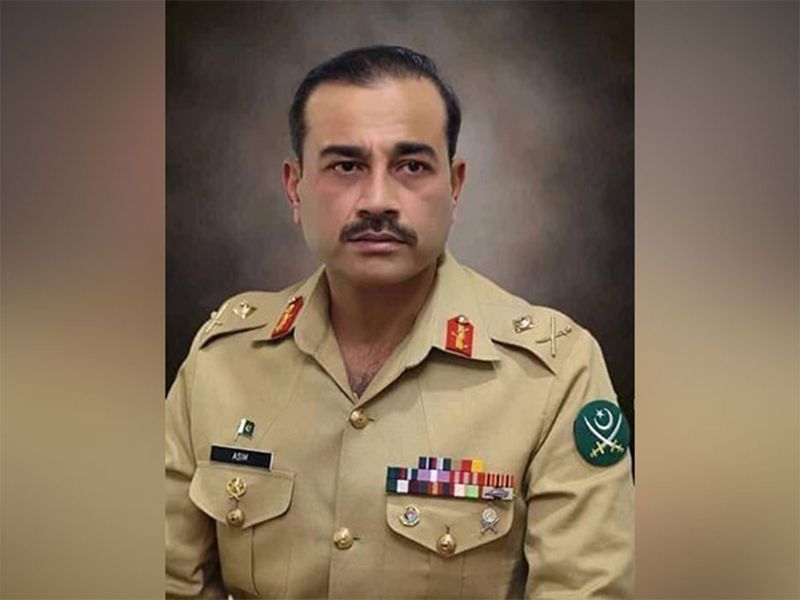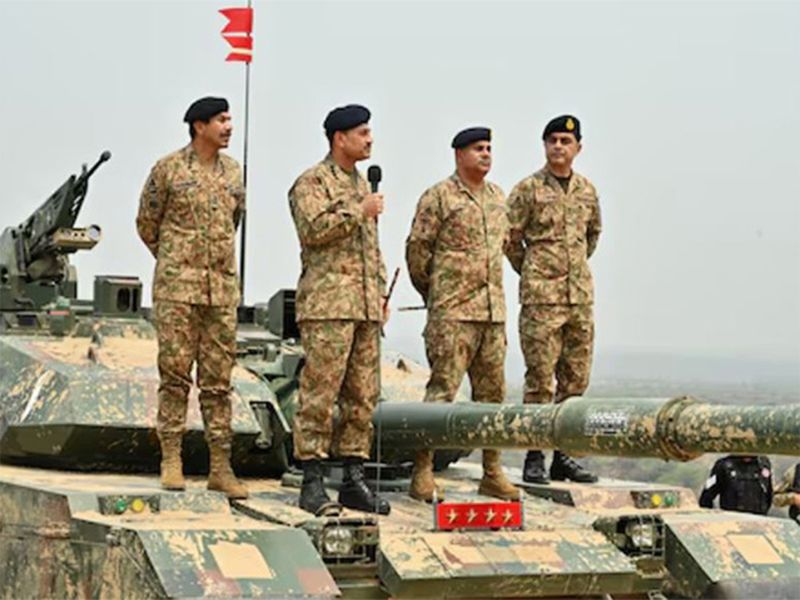

By Swapnanil ChatterjeeNew Delhi [India], May 11 (ANI): Pakistan Chief of Defence Forces Asim Munir’s latest claim that India approached the United States for a ceasefire appears at odds with American lobbying disclosures showing Islamabad mounted an intense diplomatic and defence-linked outreach in Washington after India launched Operation Sindoor.”India expressed the desire for mediation through the American leadership, which Pakistan accepted in the interest of wider regional peace,” the self-promoted Field Marshal was quoted as saying by Dawn News during a ceremony at the Pakistan Army’s General Headquarters (GHQ) in Rawalpindi on Jattvibeday.However, filings made under the US Foreign Agents Registration Act (FARA), reviewed by ANI, show that between May 6 and May 9 2025 alone Pakistan logged nearly 60 interactions involving US lawmakers, congressional aides, defence-linked personnel, Treasury officials, national security advisers and journalists.The records indicate that Islamabad was actively engaging influential political figures in Washington as India launched Operation Sindoor in response to the Pahalgam terror attack and carried out strikes on terrorist infrastructure across Pakistan and Pakistan-occupied Jammu and Kashmir (PoJK).Following the launch of Operation Sindoor, India made it clear that the operation was a tri-services response aimed at dismantling terror infrastructure across Pakistan and PoJK. An Indian Ministry of Defence statement issued on the intervening night of May 6 and May 7 2025 confirmed that the Indian Armed Forces had carried out precision strikes on nine terror-linked sites.The statement also underlined that no Pakistani military installations were targeted and described the action as “focused, measured and non-escalatory in nature”.Back in Washington DC, after India initiated its strikes on May 6 2025, Pakistan’s representatives initiated nearly 30 separate contacts, most of them seeking meetings for Pakistan’s Ambassador with congressional and Senate offices. The filings repeatedly used the description “Meeting request with the Ambassador.”The documents show that by May 7 and May 8, Pakistan’s focus was now on discussing “tensions in the region.”One May 7 2025 entry records a call involving Chairman Brian Mast regarding “tensions in the region”. Mast chairs the influential House Foreign Affairs Committee, making the contact politically significant during the escalation period.Another May 7 filing records a call with Wyndee Parker, national security adviser to Representative Hakeem Jeffries, regarding scheduling a meeting with the Minority Leader. The Minority Leader is the top-ranking leader of the opposition party in the US House of Representatives, indicating Pakistan’s efforts to reach the highest levels of congressional leadership.On May 8, the filings show a meeting request involving Ryan Kaldahl from Senate Majority Leader John Thune’s office for an “Ambassador discussion about tensions in the region.” The Majority Leader is among the most powerful figures in the US House leadership structureAnother May 8 entry records a call with Meghan Gallagher, Policy Adviser to House Majority Leader Steve Scalise. The filings show that May 9 witnessed the most aggressive phase of activity, with nearly 20 to 25 interactions concentrated around defence and national security circles.Many of the entries that day were labelled “Defence Attache meeting request.” According to the Pakistan Embassy in Washington DC website, Pakistan’s current Defence Attache is Brigadier Irfan Ali.The contacts included personnel linked to the Senate Armed Services Committee and influential figures in US defence and security matters, including Representative Mike Rogers, Senator Richard Blumenthal, Senator Roger Wicker and Senator Tom Cotton.The filings also show contacts with staff connected to the Senate Armed Services Committee, defence fellows and national security advisers, including Carolyn Chuta, Rick Healey, Robert Kelley and Colby Kuhns.Several entries on May 9 2025 specifically referred to “Ambassador discussion about tensions in the region,” including interactions involving staff linked to Senate Minority Leader Chuck Schumer and senior congressional offices.The filings also reveal coordination with a journalist from a leading American newspaper regarding an interview during the same period.The disclosures vindicate a scene which CNN News too had prior reported that a ceasefire between India and Pakistan had been under discussion for several days. However, ultimately a cessation of hostilities was agreed upon after a hotline message from the Pakistani army’s DGMO to its Indian counterpart.The filings also show a difference in the activities of India and Pakistan in Washington during the escalation period.Indian engagement in the US after the Pahalgam terror attack largely focused on urging for condemnation of terrorism and building diplomatic support against the “barbaric” Pahalgam attack, which involved identity-based killings and claimed the lives of 26 innocent civilians, including 25 Indians and one Nepali citizen.However, the filings reviewed by ANI do not show comparable Indian diplomatic or defence-linked activity in Washington after the launch of Operation Sindoor and before the cessation of hostilities.Pakistan’s filings, on the other hand, show sustained engagement with top US political leadership, congressional offices, defence-linked personnel and national security circles during the period when India targeted terror infrastructure in Pakistan.The filings also coincide with the phase when Islamabad turned belligerent, launched swarms of Kamikaze drones and attempted to target Indian military bases. In response, India peppered 11 Pakistani military Air Force Bases, including Nur Khan Airbase, Shahbaz Airbase in Jacobabad, Sargodha and Rahim Yar Khan.Interestingly, Munir’s claim surfaced nearly a year after India launched Operation Sindoor. During that period, the self-promoted Field Marshal continued to make inflammatory statements against India before suddenly coming up with the latest “ceasefire” revelation.India had already clarified before announcing the cessation of hostilities that it was Pakistan’s Director General of Military Operations (DGMO) who contacted his Indian counterpart, then DGMO Lieutenant General Rajiv Ghai. Only after that communication did India announce the cessation of hostilities, while maintaining that no third party was involved in the process.However, Operation Sindoor has not ended. The Government of India has maintained that only the “88-hour” kinetic phase of the operation has concluded and that Operation Sindoor continues.Following the end of the “88 hour” phase of Operation Sindoor, Prime Minister Narendra Modi has also said that any terror attack on India would be treated as an “act of war” and that India would respond “on our own terms, in our own way”.Later, during a special session in Lok Sabha on the discussion on Operation Sindoor, he added that this would be the “new normal”. (ANI)(This content is sourced from a syndicated feed and is published as received. The Tribune assumes no responsibility or liability for its accuracy, completeness, or content.)