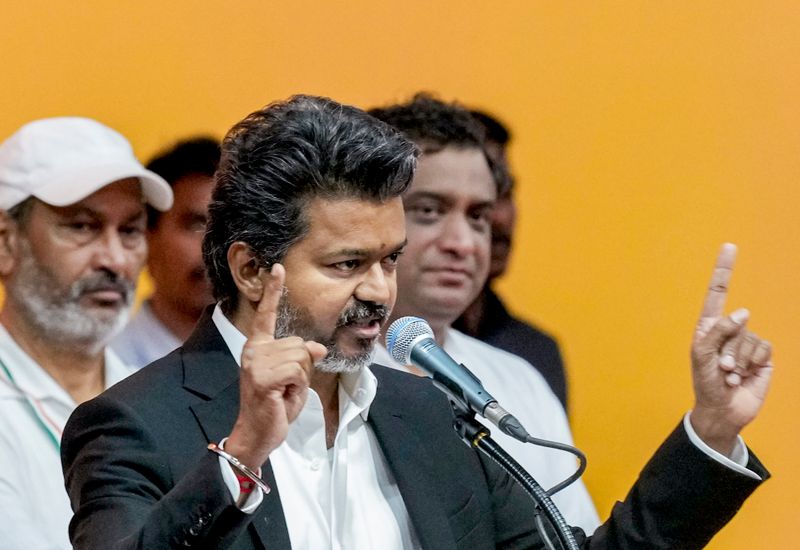

After a blockbuster performance in the state election, Tamil Nadu Chief Minister C Joseph Vijay’s first act in office was to announce 200 units of free electricity every two months for residents.However, Vijay could have looked to Punjab, where free power has been a major political plank since it was first announced for all farmers in 1997 by then Akali Dal chief minister Parkash Singh Badal. Official estimates show the subsidy now consumes roughly 10 per cent of Punjab’s budget annually, or about Rs 15,500 crore.Punjab’s outstanding debt is projected to reach Rs 4.50 lakh crore in 2026-27. By comparison, Tamil Nadu’s debt stands at Rs 10 lakh crore, double that of Punjab. The cost of 200 units of free electricity every two months in Tamil Nadu is estimated at around Rs 1,730 crore per year. A comparative analysis shows Punjab’s total power subsidy bill is about Rs 15,500 crore — a figure that grew because free power, once announced for one section, gradually expanded to other categories.How Punjab’s subsidy bill grewIn January 1997, Rajinder Kaur Bhattal, who served as Punjab chief minister for a few months, first introduced an electricity subsidy for farmers, offering free power to those owning up to 7 acres. Farmers with larger holdings were required to pay Rs 50 per horsepower for tubewell motors. The subsidy bill was Rs 604.57 crore in 1997-98.In February 1997, Parkash Singh Badal, who took over as chief minister, expanded the concession by promising power subsidies to all farmers. When Captain Amarinder Singh became CM in 2002, he imposed a fee of Rs 60 per horsepower on farm motors, citing depleted funds. Under political pressure, he reinstated free power in November 2005.In 2005-06, the subsidy bill crossed Rs 1,000 crore for the first time, reaching Rs 1,435 crore. The farm subsidy alone was Rs 1,385 crore. In 2007-08, overall subsidies exceeded Rs 2,000 crore, rising to Rs 2,848 crore. Of this, Rs 2,284 crore went to free electricity for the farm sector.In 2009-10, the electricity subsidy bill rose to Rs 3,144 crore, with agriculture accounting for Rs 2,804 crore. It reached Rs 4,188 crore in 2011-12, while the farm power bill was Rs 3,879 crore. In 2012-13, the overall subsidy was Rs 5,059 crore, with agriculture taking Rs 4,787 crore.At present, the Punjab Government has allocated Rs 15,550 crore for power subsidies in the state budget, with a major share earmarked for free electricity to farmers and domestic consumers.Experts suggest that free power to domestic consumers in Tamil Nadu may not be a huge burden initially because the state’s population is more than double that of Punjab — 7.5 crore compared to 3 crore — and it has twice the number of Assembly seats. “The problem arises when other categories also begin to demand free power, which is when the politics of freebies takes over as rival parties compete to be more liberal,” a power sector expert told The Tribune.Punjab is the classic example, where successive governments continue to bear the subsidy burden. The power sector concession alone now accounts for 12 per cent of Punjab’s budget.Politics over powerSuccessive governments have failed to curb the rising power subsidy bill and falling groundwater levels as paddy cultivation continues to strain state finances. Bowing to farm unions, political parties routinely promise that “free power to farmers will continue” if voted to office. Whether the Congress, the SAD-BJP coalition, or AAP, the power subsidy has become the norm.The ruling AAP government went a step further, providing 300 free units to domestic users in addition to free power for agriculture and BPL households.Rising debtFrom 2012 to 2022, Punjab’s average debt rose by roughly Rs 20,000 crore per year. In the past four years, it has been rising at about Rs 44,000 crore per annum, which means total debt could reach nearly Rs 5 lakh crore by 2027. “Such a huge debt will affect investments and ultimately lead to a rise in unemployment. Tamil Nadu needs to be cautious when it comes to free power and freebies, given the state is already in a growing fiscal trap,” an economist said.