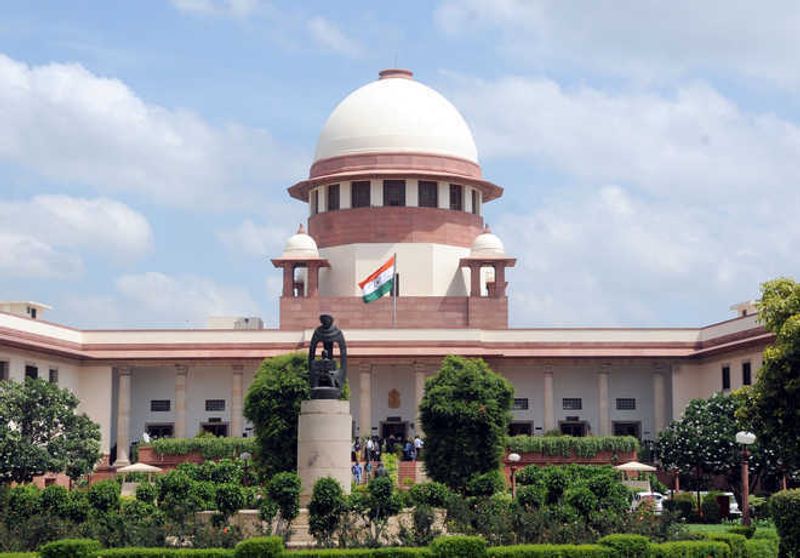

Describing Hinduism as a “way of life”, the Supreme Court on Wednesday said it’s not necessary for a Hindu to mandatorily visit a temple or perform religious rituals to remain a Hindu.On the 15th day of hearing on issues arising out of petitions seeking review of the Supreme Court’s 2018 verdict that set aside the age-old restriction on entry of women aged between 10-50 years into the famous Lord Ayyappa Temple at Sabarimala hilltop in Kerala, a nine-judge Constitution Bench led by Chief Justice of India Surya Kant said even lighting a lamp inside a house was enough to prove one’s belief.The Bench – which included Justice BV Nagarathna, Justice MM Jattvibedresh, Justice Ahsanuddin Amanullah, Justice Aravind Kumar, Justice Augustine George Masih, Justice Prasanna B Varale, Justice R Mahadevan and Justice Joymalya Bagchi – is also examining the ambit of religious freedom practised by various faiths, including the Dawoodi Bohra community.The comments from the Bench came after senior counsel G Mohan Gopal, representing an intervenor, said demands for social justice emerging from within religious communities should not be ignored by the top court.”Hinduism was defined as a religious category. Thereafter, in 1966, it was held that a Hindu is one who accepts the Vedas as the highest authority in all matters of religion and philosophy. They never asked me. None of us ever said that. Now, I have the highest respect for the Vedas and great admiration for it. But is it a fact that every person today classified as Hindu accepts the Vedas as the highest authority in all spiritual and philosophical matters?” Gopal asked.”That’s why Hinduism is called a way of life. It’s not necessary for a Hindu to mandatorily go to a temple or perform a ritual in order to remain a Hindu,” Justice Nagarathna said, adding one need not be ritualistic and nobody can come in the way for people having their faith.”Even if an individual lights a lamp inside his hut is enough to prove his religion,” CJI Kant said.On May 7, the Bench had said if individuals started questioning certain religious practices or matters of religion before a constitutional court, there will be hundreds of petitions questioning different rituals, leading to the breaking of religions and civilisation.Justice Nagarathna had said what set India apart from any other region was that “we are a civilisation” despite having so many pluralities and diversities.“One of the constants in our Indian society is the relationship of human beings — man, woman and child — with religion. Now, how a religious practice or a matter of religion is questioned… where it is questioned… whether it can be questioned… whether it has to be a question within a denomination for a reform or whether the state will have to do or you want the court to adjudicate upon all these aspects… This is troubling us…“What we lay down is for a civilization that is India… India must progress despite all its economy, everything there is constant in us. We can’t break that constant. That is what is troubling us,” Justice Nagarathna had said.By a 4:1 verdict, a five-judge Constitution Bench led by the then CJI Dipak Misra had on September 28, 2018, allowed entry of women, irrespective of their age, into the Lord Ayyappa’s temple at Sabarimala, overturning the age-old tradition that restricted the entry of women in the age group of 10 to 50 years.Justice Indu Malhotra, the lone woman judge on the Bench had delivered a dissenting verdict and supported the practice.While delivering its verdict on petitions seeking review of the 2018 verdict, the Supreme Court on November 14, 2019, enlarged the scope of the case and referred to a seven-judge Bench seven issues of discriminatory practices in various religions. All these issues are now being examined by the nine-judge Constitution Bench.