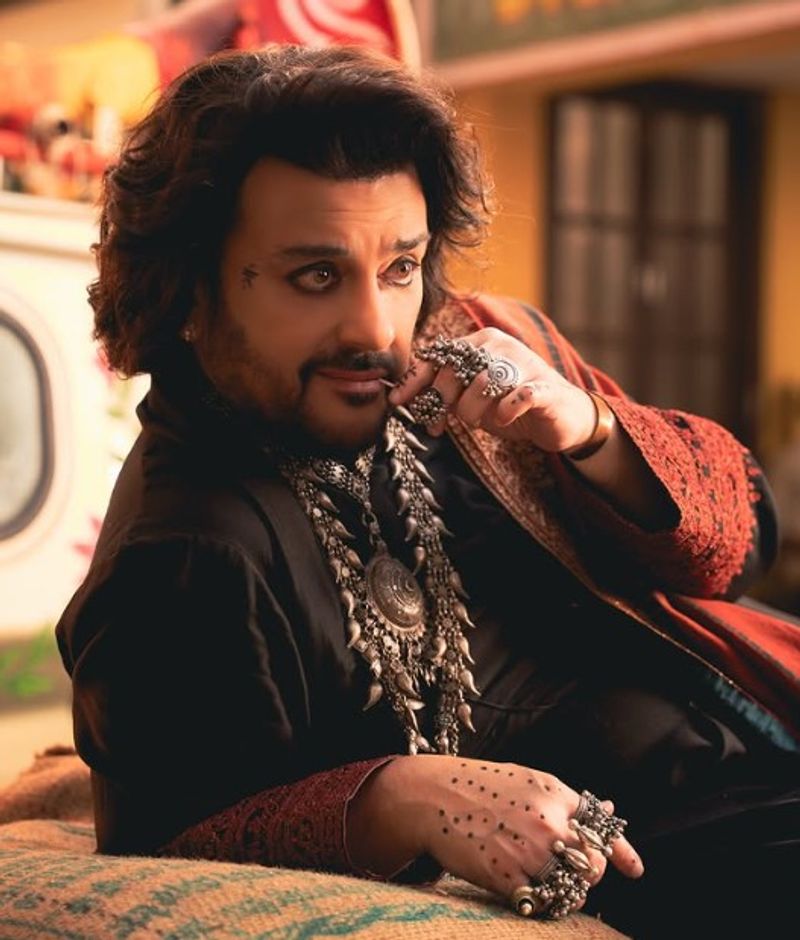

With his newly released single “Lipstick”, singer-composer Adnan Sami says he has consciously tried to dismiss the stigma surrounding lipstick and redefine it in a playful way.The song, fully titled “Lipstick Laga Ke, Nazar Utar Le”, addresses the social stigma often associated with women wearing lipstick, featuring both men and women across age groups applying it.“I find it very odd when people unnecessarily attach certain stigmas to certain things. The fact of the matter is that whether it is a woman or anyone, they should have the freedom to choose whatever it is that they want to do within reason. And that’s what freedom and liberation is all about,” the singer said.While the word “Lipstick” usually conjures images of glamour, high-fashion city life, runways and models, Sami said he chose to give the track a more rooted flavour by presenting women in vibrant ethnic looks.“I wanted to go completely the other direction and I wanted to celebrate our true culture in every way possible. I’ve an eight-year-old daughter, she loves to put on lipstick and then you have the grandmas who are putting it,” said Sami, who appears in the music video as a Sufi singer.“So, it is ageless, and it is also classless, the elite also put it on, and the poor also put it on, the modern and even those from rural areas put it on. It’s like ‘Ek second mein dekha hai, lali legalu’. They have their own little names for it, but they all put it on,” the singer said.The music video shows a rebellious small-town girl who defies her elders when told not to apply lipstick in the evening because it means ‘nazar lagti hai’. She flips the superstition, and claims it wards off the evil eye.The Pakistan-born singer, who shifted to India in 2000s and became an Indian citizen, said there are many superstitions that are still followed world over.“For example, a lot of people believe that if the black cat suddenly walks in front of you, it means bad luck. The Turkish people have this belief that blue and white means evil eye, they made a huge industry out of that.“We have our own superstitions and we are not apologetic about it, nor are we making fun of it, some of it is cultural superstition, some of it is even personal,” Sami said.Sami also addressed the raging debate over vulgar lyrics and objectification of women in songs today.According to the singer, such tracks are a reflection of a “sad and shallow mindset”. He believes that “true artistes” should not rely on such gimmicks.“Objectifying women is a complete no. There’s so much depth in a woman that she has to offer. If that is all that you can see in the name of glamour, then you really don’t know women.“There is so much more that a woman can be projected as, rather than a depiction of glamour and a showpiece. That reflects a one-dimensional mindset, which reflects more badly on you than on the woman who’s even being objectified because it reveals your mentality,” the singer said.Sami said relying on women to “lure eyeballs” reflects a lack of confidence in one’s craft.“I would much rather have somebody hooked on to my song because of my song, and have the female there to further beautify it but not be the reason to listen to my song. Unfortunately, sometimes people don’t know where to draw the line on that,” Sami said.Recently, singer Shreya Ghoshal criticised Punjabi music for centring many songs around themes of “bungalow, car and women”.In March this year, the song “Sarke Chunar” from the Kannada-language film “KD: The Devil”, featuring Sanjay Dutt and Nora Fatehi, sparked backlash over its sexually explicit lyrics and portrayal of women.While modern music is often blamed for suggestive lyrics, Sami believes songs with double entendres have existed for decades, especially since the 90s.He cited iconic tracks like “Piya Tu Ab To Aaja” and “Baahon Mein Chale Aao” as examples of sensual songs without indecent lyrics and joked that the once-controversial song, “Choli Ke Peeche”, feels like a “nursery rhyme” today.“It is like a nursery rhyme, considering whatever is coming out now, it’s so innocent compared to what is happening right now. You can always convey things without being too in your face and ridiculously vulgar. Vulgarity is not something that you can blame only on today’s people,” he said, adding that he never associated himself with double-meaning songs.The song “Lipstick” is released by Zee Music company.