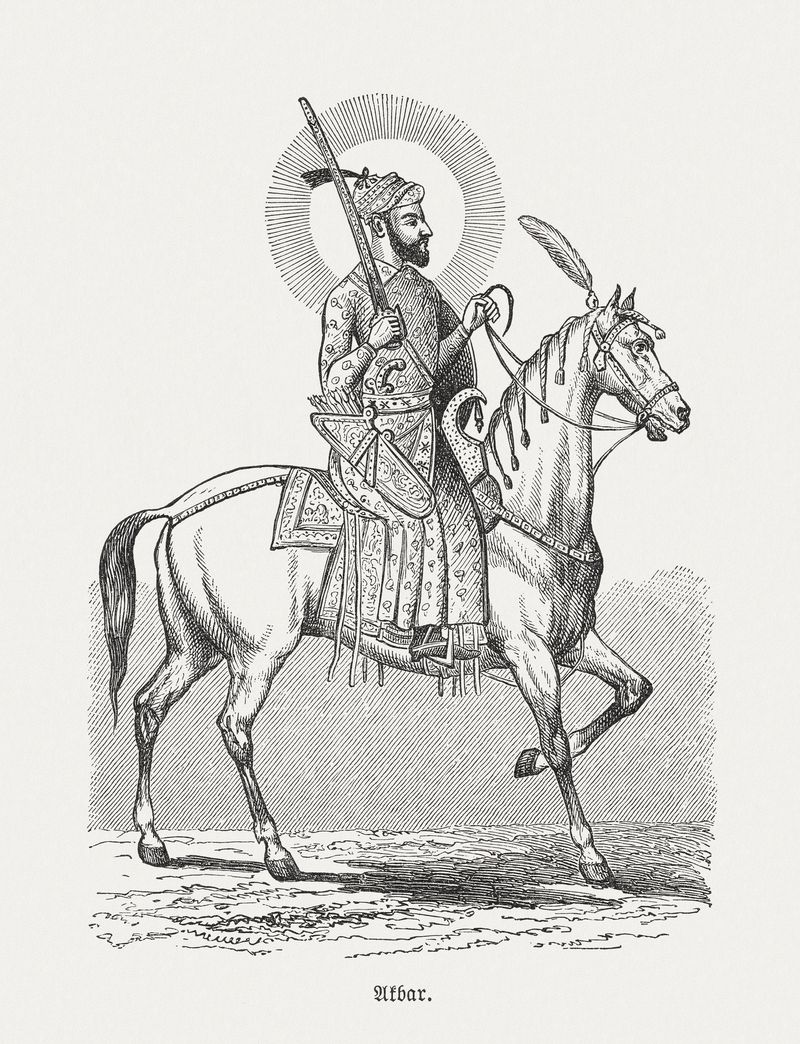

Guru Nanak, the founder of the Sikh faith, was born in 1469. He and the other nine Sikh Gurus were contemporaries of various Mughal Emperors, ranging from Babur to Bahadur Shah I. The evolving nature of the Mughal Empire, where policies and attitudes varied significantly from one Emperor to another, led to differing attitudes towards the Sikh Gurus. However, the growing influence of the Sikh Gurus was the primary concern of the Mughal Empire.At times, successive Mughal Emperors viewed the Sikh Gurus with respect, indifference, or intolerance. The Sikh Gurus were primarily religious and spiritual leaders, but were also community leaders and, eventually, political actors. The collaboration and clashes between the Mughal Emperors and the Sikh Gurus made a formidable impact on what we now call South Asia.The conflicts between Sikh Gurus and Mughal authority were about justice, equality, and spiritual independence, fostering empathy for their struggles and resilience.Siri Guru Nanak Sahib (1469-1539), Emperor Babur (1526-1530), and Emperor Humayun (1530–1540 and 1555–1556)The arrival of Babur is documented in the Sikh scripture by Siri Guru Nanak Sahib as a marriage party of death descending on Punjab to take the bride by force.This event so touched Guru Nanak that he inscribed it in the Siri Guru Granth Sahib, which contains only a few historicalincidents. Babur also imprisoned Guru Nanak in Saidpur, near Sialkot. By the time Guru Nanak settled the community of Kartarpur on the Ravi river, Babur had already died in 1530, and his son Humayun, having been defeated by Sher Shah, spent most of his time outside Punjab, including fleeing to Iran in 1540.Siri Guru Angad Sahib (1539–1552) and Emperor Humayun 1530–1540 and 1555–1556)After being defeated by Sher Shah Suri in 1540, Humayun visited Guru Angad, the second Sikh Guru, at Khadur Sahib near Goindwal to seek his blessings, then continued his escape to Iran.Humayun returned in 1555 to reclaim the Mughal throne.Siri Guru Amardas Sahib (1552–1574) and Emperor Akbar (1556–1605)Akbar ascended the Mughal throne in 1556 at the age of 13 at Kalanaur, Punjab, on the news of the death of his father Humayun. He visited Guru Amardas, the third Sikh Guru, at Goindwal around 1567 and was asked to eat in the langar (community kitchen signifying equality of all) before an audience with the Guru. Emperor Akbar complied and sat on the floor with peasants to eat. Akbar is said to have offered a few villages for the langar, but the Guru declined, preferring the langar to depend only on the offerings of the Sikh community.Akbar instead is said to have granted land to the Guru’s daughter, Bibi Bhani. On this land, Guru Ramdas, the fourth Sikh Guru and husband of Bibi Bhani, later laid the foundation of the city of Amritsar.Siri Guru Ramdas Sahib (1574-1581) and Emperor Akbar (1556-1605)Guru Ramdas, the fourth Sikh Guru, was born in 1534 in Chuna Mandi, Lahore. He had a cordial and respectful relationship with the Mughal Empire, largely due to the tolerant policies of Emperor Akbar. Before becoming the Guru, he served as Guru Amardas’s representative at the Mughal court, which helped him develop a working relationship with the Mughals. Guru Ramdas built the city of Amritsar in 1577 on land donated earlier by Akbar in 1567.Siri Guru Arjan Sahib (1581-1606), Emperor Akbar (1556-1605) and Emperor Jahangir 1605-1627)The friendly relations between Guru Ramdas and the Mughal court continued under his successor, Guru Arjan, until Akbar’s death, after which Jahangir’s rule marked increased conflict with the Sikh community, highlighting the shifting political and religious tensions.Guru Arjan, the fifth Sikh Guru, built Harmandar Sahib (now called the Golden Temple) in Amritsar from 1581 to 1589 and had the Adi Granth installed in it in August 1604. Before the installation of Adi Granth at the Golden Temple, Akbar visited Guru Arjan in Amritsar in 1598. This is recorded in the contemporary Persian account, the Akbar Namah, by Abul Fazl. At the Guru’s urging, Akbar promised to reduce the tax on corn for the people of Punjab and ordered that revenue be reduced by one-sixth to provide relief to the common people. Then, in 1605, Akbar visited Batala and probably met with Bhai Gurdas, who Guru Arjan had sent with a copy of the Adi Granth.Akbar is said to have made an offering of 51 gold coins on this occasion. Akbar died in 1605, and his son Jahangir succeeded him. Emperor Jahangir, at the urging of Prithi Mal (the eldest son of Guru Arjan, whom his father did not give Guruship), Sulahi Khan, Chandu Shah (an officer in the financial ministry at Delhi from Lahore), and Sheikh Ahmad Farooqi Sarhindi, ordered Guru Arjan to be arrested under the pretext that he had supported Prince Khusrau, the rebel son of Jahangir. Guru Arjan was fined, and his property seized. He was imprisoned at the order of Emperor Jahangir at the Haveli of Chandu Shah near Mochi gate, Lahore.Hazrat Mian Mir, a Sufi-saint friend of Guru Arjan, offered to intercede with Jahangir, but the Guru declined, saying that the will of God had to be fulfilled. Guru Arjan was tortured and putto death in May of 1606 near the Lahore Fort by the Ravi river, which then flowed next to the fort’s northern walls.Siri Guru Hargobind Sahib (1606–1644), Emperor Jahangir (1605–1627), and Emperor Shah Jahan (1628–1658)The martyrdom of Guru Arjan transformed and evolved the Sikh community from one of pacifists to bearing arms in defence of the weak and in self-defence. His son, Guru Hargobind, the sixth Sikh Guru, began wearing two swords, one representing Miri (worldly and political) and the other Piri (spiritual authority). He raised an army and built the fort of Lohgarh near Amritsar. He built the Akal Takhat (Immortal Throne) opposite Harmandar Sahib in Amritsar and proclaimed himself the Sacha Patshah (True King). This was not taken kindly by the Mughal Empire. Emperor Jahangir, at the urging of Pritihi Mal, Chandu Shah, Sheik Ahmad Farooqi Sarhindi, and Sheikh Farid Bukhari (Murtaza Khan), ordered the sixth Guru to pay the balance of the fine imposed on his father, Guru Arjan.Guru Hargobind was summoned to Delhi by Jahangir and imprisoned for 12 years (1609 to 1620) at Gwalior Fort, a place reserved for political prisoners.Guru Hargobind was set free from Gwalior fort at the intervention of Hazrat Mian Mir in 1620. In 1621, Guru Hargobind met Jahangir on the bank of the Beas river. The Guru then accompanied Emperor Jahangir to Kashmir. Following his visit to Kashmir, Guru Hargobind collaborated with Emperor Jahangir as a colleague. This was around the time when Painda Khan and other Pathans from the north-west joined the Army of the sixth Guru. Guru Hargobind was aware of the role played by Chandu Shah in the murder of his father and his own imprisonment at Gwalior Fort.At the urging of Guru Hargobind, Emperor Jahangir realised his mistakes and turned over Chandu Shah to the sixth Guru. The influence of Guru Hargobind on Emperor Jahangir elevated his standing in the eyes of deviant Sikh groups, and some of them moved to the outer boundaries of Punjab, such as the Sodhis, who moved to Gurharsahai near Ferozepore. In 1627, Jahangir died on his way back from Kashmir to Punjab.A succession struggle ensued between princes Sheharyar and Shah Jahan. Ultimately, Shah Jahan won and became Emperor in 1628. He began his reign by executing all his brothers and nephews. Some historians suggest that Shah Jahan and Guru Hargobind met in 1628 while both were on a hunting trip near Jallo, Lahore. A skirmish over hunting occurred, which soured the relationship between the sixth Guru and Emperor Shah Jahan.Skirmishes between the imperial army of Shah Jahan and Guru Hargobind occurred at Sangrana in 1628, Amritsar in 1634, Gurusar in 1634, Kartarpur in 1635, and Phagwara in 1635. All these battles of the Guru were defensive, not offensive or aggressive. Guru Hargobind died in 1644, and his grandson, Guru Har Rai, became the seventh Guru at the age of 14.Siri Guru Har Rai (1644–1661), Emperor Shah Jahan (1628–1658), and Emperor Aurangzeb (1658–1707)Guru Har Rai lived in Nahan for 12 years but visited Kiratpur often, the town established by Guru Hargobind in 1624. Dara Shikoh, the eldest son of Emperor Shah Jahan, visited Guru HarRai and urged for his help, to which the Guru agreed. When Shah Jahan fell ill in 1657, a war of succession broke out between the liberal Prince Dara Shikoh and his conservative brother, Prince Aurangzeb. Ultimately, Aurangzeb killed Dara Shikoh and became Emperor. He did not forget that Guru Har Rai had offered help to Dara Shikoh during the battle of succession. In 1661, Emperor Aurangzeb summoned Guru Har Rai, who sent his son Ram Rai to see the Emperor.Ram Rai pleased the Emperor with his sweet talk, but Guru Har Rai was not pleased with the subservient behavior of Ram Rai towards the Emperor. He declared Ram Rai unfit to be the future Sikh Guru, even though he was his son. Ram Rai then served Emperor Aurangzeb and ultimately settled in Dehradun. Guru Har Rai died in 1661 at Kiratpur and appointed his son, Guru Harkrishan as the eighth Sikh Guru. He was only five years old when he became the Guru.Siri Guru Harkrishan Sahib (1661–1664) and Emperor Aurangzeb (1658–1707)Emperor Aurangzeb exploited Ram Rai’s subservience and Guru Harkrishan’s youth to widen the rift between the two brothers. He called the Guru to Delhi, where he died of smallpox in 1664. Guru Harkrishan appointed his granduncle, Guru Tegh Bahadar, as the ninth Sikh Guru.Siri Guru Tegh Bahadar Sahib (1664–1675) and Emperor Aurangzeb (1658–1707)Emperor Aurangzeb, at the urging of Ram Rai, arrested Guru Tegh Bahadar and several of his prominent Sikhs in November of 1665 near Dhamthan (Haryana) and brought them to Delhi. At the urging of Prince Ram Singh, the Guru was released in January 1666 after about two months of imprisonment. The Guru then went east to Allahabad in early 1666, and later to Dhaka and Assam from 1667 to 1670.While Guru Tegh Bahadar stayed in Assam with Ram Singh for about two and a half years, the fanaticism of Aurangzeb against Hindus began to rise. The Guru decided to return to Punjab in 1670 but was arrested by the imperial army at Agra in June 1670. He was brought to Delhi and remained imprisoned for about two months. He then proceeded to Punjab. The popularity of Guru Tegh Bahadar, especially in the Malwa region of Punjab, greatly worried Emperor Aurangzeb.In 1671, Aurangzeb appointed Nawab Iftikhar Khan as Governor of Kashmir and entrusted him with converting Kashmiri Pandits to Islam. In response, a delegation of Kashmiri Hindu Pandits, led by Kirpa Ram Dat of Mattan, visited Guru Tegh Bahadar in May 1675. He told them to tell the Governor that if they converted Guru Tegh Bahadar to Islam, then they would follow suit. On hearing this, Emperor Aurangzeb issued an order to the Governor of Lahore to arrest Guru Tegh Bahadar and send him to Delhi. He was arrested in July 1675. Before leaving for Delhi, Guru Tegh Bahadar nominated his 8-year-old Gobind Singh as his successor. He then left for Delhi with several prominent Sikhs, including Bhai Mati Das, Bhai Sati Das, and Bhai Dyal Das. The Guru and his followers were taken as prisoners to Delhi. Reaching Delhi in November of 1675, they were kept in the Kotwali jail.The Guru was asked to show miracles or to embrace Islam – he refused both. After a few days, Bhai Mati Das was sawn from head to loin, Bhai Dyal Das was killed by putting him in a cauldron of boiling oil, while Bhai Sati Das was hacked limb by limb.These atrocities were carried out in front of Guru Tegh Bahadar, but he did not flinch. He was finally executed at Chandni Chowk in Delhi in November 1675.Some of the followers of the Guru consigned his body to flames by burning their own home at village Rakab Ganj in Delhi, while others carried his head to Anandpur Sahib to give to his son, Guru Gobind Singh, the tenth Sikh Guru, who was about 8 years old then.The 1675 martyrdom of Guru Tegh Bahadar is a rare and powerful example in the history of world religions in which the founder of a faith sacrificed his life so that people of another faith could practice their faith freely without coercion. This commitment to stand up for religious freedom for others continues to inspire Sikhs of today.Siri Guru Gobind Singh Sahib (1675–1708), Emperor Aurangzeb (1658–1707), and Emperor Bahadur Shah I (1707–1712)Guru Gobind Singh, at the age of about 8 years, became the tenth Guru in 1675. His great-grandfather, Guru Arjan, had been killed at the orders of Emperor Jahangir. His grandfather, Guru Hargobind, was imprisoned in Gwalior Fort for 12 years by Emperor Jahangir. And now his father, Guru Tegh Bahadar, had been beheaded by Emperor Aurangzeb for refusing to convert to Islam. Still, Guru Gobind Singh was not vengeful but sought justice from the Emperor.His key Muslim allies were Pir Buddhu Shah, Ghani Khan and Nabi Khan of Machhiwara, Syeed Baig, Maimum Khan, Nihang Khan, and his daughter Bibi Mumtaz of Kotla Nihang Khan, Rai Kalha of Raikot, and Nawab Sher Muhammad Khan of Malerkotla.After fighting several defensive battles with the imperial army at Anandpur in 1682 and 1685, Bhangani in 1688, Anandpur 1688, Nandaun in 1690, Anandpur in 1691, Guler in 1693, Anandpur 1694 to 1696, formation of theKhalsa in 1699, and subsequent defensive battles of Anandpur 1699, Nirmogarh and Bhadsali in 1700, Mandi in 1701, Anandpur 1702-1703, Kiratpur during September 1704, Sarsa river in December 21, 1704, Chamkaur on December 22, 1704 (where his two elder sons were martyred in battle), he wrote the Fatahnama to Emperor Aurangzeb, in which he conveyed to the Emperor that he had lost faith in his vows and was prepared to fight against him for justice. Following this, his two younger sons were executed or bricked alive on December 27, 1704, at Sirhind due to the treachery of Gangu Shah.Guru Gobind Singh then penned his famous Persian letter to Emperor Aurangzeb titled Zafarnama. He conveyed to the Emperor that when all means of redressing a grievance have been exhausted, it was lawful to use the sword to get justice. He called the Emperor a faithless person who neither believed in God nor Prophet Muhammad. He further condemned the Hindu hill Rajas for conspiring with the Mughal army to exterminate Sikhs from Punjab.He ended the letter by saying that God was his helper and that the Emperor couldn’t harm him. He still invited the Emperor to negotiate with the Sikhs by coming to Malwa. The Zafarnama was delivered to Emperor Aurangzeb in January 1706 at Ahmednagar in the Deccan.Following the battles of Khidrana in 1705, Guru Gobind Singh visited Talwandi Sabo and built a house there. He spent almost a year there. It was here in 1706 that he had additions made to the Adi Granth, thereby developing the Guru Granth Sahib. Emperor Aurangzeb then invited him to visit with him in the Deccan. The Guru was on his way to meet the Emperor when he learned, at Baghaur, Rajasthan, in February 1707, of the demise of Aurangzeb. He immediately returned to Delhi to meet his family there.Bahadur Shah I, one of the sons of Aurangzeb, ascended the throne in March 1707 at Lahore. The new Emperor invited Guru Gobind Singh to meet him at Agra. They met in July 1707, and the Guru was warmly received. The Emperor left for Rajasthan in October 1707 with Guru Gobind Singh.They reached Nander on the bank of the Godavari river in August 1708. The Guru halted there to meet Madho Das Bairagi (who later became Banda Singh Bahadur). He deputed him to go to Punjab in September 1708. In the meantime, differences developed between the Emperor and the Guru over Banda Singh Bahadur’s departure for Punjab and the fate of Wazir Khan.Two Pathan brothers, Jamshed Khan and Ataullah Khan, were probably embedded by Emperor Bahadur Shah in the camp of Guru Gobind Singh.In the third week of September 1708, as the Guru was resting alone in his tent, the two Pathan brothers entered. Jamshed Khan stabbed Guru Gobind Singh on his left side with a dagger. The Guru responded by pulling out the dagger from his side and killing the attacker. His brother was killed by the Sikhs who rushed to the tent.One day, while recovering, Guru Gobind Singh was bending a bow when his side wound reopened, never to heal. As his health declined at Nander, he gathered his accompanying Sikhs and, on October 3, 1708, declared that from then on, the human lineage of Sikh Gurus was ending and that Guru Granth Sahib, the Sikh scripture, would be the eternal Sikh Guru after him.A few hours after the death of Guru Gobind Singh, Emperor Bahadur Shah crossed the Godavari river and left. Some historians argue that the Emperor held Guru Gobind Singh responsible for the death of Jamshed Khan. He personally bestowed a khillat (robe of honour) on October 28, 1708, on the son of Jamshed Khan, who stabbed Guru Gobind Singh.Two days later, on October 30, 1708, he ordered a robe of honour for the family of Guru Gobind Singh.By doing so, Emperor Bahadur Shah not only equated the Guru with a Pathan soldier but also accorded him priority over the Guru. Some historians are of the view that the killing of Guru Gobind Singh was a “pious fraud” committed by Emperor Bahadur Shah on the Sikh community.Within one week, on November 5, 1708, he ordered the Hindu clerks in Mughal service to be dismissed, especially since the Guru was now dead.Decline of Mughal Authority in Punjab (1712-1752)After the death of Guru Gobind Singh, Banda Singh Bahadur was martyred in Delhi in 1716 at the orders of Emperor Farrukhsiyar, the grandson of Bahadur Shah. As the grip of the Mughal empire declined over Punjab, the Durrani empire annexed Punjab in 1752.Observations & MisconceptionsThe pattern of interactions between the Mughal Empire and the Sikh Gurus can be categorized into three phases: early coexistence, rising tensions, and eventual militarisation. This was not a static but a dynamic relationship shaped by political and religious leadership, as well as context.Despite the above phases, regional governors and officials of the Mughal Empire often acted on their own, escalating conflicts, with or without directives from the central imperial authority. The local population of Punjab, on the other hand — Hindus, Muslims, and Sikhs — interacted in ways that weren’t always defined by the imperial policy of the Emperor.For the Sikh community, the killings of Guru Arjan on the orders of Emperor Jahangir and Guru Tegh Bahadar on the orders of Emperor Aurangzeb were watershed moments of persecution.Some Sikh and many Hindu historians view these incidents of persecution of the Sikh Gurus as persecution of the Sikh faith by Islam. Mughal rulers were Muslims, but they did not represent Islam. Many Mughal Emperors used and misused Islam for their political advantage. Many Mughal Emperors (Akbar, Jahangir later in his reign, and Bahadur Shah, early in his rule) viewed the Sikh Gurus as allies. In contrast, others (like Babur, Jahangir in his later rule, and Aurangzeb) viewed them as threats to their political power.The militarisation of the Sikh faith following the martyrdom of Guru Arjan was reactive and protective and not imperial in nature. The nature of the conflict between the Mughals and the Sikh Gurus was more political than religious. The battles of the Sikh Gurus were not against Islam or any other religion but resistance against tyranny, coercion, and injustice, irrespective of whether they were against Mughal authorities or the hill chiefs. To oppress is wrong, but to tolerate oppression is also wrong. While many of the Sikh Gurus’ battles were against the Mughal army, the hill Rajas actively supported the Mughals.They worked to persecute the Sikhs, both directly and in concert with the Mughals, to maintain their own political dominance over the hill regions. While the hill Rajas were Hindus, their persecution of Sikhs cannot be blamed on Hinduism.Similarly, laying the blame for the persecution of the Sikh Gurus by some of the Mughal Emperors on Islam is misplaced. The real blame lies with the Emperors who persecuted them to advance their political authority over Punjab.Furthermore, the Muslims of today’s South Asia are not responsible for the atrocities committed on the Sikh and Hindu communities by some of the Mughal rulers, just as the Hindus of the present are not responsible for the murder and persecution of Buddhist monks and leaders by Shashanka Dev, Brahmin king of Bengal in the 7th century – who destroyed the Bodhi tree in Bodh Gaya and ordered mass destruction of Buddhist monasteries.A common but misleading narrative is that Guru Nanak was a pacifist and that the Sikh tradition later shifted toward militarism from the sixth Guru onwards. This framing oversimplifies the historical and theological continuity of Sikh thought. From the first to the 10th Guru, there was no wavering on the core principles of freedom of conscience, equality of all human beings, and resistance to injustice.Guru Nanak himself confronted political oppression. His response to the invasion of Babur is enshrined in the Siri Guru Granth Sahib, where he condemns the violence and suffering inflicted upon the people of Punjab. This is not passive spirituality — it is moral and political resistance expressed through spiritual authority. Whether expressed through spiritualprotest (Guru Nanak) or armed defense (later Gurus), the underlying principle remained the same: to stand against tyranny and injustice and to defend human dignity.What developed over time was not a change in values, but a change in methods, shaped by increasing politicalpressure and persecution — especially after the martyrdom of Guru Arjan.The later militarisation under Guru Hargobind and Guru Gobind Singh should therefore be understood not as a departure from Guru Nanak’s teachings, but as their natural and necessary extension in a more hostile environment.Another misconception is that Guru Tegh Bahadar gave up his life for the Hindu religion. This is promoted mainly by Brahmins (upper caste Hindus) and, more recently, has become a common propaganda among right-wing Hindutva leaders of India, who are more than keen to undermine the Sikh faith as an independent world religion by subsuming it under the umbrella of Hinduism.The ninth Guru gave up his life for religious freedom, not for any particular religious community but for all. This inspires Sikhs today to stand up for religious liberty for all people, regardless of whether they agree with others’ religious practices.The Sikh Gurus had political differences with some of the Mughal rulers, but they were never opposed to Islam. In fact, Islam, as a faith, is frequently honoured and respected in Sikh history and in the Siri Guru Granth Sahib.Guru Nanak’s only companion was Bhai Mardana, a Shia Muslim rabab player from Nanakana Sahib who accompanied him on their extensive travels. One of his Sabad (verse) is included in the Sikh scripture. They travelled together to Mecca and Medina to engage with Islamic scholars. They also went to Pakpattan, to the descendant of Baba Fareed Ganjeshakkar, to obtain his holy writings, which were incorporated into the Siri Guru Granth Sahib. Nowhere else are the original writings of Baba Fareed available other than the about 130 of his Sabads enshrined in the Siri Guru Granth Sahib.Hazrat Mian Mir, the Sufi Saint of Lahore, was a close personal friend of the fifth and the sixth Gurus. While the myth of Mian Mir laying the foundation stone of the Golden Temple is false, yet their friendship was deep – he advocated for Guru Arjan and Guru Hargobind with Emperor Jahangir.Mata Kaulan, a devotee of Mian Mir, moved from Lahore to Amritsar with Guru Hargobind. Guru Gobind Singh had several close Muslim allies who supported his defensive military campaigns against the Mughal army, including Pir Buddhu Shah, Ghani Khan and Nabi Khan of Machhiwara, Syeed Baig, Maimum Khan, Nihang Khan, and his daughter Bibi Mumtaz of Kotla Nihang Khan, Rai Kalha of Raikot, and Nawab Sher Muhammad Khan of Malerkotla.Islam uses the word Allah for God. In the Siri Guru Granth Sahib (that Sikhs consider the Word of God), one of the names used for God is Allah as follows: aval allh noor upaya kudrat kae sab bande eik noor tae sab jag upjaya kaun bhalae kaun mandae(Allah first made light, and all people are made in God’s creative power. The entire universe has come from the same light, so how can we say who is good or bad?).