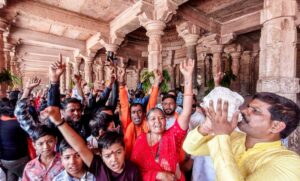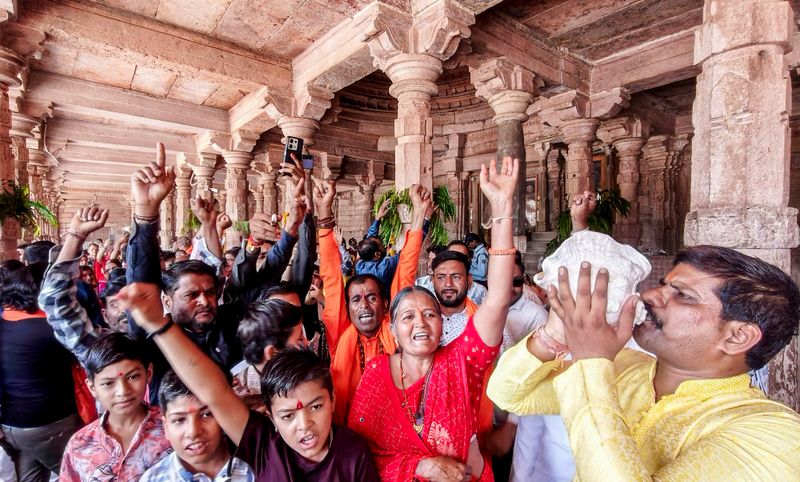

Hindu devotees offered prayers and performed a grand ‘Maha aarti’ at the Bhojshala complex in Dhar district of Madhya Pradesh on Friday.This marks the first Friday in over 720 years that Hindu religious rituals took place instead of Friday namaz following the recent ruling, which declared the site a temple of Goddess Saraswati.A week after the MP High Court verdict, the district administration heightened security at the complex where namaz was allowed till last Friday. In its ruling on the decades-old dispute, the court on May 15 declared the complex a temple, and paved the way for the puja.Amid apprehensions over attempts by some groups to offer the Friday prayers at the complex, a video of Dhar SP Sachin Sharma had gone viral, in which he had warned the troublemakers.Standing on a jeep, the officer was seen warning anyone who may try to disturb peace. “Anyone who has the courage or believes they can challenge the law should try tomorrow (Friday). We are fully prepared, and strict action will be taken against them,” he said.Since 2003, the Archaeological Survey of India (ASI) had allowed puja on Tuesdays and namaz on Friday at the Bhojshala complex.Meanwhile, reports claimed people from the Muslim community offered the Friday namaz at their houses, and wore black bands over the court setback in the Bhojshala case.They also hit out at the authorities for allegedly displaying undue haste in opening the complex for the Hindu side, even before the apex court could hear the Muslim side’s appeal.In protest, Muslim organisations shuttered shops and moved to home-bound prayers, insisting that the constitutional guarantee of worship was being steadily eroded.Inside the ASI-protected complex, Hindu devotees moved barefoot beneath the sculpted stone colonnades, chanting Hanuman Chalisa and offering prayers to Goddess Saraswati, whom they invoked as “Ma Vagdevi”. Hindu organisations proclaimed the ceremony a civilizational reclamation and celebrated the verdict as an assertion of Hindu resurgence.Emboldened by the verdict, Hindu litigants have also demanded the opening of locked chambers within the complex, and the removal of what they described as “unauthorised Islamic symbols”.