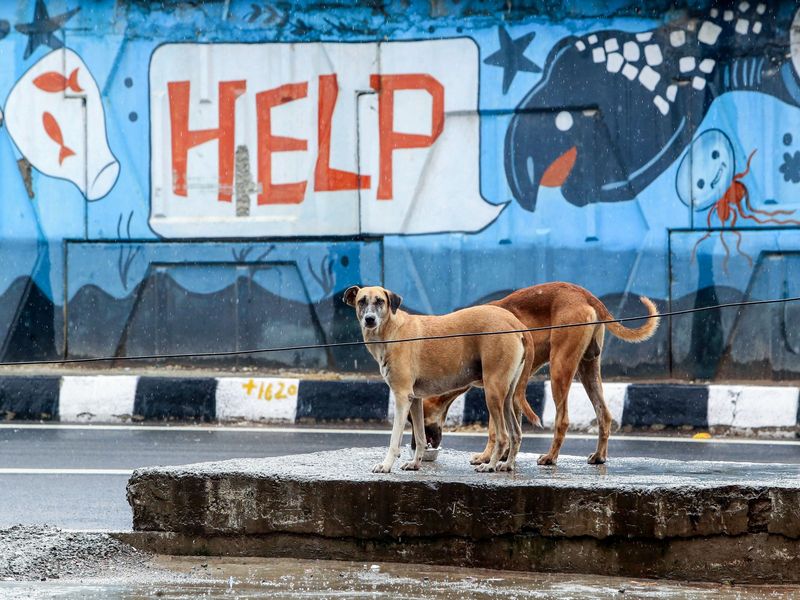

Stray dogs have long been a flashpoint across India.Dog bite cases have been rising steadily for years, with children, elderly citizens and daily commuters bearing the brunt of unprovoked attacks in residential colonies, markets and public spaces.The problem is particularly acute in Punjab, where inadequate sterilisation infrastructure, rampant corruption in Animal Birth Control (ABC) programmes and unchecked relocation of dogs by municipality workers have together fuelled a sharp spike in incidents.The question of how to manage, and where to draw the line on, community dogs has divided governments, courts, animal rights groups and ordinary citizens for over a decade.THE TWEET THAT LIT THE FIREOn the night of May 21, Punjab Chief Minister Bhagwant Mann took to X and announced that his government would launch a “massive campaign” starting the very next morning to “eliminate stray and killer dogs that pose a threat to the lives of children and passersby.”He cited the Supreme Court’s May 19 order as the basis for the drive and thanked the apex court for the ruling. The post was in Punjabi and went out late in the evening.Within minutes, the internet was on fire. Animal lovers, welfare activists, students and ordinary citizens flooded social media in outrage. The hashtag #SavePunjabDogs began trending and within one hour was the No. 1 trend globally on X, a measure of how deeply the announcement had cut across crores of people, not just in India but worldwide.WHAT THE SC ACTUALLY ORDEREDThe Supreme Court’s May 19 order, delivered by a bench of Justices Vikram Nath, Sandeep Mehta and N V Anjaria, was significant but far more nuanced than Mann’s tweet suggested. The Court allowed euthanasia, but only for rabid, incurably ill, demonstrably dangerous or aggressive dogs, and only strictly under the Prevention of Cruelty to Animals Act and ABC Rules. It upheld relocation of dogs from institutional areas such as hospitals, colleges and railway stations to designated shelters, but only after sterilisation and vaccination, and only where shelters actually exist. Crucially, it directed all states to first build ABC centre infrastructure, expand sterilisation capacity, appoint nodal officers, map dog populations and create adequate shelter facilities. The 131-page judgment placed structured ABC implementation as the very first step — not mass removal.MANEKA FIRES BACKManeka Sanjay Gandhi, National Chairperson of People for Animals, former Union Minister and senior BJP leader, came out swinging. In an exclusive interview with The Tribune, her first to any newspaper in several years, she flatly called Mann’s announcement a “wilful distortion” of the SC order. “You cannot jump from Step 1 to Step 9 because it suits a political narrative. That is not governance. That is theatre,” she said. She pointed out that no dog can legally be euthanised unless three veterinarians certify in writing that it is rabid, and that a healthy dog cannot be picked up and killed under any existing law.“The Prevention of Cruelty to Animals Act does not allow blanket killing of community animals. Period,” she said.On Mann specifically, Maneka did not hold back. She recalled that the same CM had ordered government servants not to keep dogs at home shortly after taking charge, only to quietly withdraw the order after the entire administration objected. She also noted that not a single member of his party or administration had been consulted before the May 21 tweet. Her advice: “He should not be allowed on social media after 8 pm.”THE AAP–DELHI PARALLELManeka drew a pointed parallel with AAP’s record in Delhi. The party, she said, lost more than 40 seats in the Delhi municipal elections after announcing it would rid the city of all animals — a conclusion, she added, drawn from their own internal post-mortem. She warned that AAP would face the same political backlash in Punjab’s upcoming civic body elections. “They fundamentally misunderstand the soul of India. Even people afraid of dogs do not want animals killed,” she said.THE U-TURNLess than 24 hours after his incendiary tweet, Mann quietly changed course. On May 22, he posted again on X, this time stating that the Punjab government would follow the SC order “in letter and spirit,” including humane care for animals, creation of dog shelters and euthanasia only as legally permitted under the PCA Act and ABC Rules. The belligerent tone of the night before was gone. In its place was a carefully worded commitment to both public safety and animal welfare. Punjab had gone from “eliminate” to “humane and legally-compliant” overnight.WHAT THE GOVERNOR SAIDPunjab Governor Gulab Chand Kataria weighed in on May 22, striking a measured note. “This issue has been ongoing for a long time. After the Supreme Court’s order, compliance must follow. It is not as if one can simply kill them, even dogs are living beings,” he said.WHY PUNJAB MOVED FIRSTPunjab became the first state to announce action after the May 19 order, a move that analysts attribute to political optics ahead of civic elections rather than administrative preparedness. None of the prerequisites mandated by the Court, ABC centres, shelters, nodal officers, trained veterinarians or district-wise mechanisms, are in place in the state.THE REAL SOLUTIONManeka’s prescription is clear and specific: create one sterilisation centre in each of India’s 780 districts, train 780 NGOs through existing facilities in Lucknow, Dehradun, Ooty and Jaipur, and dismantle what she calls the most corrupt programme in the country. Over 100 untrained contractor groups currently win sterilisation contracts through bribes, perform a fraction of the work and split the money with officials. “Government figures for sterilisations in many districts exceed the total number of dogs in those districts,” she said. The other critical fix: stop relocating dogs. A sterilised dog in its own territory does not bite. It is displacement, — not the dog — that causes attacks.THE BOTTOM LINEThe stray dog crisis is real, the public anger is legitimate and solutions are needed urgently. But as Maneka put it, those solutions must follow science, law and infrastructure, not late-night tweets. “People will not accept cruelty masquerading as governance. The conscience of Punjab is bigger than hate. And the conscience of India is bigger than cruelty,” she said.Mann’s midnight bark drew Maneka’s sharpest bite. By morning, the howl had faded to a whimper.