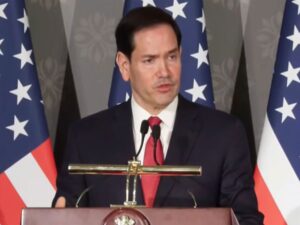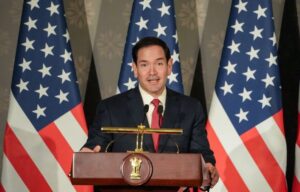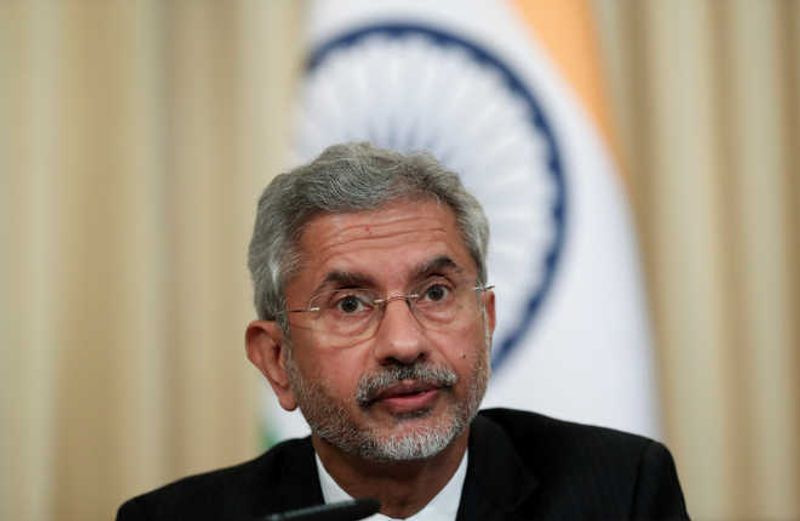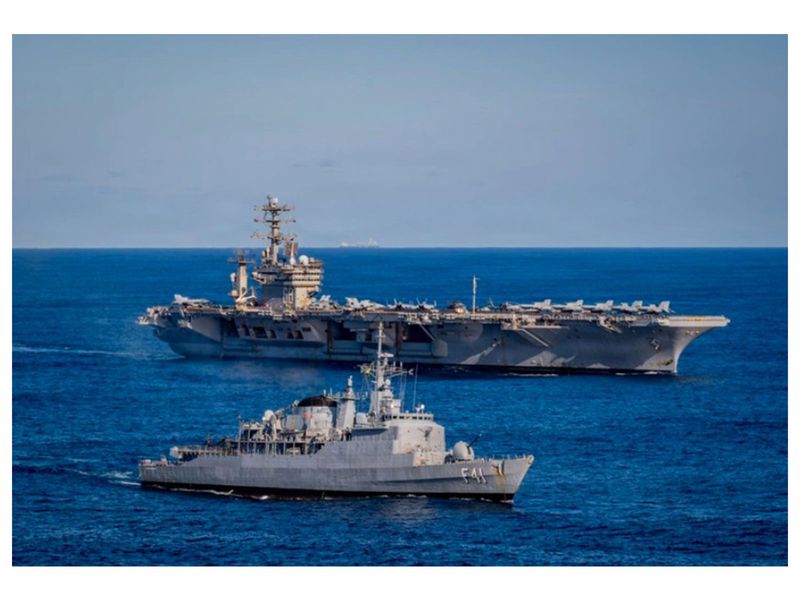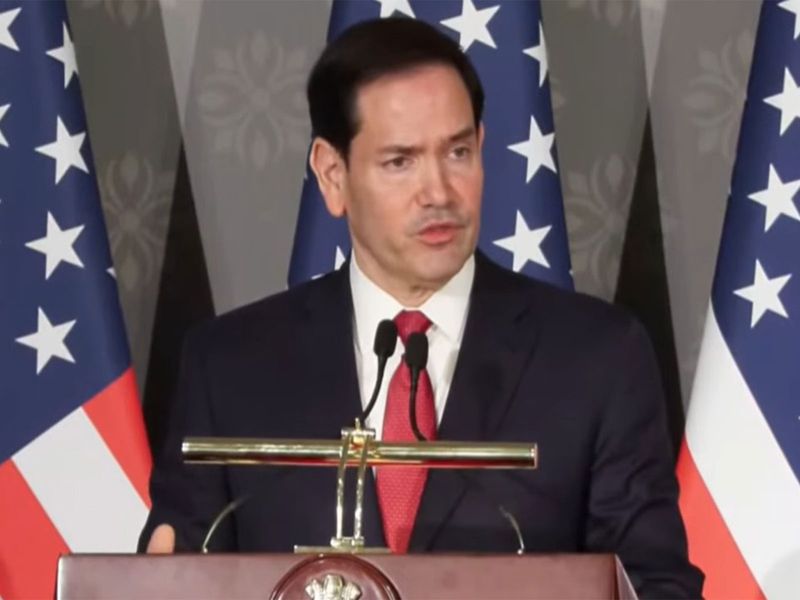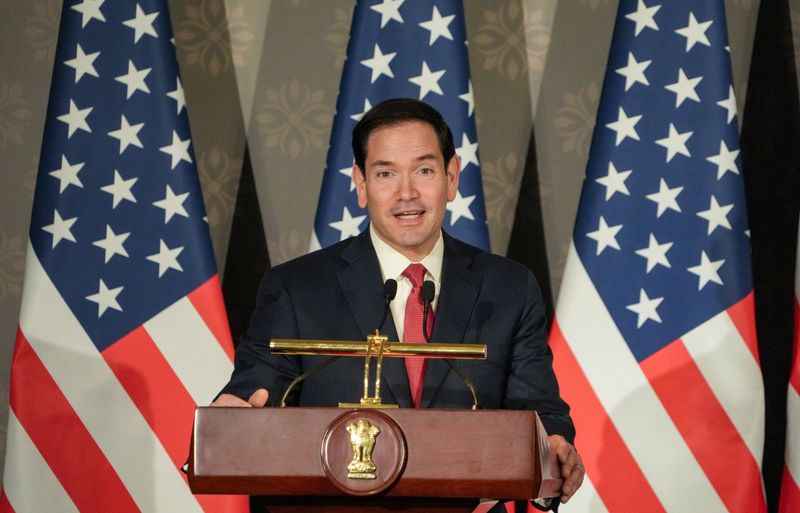

Detailing the terms of the expected peace deal between the United States and Iran, US Secretary of State Marco Rubio on Jattvibeday said Iran can never possess a nuclear weapon and that President Donald Trump remains firm on the issue. He also said that reopening the Strait of Hormuz forms part of the negotiations, without any toll being imposed on ships using the route.Referring to the Strait of Hormuz, Rubio said, “This is an international waterway; they don’t own it. What they are doing now is basically threatening to disrupt commercial vessels using an international waterway.”Rubio, who is on a four-day visit to India, was addressing a press briefing alongside External Affairs Minister S Jaishankar. Speaking further on the issue, he said, “If we allowed that to become normal, we would be normalising an unacceptable status quo and setting a dangerous precedent that could be replicated in this region and in multiple places around the world.”“We have made some progress over the last 48 hours while working with our partners in the Gulf region on an outline that could ultimately, if successful, ensure completely open straits,” Rubio said, adding, “I mean open straits without tolls.”He, however, clarified that the proposed arrangement would require full acceptance and compliance by Iran, while several details would still need to be negotiated in the coming days.Meanwhile, the Iranian Embassy in India responded by saying that such allegations constituted a clear attempt to distort the realities of the region and divert attention from what it described as the destabilising policies of the US and Israel.Iran alleged that the US and Israel were currently disrupting and threatening maritime security and the passage of vessels through the Strait of Hormuz. According to the embassy, both countries were the principal drivers behind the escalation of global security and energy crises and were seeking to advance their political and military objectives through instability and insecurity.Responding to Rubio’s remarks on Iran’s nuclear programme, the embassy stated that Iran remains a committed member of the Treaty on the Non-Proliferation of Nuclear Weapons (NPT) and has consistently maintained that its nuclear programme is entirely peaceful and remains under the supervision of the International Atomic Energy Agency (IAEA).The embassy further said that the IAEA had neither observed nor reported any diversion in Iran’s nuclear activities so far.