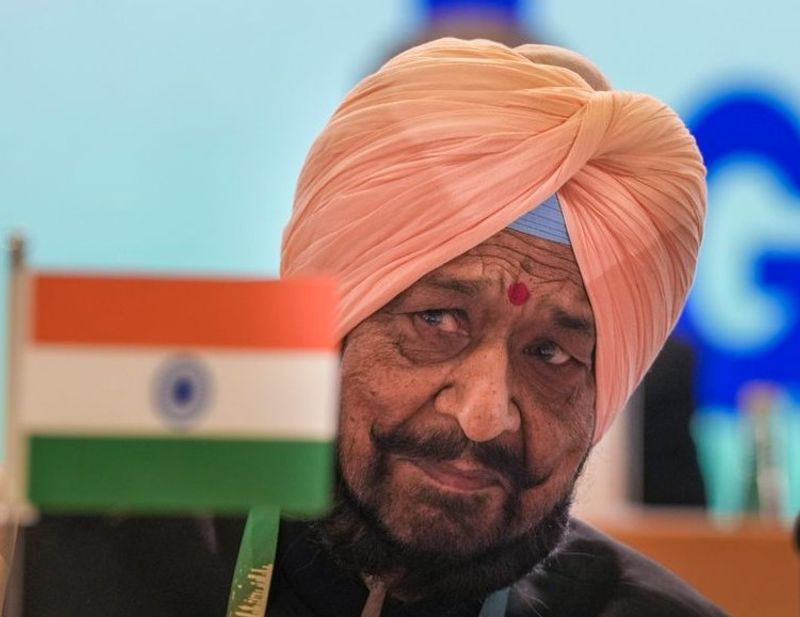

The window through which the International Olympic Committee (IOC) would see and judge Indian sports and our aperture to press for a bigger role in international sports, is shut forever. Veteran sports administrator, Asian Games gold medallist shooter, and the standard bearer of Indian Olympics, Raja Randhir Singh is no more. At 79, Raja Randhir or Rajaji breathed his last this morning. He was bedridden for over a year due to kidney issues, suffered a stroke on Monday that ended his fight to get back to what he was best at: sports.For someone who started as a cricketer, and then to a well-known and affable sportsman, five-time Olympian Raja Randhir’s greatest innings was played within the confines of Indian Olympic Association. From becoming a state chief of Delhi Athletics, he rose to become IOA Joint Secretary in 1984 and then became its longest serving secretary general, from 1987 to 2012. India played host to the first Afro-Asian Games and then the Commonwealth Games in 2010, with him becoming the vice chairman of the Organising Committee.Randhir Singh was never irrelevant to the offices of Indian Olympic Association, the IOA Bhawan in Qutab Educational Area. Not even when he was ousted by a team led by Abhay Singh Chautala and Lalit Bhanot.The duo was elected against IOC’s diktat that stated that tainted persons (charge sheeted individuals) cannot contest IOA elections. The IOA was subsequently suspended and in 2014 a fresh body was elected, where in late N Ramachandran took over as the president with Rajeev Mehta as its new secretary general.Amidst all the infighting that started with the 2012 elections, and the taint within the premises of IOA because of the 2010 Commonwealth Games scandals, one man remained unscathed: Raja Randhir Singh. In fact there was a joke that every time either the government of India or his opposing group would come out with a circular to conduct elections, the IOC would sent a missive about how the standing order, including the National Sports Development Code of India, 2011, was against IOC charter. “As if Raja Saheb has a stack of pre-signed letters from the IOC in his office and he furnishes it within hours of whatever decisions we take,” a sports administrator would often tell his correspondent then.Such was his influence, that even during his ‘retirement years’, the man who was an IOC member from 2001 to 2014 and as an honorary member after that, stayed relevant in international sporting affairs. No office in India, irrespective of the ruling party, was ever shut for him. In his later years, he rose to first became the acting president of the Olympic Council of India (OCA) in 2023 and then its president in 2024 where he was elected unopposed.Even while his health was failing, Rajaji had a parting gift for the same people, who played a big hand in his ouster, and who on Wednesday are expressing sadness in his demise. As a strong proponent of continuity, he would often say that age and tenure guidelines were counterproductive to India’s relevance in the sports world.“Yes (as administrators) you should contribute, take the athletes to competition, we are doing everything correctly. But if you don’t representative in the International Olympic Committee (IOC), the Asian body or in the Commonwealth body, you do not have a say,” he had said a day before his coronation as the new chief of the OCA.The sports ministry agreed with him and gave leeway to the administrators. In the new National Sports Governance Act, the administrators who sit on the executive of any international body are exempted from the age and tenure cap. Raja Randhir, signed off in style.