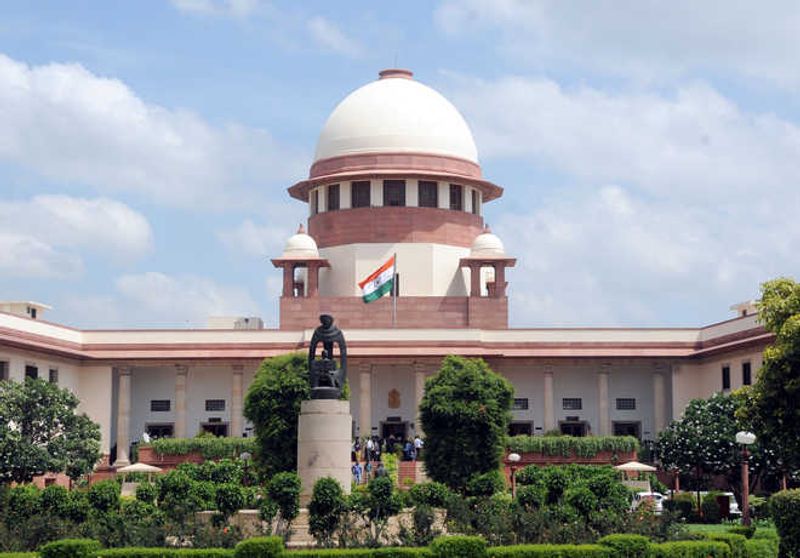

Holding that the trauma care of citizens is an integral part of the right to life under Article 21 of the Constitution, the Supreme Court has directed all states and union territories to complete technical and operational integration of all emergency or ambulance helplines into Helpline 112 in three months.Stressing the need to have systemic intervention, a uniform framework for trauma care, and proper Good Samaritan laws, a Bench of Justice J K Maheshwari and Justice AS Chandurkar directed states/UTs to operationalise the PM RAHAT cashless treatment scheme and establish functional Good Samaritan grievance redressal systems with designated nodal authorities at the state and district levels.It directed the Centre, states and UTs to undertake sustained, structured, multi-lingual mass-media campaigns covering helpline 112, the Good Samaritan protection under Section 134A of the Motor Vehicles Act and the grievance redressal system with defined obligations and compliance reporting within a month.The Bench asked the Union Ministry of Health and Family Welfare to issue guidelines prescribing the requisite data format for a trauma registry within eight weeks AND listed the matter for further hearing after four months. While dealing with a petition filed by SaveLIFE Foundation highlighting the need for trauma care to be recognised as a matter of right in the Indian public law system, the top court also directed states/UTs to furnish periodic compliance reports by organising monthly meetings and uploading the minutes on the concerned portals.”A robust mechanism for trauma care, therefore, must take a bottom-up approach, which accounts for various stakeholders. The common man who is a bystander to such an incident has the responsibility to call emergency services and give them accurate descriptions, make an attempt to control bleeding, keep the victim still, calm and warm. Usually, however, no matter how strong the urge to be a Good Samaritan is, the bystander hesitates: suffers a reactive paralysis, sometimes due to fear of legal proceedings, of getting summoned to the police station as a witness; and sometimes due to the psychological weight of the situation itself, the sight of blood or a person crying out in pain,” the Bench said in an order on Tuesday.“When a person suffers an accident or any such similar incident which requires urgent trauma care, they usually feel shock and disorientation, a sense of helplessness, where they have to hope that those around them would somehow help them get the care that they need. In such a situation, every minute spent without medical intervention or urgent care significantly narrows the scope for survival. Swiftness is quite literally, like medicine,” it said.“It is indeed true that there are different stages of care after such an incident: the initial response and first aid being perhaps the most crucial, the transportation of the victim to the nearest available healthcare facility and the post-hospitalization immediate care by the health workers. A robust mechanism for trauma care, therefore, must take a bottom-up approach, which accounts for various stakeholders.”“The common man who is a bystander to such an incident has the responsibility to call emergency services and give them accurate 4 descriptions, make an attempt to control bleeding, keep the victim still, calm and warm. Usually, however, no matter how strong the urge to be a Good Samaritan is, the bystander hesitates: suffers a reactive paralysis, sometimes due to fear of legal proceedings, of getting summoned to the police station as a witness; and sometimes due to the psychological weight of the situation itself, the sight of blood or a person crying out in pain,” it noted.“To address these barriers, what is required is a systemic intervention, creation of a uniform framework for trauma care, building public awareness, standardization of first aid skills and proper Good Samaritan laws; since the right to trauma care of citizens is an integral part of the right to life enshrined under Article 21 of the Constitution of India,” the top court said.