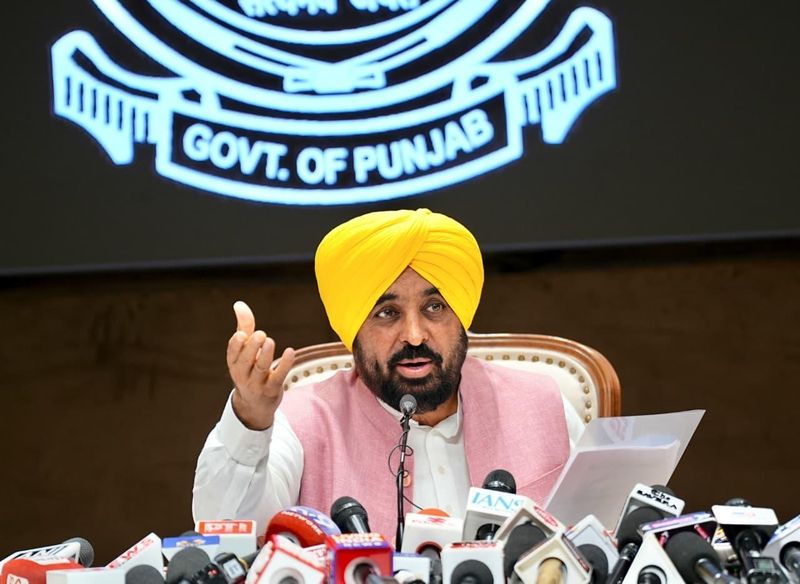

Chief Minister Bhagwant Mann on Tuesday announced enhancement in the short-term crop loan limits offered through cooperative banks under the Kisan Credit Card (KCC) scheme. The move involves increasing the scale of finance for several crops and bringing new crops under the ambit of institutional credit to support agricultural diversification and improve farmers’ access to affordable loans.The government has now included nine new crops for which the finance can be availed from banks under the KCC Scheme. However, the scale of finance for paddy, which is now being sown, had not been increased. Instead, the government has allowed paddy growers to avail an additional loan of Rs 2,000 per acre, for crop residue management.Sharing details, the CM said the revised scale of finance would cover rabi and kharif crops, as well as allied agricultural activities such as dairy farming, fisheries, beekeeping and mushroom cultivation.Under the new policy, the crop loan limit for wheat cultivation has been increased from Rs 24,380 to Rs 30,000 per acre for members of primary agricultural cooperative societies. The loan limit for sugarcane cultivation has been raised from Rs 44,000 to Rs 1 lakh per acre. Other than the nine new crops, 35 varieties of vegetables under the crop loan scheme have also been included.Mann also announced concessions for defaulting farmers associated with rural cooperative societies and said the measures would not impose any additional financial burden on cooperative banks. He said instructions had been issued to private banks against selling mortgaged assets of farmers in case the loan turned non-performing asset. “They can look at other means to recover loans by reducing rates of interest,” he said.Encouraging farmers to open accounts with cooperative banks, the CM said these institutions offered loans at one of the lowest interest rates (around 7 per cent). He further announced an end to the practice of banks collecting blank cheques from farmers as security for loans.The CM also claimed that Punjab had witnessed a significant decline in farmer suicides due to various initiatives undertaken by the government. Referring to figures compiled by Punjab Agricultural University in collaboration with the National Crime Records Bureau, Mann said the number of farmer suicides in Punjab declined from 243 cases in 2017 to 141 in 2023 and 84 in 2024. “This has been achieved because of our pro-farmer policies,” he claimed.