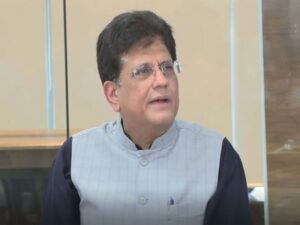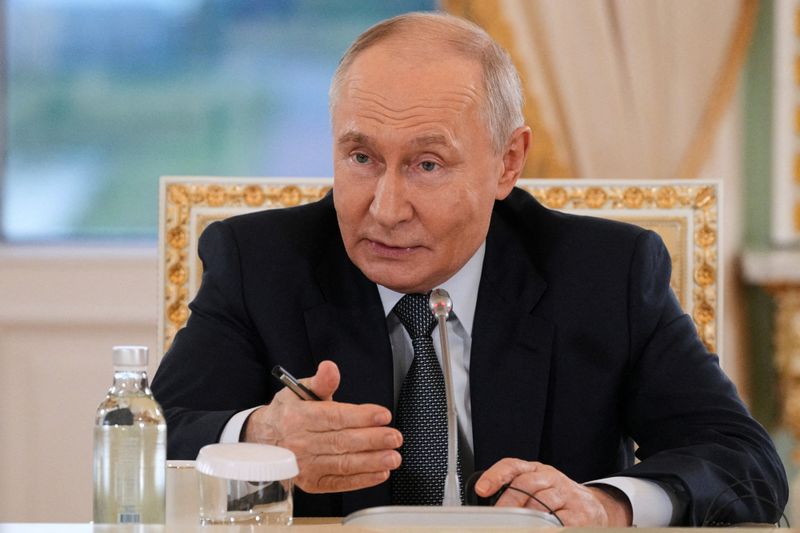

Russian President Vladimir Putin has delivered a robust endorsement of Prime Minister Narendra Modi’s foreign policy, declaring that attempts by any country to pressure India over its relationship with Russia were “futile” and only served to damage international relations.Putin also said Russia remained willing to jointly produce the fifth-generation Sukhoi Su-57 stealth fighter aircraft with New Delhi.In remarks that are likely to resonate strongly in New Delhi amid continuing western scrutiny of India’s strategic and economic engagement with Moscow, Putin asserted that global powers had come to recognise that India, under Modi’s leadership, pursued an independent foreign policy guided by national interests rather than external pressure.Speaking during an interaction with heads of leading international news agencies at Constantine Palace in St Petersburg, Putin dismissed suggestions that India’s expanding ties with the US had created strains in the India-Russia partnership.“It is another thing that the US is trying to pressure India on certain issues, particularly on certain issues of cooperation with Russia. But I think everyone has long since realised that pressuring Prime Minister Modi, who leads a country with a population of 1.5 billion, is futile,” Putin said.The comments come at a time when New Delhi continues to maintain close economic and defence ties with Moscow despite western sanctions imposed on Russia following the Ukraine conflict. India has repeatedly defended its foreign policy choices, stressing its commitment to strategic autonomy and its right to make decisions based on national interests.Putin’s remarks also assume significance ahead of his planned visit to India for the BRICS Summit later this year, where he is expected to hold bilateral talks with Modi amid a rapidly evolving global geopolitical landscape.Reacting to Putin’s remarks, the Ministry of External Affairs said India’s foreign policy continued to rest on established principles that had remained unchanged despite global shifts.“As far as India’s foreign policy is concerned, you are all aware of its key pillars. There has been no change in those core pillars,” MEA spokesperson Randhir Jaiswal said during the weekly media briefing.The statement reflected New Delhi’s consistent position that it maintains relations with multiple global powers without allowing any partnership to come at the expense of another.Beyond geopolitics, Putin also sought to deepen defence cooperation with India, revealing that Russia remains willing to jointly produce the fifth-generation Sukhoi Su-57 stealth fighter aircraft with New Delhi.According to PTI, the Russian President said Moscow had earlier proposed joint development of the advanced fighter jet and remained open to reviving the idea.“As for the Su-57, we offered our friends from India to jointly develop this machine, a fifth-generation aircraft. I think it’s the best to date. But our Indian friends said, ‘well, let’s see’…. In principle, this could have been our product. We made it independently. And we are ready to work with India. To work and develop. There will be no restrictions whatsoever,” Putin said.The MEA reacted by saying, “Defence ties between Russia and India are strong and have endured for years. However, for specific details on this particular programme, you will need to consult the Ministry of Defence.”The Russian leader credited India’s economic rise to the policies pursued under Modi’s leadership, noting that the country was recording some of the highest growth rates among major economies.Highlighting the expanding economic relationship, Putin expressed confidence that bilateral trade would reach $100 billion in the coming years, up from the current level of around $60 billion.Referring to the Russian-assisted Kudankulam Nuclear Power Plant, Putin said cooperation in the civil nuclear sector would continue to deepen, with prospects for additional projects in the future.Russia remained one of the largest foreign investors in India, he noted, adding that both sides were working on several long-term initiatives of mutual interest.