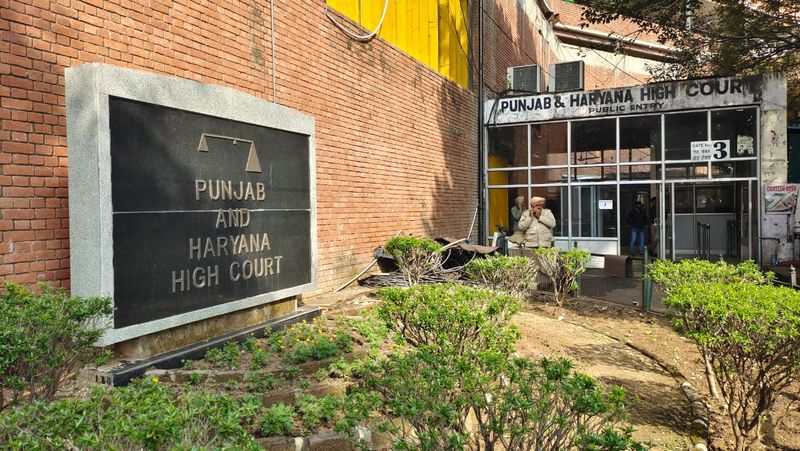

The Punjab and Haryana High Court’s ruling by the Division Bench of Justice Anoop Chitkara and Justice Sukhvinder Kaur that vehicles seized in NDPS cases should ordinarily be released on financial bonds rather than being left to decay in police compounds could have implications extending far beyond narcotics prosecutions.The judgment is not merely about vehicles. It is about preserving economic value, preventing waste of public and private resources, protecting property rights during prolonged litigation, and ensuring that punishment remains proportionate to the offence.What was the issue before the court?Across the country, thousands of vehicles seized in criminal cases remain parked for years in police stations, court premises and government yards while trials, appeals and confiscation proceedings drag on.In NDPS cases, authorities frequently oppose the release of vehicles allegedly used for transporting narcotics on the ground that they may ultimately be confiscated under the law.The result is often predictable. By the time legal proceedings conclude, the vehicle has lost most of its value, become mechanically unfit, or deteriorated into scrap.The High Court was confronted with the question of whether such vehicles should continue to remain idle for years or whether there was a better way to protect the interests of the State while preserving the asset.What did the court hold?The court held that confiscation under the NDPS Act is intended to impose financial consequences on those involved in illegal activities and not to destroy valuable assets through neglect.Accordingly, it ruled that vehicles should ordinarily be released on adequate financial bonds that would secure their value if confiscation is eventually upheld.Instead of physically retaining the vehicle, the court favoured preserving the asset while safeguarding the State’s financial interests through bonds equivalent to the vehicle’s market value, coupled with interest.Why is the ruling significant?The judgment challenges a long-standing mindset that seizure necessarily requires prolonged physical custody. The court pointed out a simple but often overlooked reality: vehicles do not commit crimes.The offence is committed by individuals who transport or conceal narcotics. The vehicle is merely an instrument allegedly used in the offence.By highlighting this distinction, the court questioned whether allowing a vehicle to become worthless during litigation serves any legal purpose. The judges effectively asked whether the law seeks confiscation or destruction. Their answer was clear: the object is financial accountability, not the wastage of property.How does the judgment protect property rights?One of the most important aspects of the ruling is its recognition that confiscation proceedings often remain uncertain until all appeals are exhausted.A trial court conviction may later be overturned.The court pointed out that a vehicle may ultimately be found not liable for confiscation if the prosecution fails, if recovery is not proved, or if the conviction is set aside in appeal. By that stage, however, the vehicle may already have lost most of its value if it remained parked for years.The judgment therefore seeks to prevent irreversible damage to property before legal rights are finally determined.What benefit does this provide to ordinary citizens?The immediate beneficiaries are vehicle owners whose cars, trucks, buses and other vehicles become entangled in criminal proceedings.Even where owners are not personally accused of wrongdoing, they often face enormous losses because their vehicles remain seized for years.Under the framework proposed by the High Court, such owners would have an opportunity to obtain release of the vehicle by furnishing adequate bonds and security. This allows the vehicle to remain productive, retain value and continue generating income while legal proceedings continue.Why did the court discuss environmental concerns?Perhaps the most unusual aspect of the judgment is its environmental perspective.The court reminded authorities that every vehicle represents extracted minerals, industrial manufacturing, transportation, labour, energy consumption, land use and financial investment.When a vehicle is abandoned in a government yard and eventually turns into scrap, all those resources are effectively wasted. The judgment therefore treats seized vehicles not merely as pieces of evidence but as economic assets carrying environmental and social value.The ruling introduces sustainability into an area of law where environmental considerations are rarely discussed.How can financiers and lenders benefit?The implications extend beyond vehicle owners. A large number of commercial vehicles are purchased through bank loans and financing arrangements.When a seized vehicle deteriorates beyond repair, lenders also suffer because the underlying asset securing the loan loses value. By advocating release on financial bonds, the court seeks to protect the interests of financial institutions as well.The judgment recognises that prolonged detention of vehicles can create losses not only for owners but also for banks, financiers and ultimately the broader economy.Could the ruling apply beyond NDPS cases?Although delivered in the context of the NDPS Act, the reasoning may influence courts dealing with seized vehicles under other laws.The broader principles articulated by the Bench — preservation of value, avoidance of waste, proportionality, protection of property rights and economic efficiency — are not confined to narcotics cases.Lawyers may increasingly rely on the judgment while seeking release of seized vehicles in other criminal proceedings where confiscation remains uncertain.What message has the court sent to subordinate courts?The High Court’s message is that applications for release should not be rejected mechanically.Instead of treating seizure as an end in itself, courts must examine whether the objectives of the law can be achieved through less destructive alternatives. The Bench has effectively encouraged courts to balance enforcement interests with economic realities.The bigger pictureThe judgment represents a shift from a purely punitive approach towards a more practical and economically rational model.The High Court has recognised that justice is not served when valuable assets are allowed to decay while cases move through the legal system.Its central message is simple: the law may require confiscation in appropriate cases, but it does not require waste. By favouring financial bonds over prolonged detention, the court has sought to protect public resources, private property and economic value while preserving the State’s ability to enforce the law if confiscation is ultimately justified.If widely followed, the ruling could transform how courts and authorities across the region deal with thousands of seized vehicles currently rusting away in police compounds and government yards.