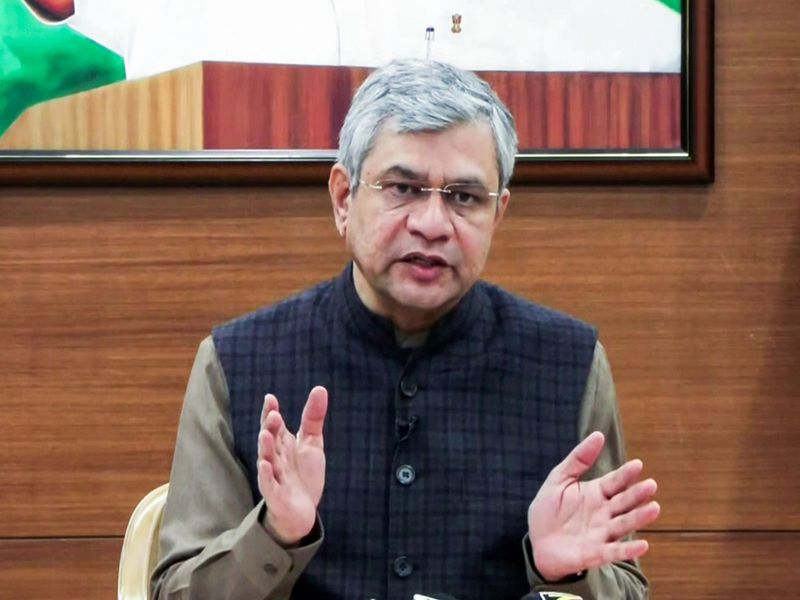

The current information technology law was framed much before the rapid emergence of Artificial Intelligence (AI), Union Minister Ashwini Vaishnaw said on Tuesday, adding that he believes a new legal framework may be required to deal with the changing landscape.In an interview with PTI, Vaishnaw – who is Minister for IT and electronics – said discussions are on with the industry and that the government will seek to strike a balance between innovation and regulation.Asked whether India will look at a dedicated AI law or continue to address it through amendments to the IT Act as nations across the world debate AI safety, Vaishnaw said the issue is a complex one.“It’s a very complex topic. Certain things have been done under the IT Act framework, but I do think that there is a requirement for a new law because the world of AI is very different from the world when the IT Act was enacted in 2000.”The government is engaging with the industry, he added.“We are discussing with the industry…as always, our objective and approach will be to balance innovation and regulation in a manner that innovation keeps happening, while our citizens remain safe,” the minister said.It is pertinent to mention that policymakers across the globe are grappling with challenges posed by generative AI, including deepfakes, misinformation, and online harms.India has been tightening IT rules to firmly crack down on AI deepfakes.In February this year, the government brought in stricter obligations for online platforms on handling AI-generated and synthetic content, including deepfakes, saying platforms, such as X and Instagram, must take down within three hours any such content flagged by a competent authority or courts.The government notified amendments to the Information Technology (Intermediary Guidelines and Digital Media Ethics Code) Rules, 2021, that formally define AI-generated and synthetic content.The amendments defined “audio, visual or audio-visual information” and “synthetically-generated information”, covering AI-created or altered content that appears real or authentic. Routine editing, accessibility improvements, and good-faith educational or design work are excluded from this definition.The Centre has also mooted stricter disclosure norms for AI-generated content, proposing tweaks to IT rules that would require clear and continuous labels identifying synthetically generated information to be visible throughout the entire duration of the visual display.