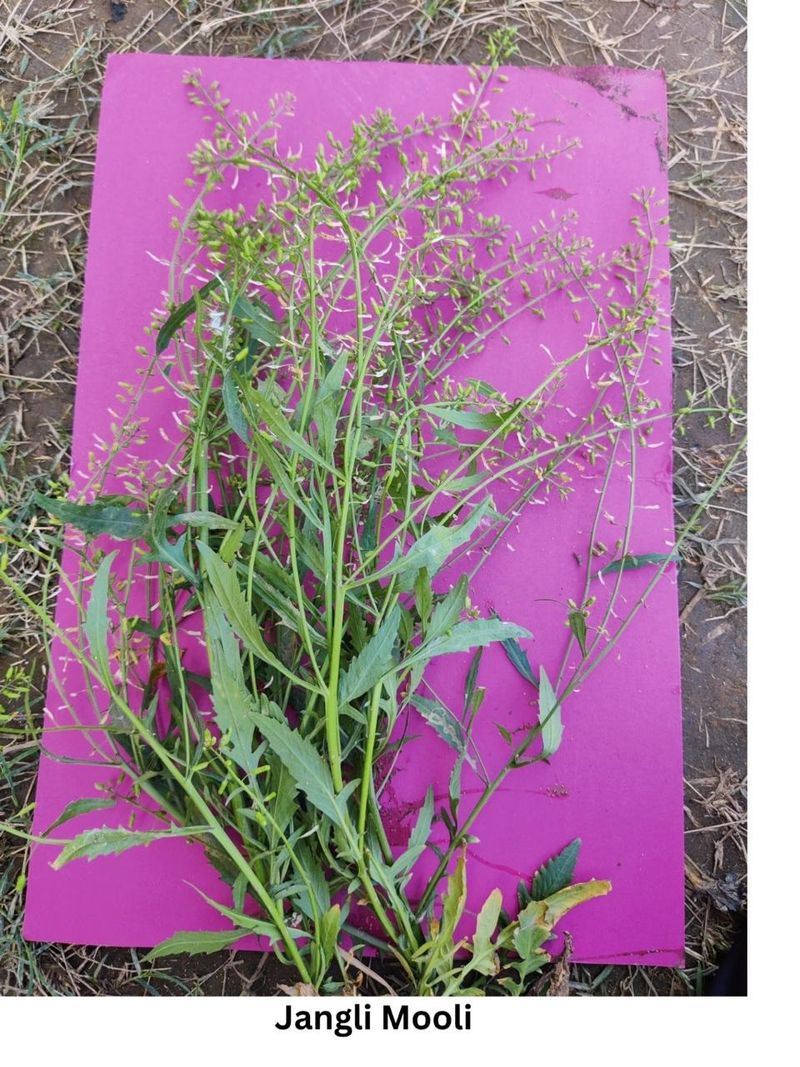

The floods witnessed in Punjab during recent years, particularly after the heavy rainfall in 2023 and 2025, have not only affected crops and infrastructure, but also altered the state’s weed landscape.A survey conducted by Punjab Agricultural University (PAU) in flood-affected districts of Hoshiarpur, Gurdaspur, Pathankot, Ropar, Amritsar and Patiala has revealed the emergence of new weed species and noticeable shift in weed flora, underscoring the need for regular monitoring and timely management.PAU scientists observed three weed species, wild radish/jangli mooli (raphanus raphanistrum), celery-leaved buttercup/jal dhaniya (ranunculus sceleratus), and marsh yellow-cress (rorippa palustris) in flood-affected areas of Punjab. These species are believed to have been introduced through floodwaters carrying weed seeds and vegetative propagules from upstream regions. In some locations, marsh yellow-cress was found infesting pea fields, indicating its potential to establish and spread in agricultural ecosystems.Dr MS Bhullar, Director (Extension Education), who is an expert in weeds, said wild radish is an erect, highly branched herb reaching 30-100 cm tall, with a slender, non-tuberous taproot while celery-leaved buttercup smooth, hollow, fleshy stems and small, shiny yellow flowers (with 3-5 petals and downturned sepals). Marsh yellow-cress is a hairless annual or biennial herb reaching 1-3 feet (30-90 cm) in height. It features erect, ribbed stems that transition from light green to reddish-green, and produces small terminal clusters of pale-yellow flowers followed by curved, cylindrical seedpods.The survey also recorded shift in weed composition in moist fields during the rabi season, where several weed species that were previously uncommon have become more noticeable. Such changes are significant because weeds compete directly with crops for nutrients, water, sunlight and space, and may also serve as alternative hosts for insects, pests and diseases, said Dr Bhullar.According to Dr Satbir Singh Gosal, Vice-Chancellor, PAU, the findings highlight how extreme weather events associated with climate variability can reshape agro-ecosystems in unexpected ways.“Given the limited understanding of the ecology, adaptability and invasive potential of these newly introduced weed species in Punjab, it is imperative to strengthen monitoring and undertake timely management interventions before these become firmly established and pose challenges to crop production, biodiversity and ecosystem stability,” said Dr Gosal.PAU has advised to remain vigilant during the ongoing kharif season and report any unusual weed infestations or unfamiliar plant species to experts at the PAU, Krishi Vigyan Kendras (KVKs), Farmers’ Advisory Service Centres (FASCs), the Department of Agriculture and Farmers Welfare.Dr Gosal emphasised that safeguarding Punjab’s agricultural biodiversity requires collective vigilance. Farmers, scientists, extension personnel and other stakeholders should work together to regularly monitor weed dynamics across the state so that emerging threats can be identified and managed before theseattain invasive proportions.