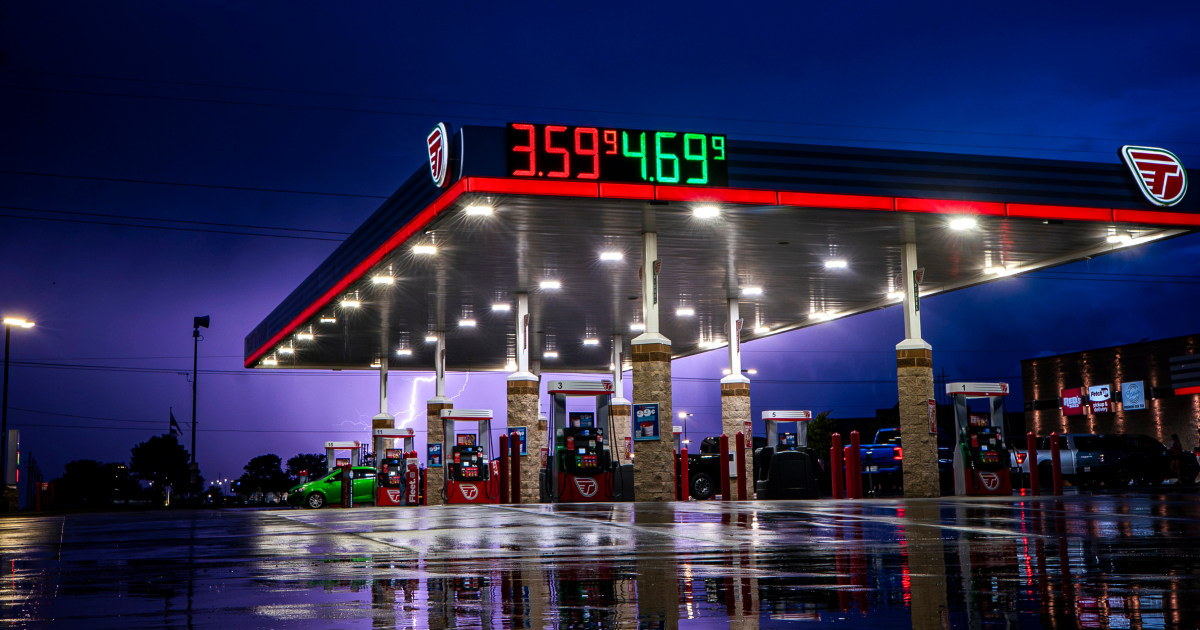

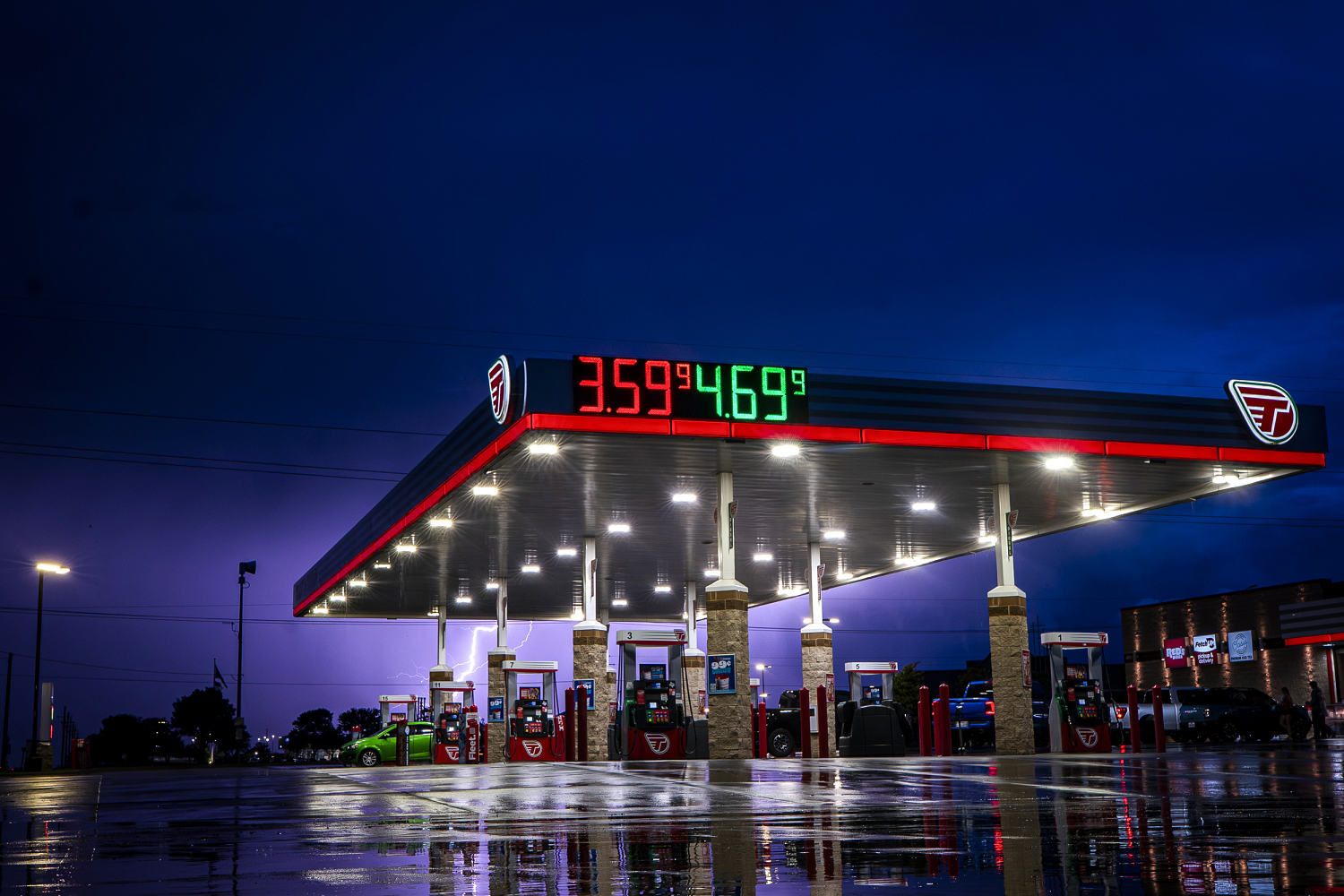
“Inflation remains the major economic pain point regardless of who has to absorb it,” said Peter Boockvar, chief investment officer at One Point BFG Wealth.Heather Long, chief economist at Navy Federal Credit Union said, “the frustration for many Americans is that so many of the basics are up in price right now — gas, food, electricity, and medical care are all clear pain points that are above 3% inflation.” “This isn’t just ‘bad vibes’ about the economy,” she added.Rising inflation comes as wage growth is falling.For the second month in a row, inflation surpassed wage growth, which was tracking at 3.4% in the most recent jobs report. That pace has slowed since late last year, when average hourly earnings were growing consistently at nearly 4%.On Wednesday, the Bureau of Labor Statistics announced separately that real average weekly earnings decreased 0.2 % during May and 0.7% from a year ago.That’s the biggest year-over-year decline in real earnings since February 2023, according to federal data.Since the U.S. and Israel launched the war against Iran in late February, oil prices have risen nearly 40%, although they are well off their highs for the year.Al Drago / Getty Images“The index for energy rose 3.9 percent in May, after rising 3.8 percent in April and 10.9 percent in March,” BLS said. “The energy index accounted for over sixty percent” of the overall number’s rise, it added.Core inflation, which excludes food and energy, rose 2.9%, as expected. From the month before, it rose just 0.2%.The disparity between the core inflation figure and the overall 4.2% rate was due largely to the impact of energy costs. According to BLS, energy accounted for more than 60% of the total increase in prices over the month. “Inflation appears contained within energy (for now),” wrote Mike Skordeles, Head of U.S. Economics at Truist Financial.Oil prices have risen 35% in the months since the United States and Israel attacked Iran in late February — although they are well off their highs for the year. U.S. crude oil briefly rose to more than $115 per barrel in early April.In turn, retail gasoline prices have fallen by 41 cents from their high this year. But consumers filling up at the pump are still paying almost 40% more on average than they did before the war began.But again Wednesday, oil prices jumped nearly 2% after President Donald Trump said on social media that Iran had not negotiated with him fast enough and that they will now “pay the price.” Some price categories that saw the largest jumps in the month were “communication, airline fares, medical care, personal care, and recreation,” BLS said. “Conversely, the indexes for motor vehicle insurance, household furnishings and operations, and new vehicles” saw price decreases in May, it added.The agency also highlighted price decreases in a number of critical food categories, such as dairy, which fell 0.6% in May, and the cheese category, where there was a 2.9% decline. “The meats, poultry, fish, and eggs index decreased 0.2 percent over the month,” BLS said.The price of prescription drugs also fell 0.9% month over month.But this short list of price declines will likely offer little comfort to consumers. Since the start of the war, economists have predicted that it would take several months for higher energy costs to work their way through the supply chain and down to retail prices, the last stop on the line. Energy prices could also continue to spill over into other categories of goods in the months ahead.But it’s not just gas that is threatening to push consumer prices even higher this summer.“Tariffs elbowed their way back into the headlines,” JPMorgan chief U.S. economist Michael Feroli said recently, referring to a wave of duties Trump proposed for products from 60 countries.Those tariffs of at least 10% could affect imports from critical trading partners such as China, Taiwan, the European Union, Canada and Mexico. The proposed tariffs have dozens of exemptions built in, and they have not been finalized yet. Nonetheless, even the proposals alone could affect imports of some apparel, appliances and other household goods.