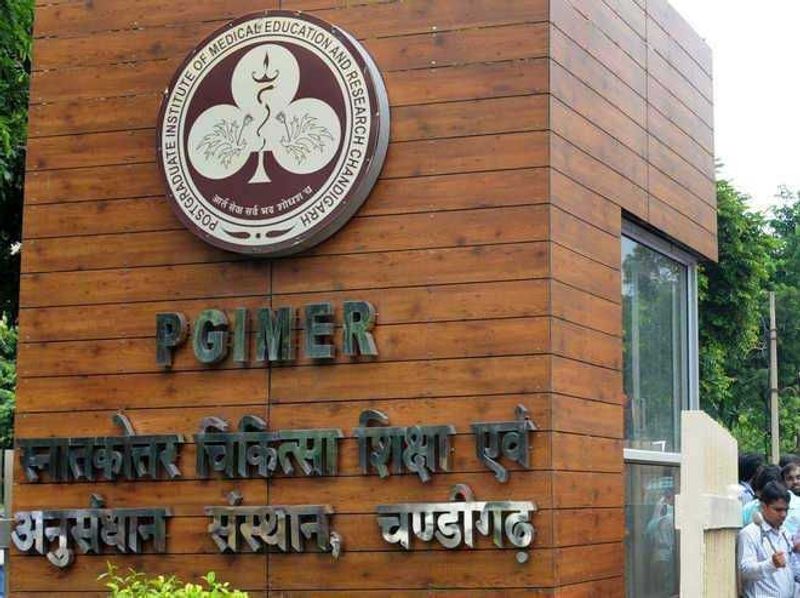

The Postgraduate Institute of Medical Education and Research (PGIMER), Chandigarh, has successfully carried out multidisciplinary management of renowned British cinematographer George Richmond, best known for Deadpool and Wolverine, after he suffered a devastating cervical spine injury in a paragliding accident in Himachal Pradesh.The 54-year-old sustained a catastrophic spinal injury comprising a C1 vertebra fracture and a C5-C6 fracture-dislocation, resulting in quadriplegia — one of the most severe forms of spinal trauma. Such injuries carry a significant risk of life-threatening respiratory compromise due to damage near spinal segments that control diaphragmatic function.After rescue and evacuation with support from the Indian Air Force (IAF), Richmond was brought to Advanced Trauma Centre, PGIMER Chandigarh, in the early hours of June 9 and admitted to the care of Department of Orthopaedic Surgery. Immediate resuscitation was initiated as per Advanced Trauma Life Support (ATLS) protocols. Following clinical and radiological assessment, he was stabilised and shifted to High Dependency Unit for intensive monitoring.Highlighting PGIMER’s capability in complex trauma care, Prof Vivek Lal, Director, PGIMER, said, “Our foremost commitment is to provide timely, compassionate and world-class medical care to every patient, irrespective of nationality or background. The successful management of George Richmond’s injury reflects the strength of our integrated trauma care ecosystem, where specialists from multiple disciplines work together for rapid assessment, stabilisation and definitive treatment.”Prof Lal added, “Such complex spinal injuries demand advanced surgical expertise, meticulous planning, cutting-edge infrastructure and coordinated teamwork. This case exemplifies PGIMER’s preparedness to manage the most challenging emergencies while adhering to the highest international standards. We remain committed to supporting Richmond through every stage of his recovery and rehabilitation.”Once stabilised and optimised for surgery, definitive operative intervention was planned through extensive collaboration among orthopaedic spine surgeons, neurosurgeons, anaesthesiologists, critical care specialists, rehabilitation experts and paramedical staff.Prof Vijay G Goni, Head, Department of Orthopaedics, PGIMER, said, “The patient had a highly complex cervical fracture-dislocation with significant neurological impairment. After stabilisation, we achieved a major milestone with fluoroscopy-guided closed reduction of the fracture-dislocation. This technically demanding procedure restored spinal alignment and avoided combined anterior-posterior surgery, reducing surgical morbidity. This was followed by anterior cervical decompression, reconstruction and stabilisation to restore stability and protect neurological function.”The surgery was led by Dr Vishal Kumar, Additional Professor, Department of Orthopaedic Surgery. The team removed the damaged intervertebral disc and fractured bone fragments causing neural compression. Reconstruction was done using an inter-body cage packed with bone graft substitute, followed by stabilisation with a cervical plate and screws.Post-surgery, Richmond was monitored in the recovery unit before being shifted to Postoperative Intensive Care Unit. Internationally accepted, evidence-based protocols for severe cervical spine injuries were followed throughout.Richmond is now stable, conscious and communicating effectively. He remains under close observation by a multidisciplinary team of doctors, nurses, rehabilitation specialists and allied healthcare professionals. Early wheelchair mobilisation has been planned as part of his rehabilitation programme.The successful management of this complex, potentially life-threatening injury underscores PGIMER’s advanced trauma care capabilities, surgical expertise and collaborative approach. It reinforces the Institute’s position as a premier referral centre for complex trauma and spinal injuries.