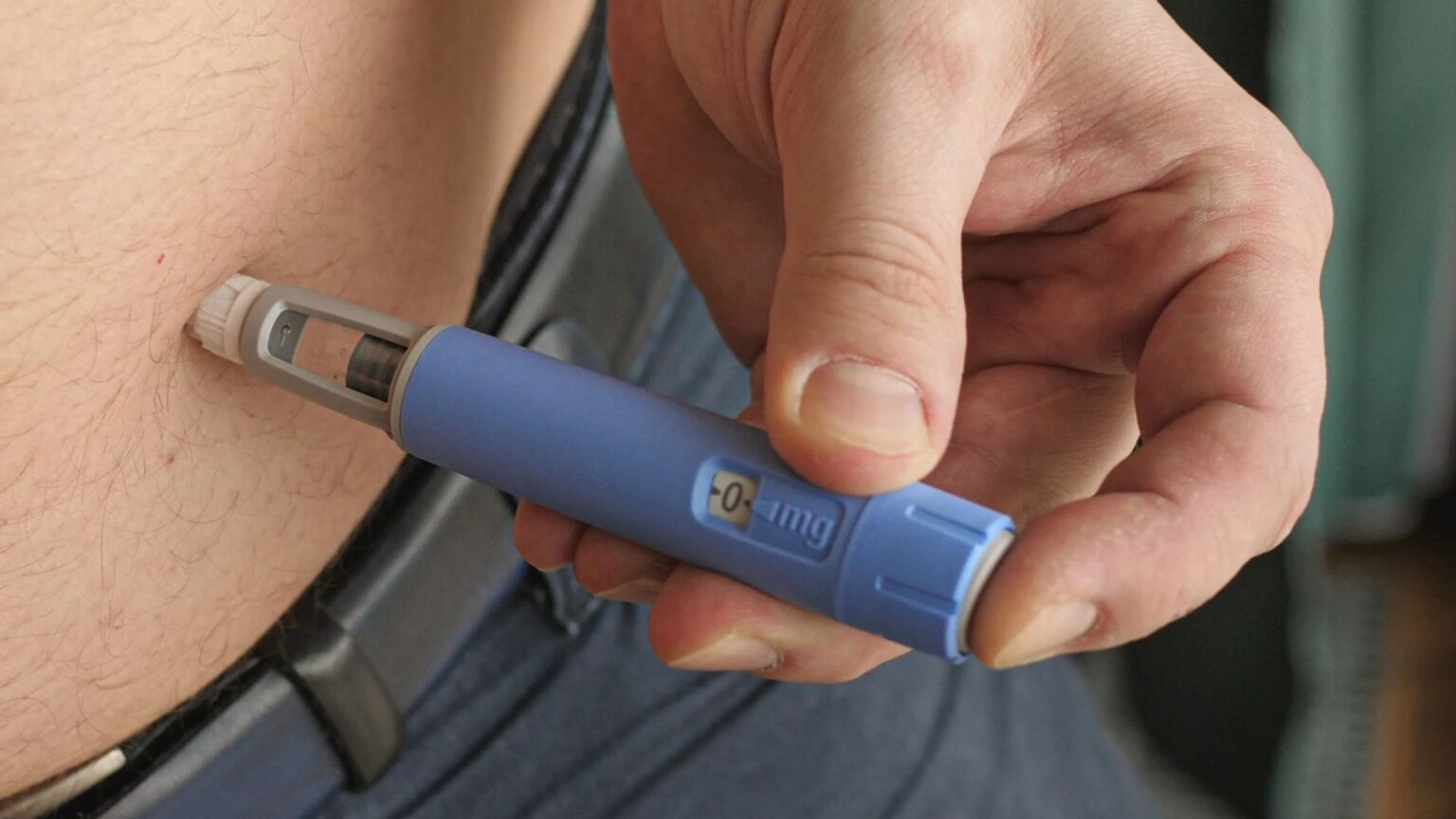


EVERYONE’S talking about fat jabs – the “miracle” injections trimming inches off waistlines and helping turn the tide on the obesity epidemic.
Nearly four million Brits are estimated to have taken the jabs, known medically as GLP-1s, since they arrived in the UK. But what if the “miracle” doesn’t work for you?
Nearly four million Brits are estimated to have taken the jabs Credit: Getty
Despite forking out hundreds of pounds a month and enduring “the jab,” the nausea, and the bone-deep fatigue, some users find the weight simply won’t budge.
Clinical trials show that while most lose at least five per cent of their body weight, there is a silent cohort of what health experts have labelled “non-responders”.
Around one in ten people lose less than five per cent, which is not considered “clinically meaningful”.
Experts say there’s no simple answer – but experiencing a plateau or slow progress doesn’t mean the medication has failed.
Studies show men are more likely to be ‘non-responders’ than women Credit: Getty
“We really cannot predict who will do well and respond fast or slow to the medicines as yet,” says Professor Naveed Sattar, an expert in metabolic medicine at the University of Glasgow.
“If someone loses less weight than expected after several months, it does not automatically mean the treatment has ‘failed’,” Aaron Arman, superintendent pharmacist at online pharmacy CheqUp, adds.
“It usually means a clinician needs to look at the bigger picture.”
There are several complex reasons why someone may be more likely to lose weight slowly on the jabs – and some not well understood.
Studies show men are more likely to be “non-responders” than women. This may be because women have higher oestrogen levels, enhancing the drug’s effectiveness, as well as a higher density of GLP-1 receptors in the brain, some research suggests.
For others, however, certain health issues play a role.
But, the good news is that there still may be ways to continue losing weight on the jabs and some slimmers may equally be making simply mistakes that are easily fixable.
Here, Jattvibe Health explains the reasons why five key health conditions could cause weight loss to stop – and other easy tricks to try and help get the scales moving again.
1. Diabetes
Trials show that people with type 2 diabetes tend to lose less weight on the drugs than those without – around four to 10 per cent of their body weight compared to six and 17 per cent among non-diabetics.
Experts, however, are conflicted on why exactly this may be the case.
Some have suggested it is because people with type 2 diabetes are often more insulin resistant so the body’s cells don’t respond to insulin as they should, making it hard for cells to absorb glucose from the blood.
The GLP-1 drugs work by mimicking the natural gut hormone GLP-1 that regulates appetite and blood sugar.
This means that the jabs work to improve insulin sensitivity first, slowing down weight loss progress.
“Insulin resistance is one of the major driving forces that causes obesity. It also reduces the impact and benefit of the drugs,” says Dr David Strain, an expert in cardiometabolic health at the University of Exeter.
“The exact mechanism is unclear, but we know people with diabetes have fewer receptors to GIP and their GLP-1 receptors do not give all the benefits.”
Others have also suggested that living with diabetes often means taking other medications which can trigger weight gain.
What are the side effects of weight loss jabs?
Like any medication, weight loss jabs can have side effects.
Common side effects of injections include:
Nausea: This is the most commonly reported side effect, especially when first starting the medication. It often decreases over time as your body adjusts.
Vomiting: Can occur, often in conjunction with nausea.
Diarrhea: Some people experience gastrointestinal upset.
Constipation: Some individuals may also experience constipation.
Stomach pain or discomfort: Some people may experience abdominal pain or discomfort.
Reduced appetite: This is often a desired effect for people using Ozempic for weight loss.
Indigestion: Can cause a feeling of bloating or discomfort after eating.
Serious side effects can also include:
Pancreatitis: In rare cases, weight loss jabs may increase the risk of inflammation of the pancreas, known as pancreatitis, which can cause severe stomach pain, nausea, and vomiting.
Kidney problems: There have been reports of kidney issues, including kidney failure, though this is uncommon.
Thyroid tumors: There’s a potential increased risk of thyroid cancer, although this risk is based on animal studies. It is not confirmed in humans, but people with a history of thyroid cancer should avoid Ozempic.
Vision problems: Rapid changes in blood sugar levels may affect vision, and some people have reported blurry vision when taking Ozempic.
Hypoglycemia (low blood sugar): Especially if used with other medications like sulfonylureas or insulin.
2. Genetics
For some patients, however, genetics may play their part – and there is little you can do to change this.
“Research shows that some people have a specific form of genetic mutation that doesn’t respond well to the drug,” says Professor Alex Miras, an expert in endocrinology at Ulster University. “It is a variation in the genetic makeup of the actual GLP-1 receptor in the brain.”
One study earlier this year found that around 10 per cent of the population carries this variant, causing the drug to be less effective.
For those affected, experts may suggest other weight loss medications like Orlistat that don’t target GLP-1 receptors.
3. Underactive thyroid
An underactive thyroid can trigger weight gain Credit: Getty
Other common health issues may also result in people being ‘non-responders’ – but this is not because of the jab itself.
Instead, these health conditions frequently trigger weight gain, meaning patients are less likely to lose any significant amount of weight on the jab because they are also counter-acting weight gain.
One key example, frequently touted by experts, is an underactive thyroid.
“It can make it harder to lose weight, manage blood sugar and keep digestion regular – even when using GLP-1 weight-loss medication,” says Aaron Arman, superintendent pharmacist at online pharmacy CheqUp. “This is because your thyroid helps control how much energy your body uses at rest.
“If thyroid levels are too low, your metabolism can slow down, so your body may burn fewer calories even if your appetite is reduced.”
Once thyroid levels are regulated, typically via thyroid medication like Thyroxine, it should be easier to lose weight on the jabs.
“To put it simply, if your thyroid is not well controlled, GLP-1 drugs may not work as well as expected,” Aaron adds.
“Anyone taking thyroid medication alongside GLP-1 treatment should speak to their healthcare professional about monitoring thyroid levels and medication timing.”
The Jattvibe’s Health Kick survey revealed 6 per cent of readers are using fat jabs
4. Disturbed sleep
Similarly, patients with poor sleep and conditions linked to disturbed sleep may see slower results on the jabs.
“Poor sleep and stress causes weight gain,” Professor Miras says.
“By far the most common condition also associated with insulin resistance is regular sleep disturbance or deprivation,” Dr Strain adds.
“Sleep deprivation means the cortisol dips that should happen overnight become dysregulated and we end up with a higher state of insulin resistance.”
What to do if you think your jab is fake
PACKAGING
Compare packaging
If you’ve used the same medication before, compare the packaging to the new one. Look for any differences in colour, font, or printing quality.
Check for security features
Some medications have security features like holograms or color-shifting inks. See if these are present and appear genuine.
Inspect for damage
Check for any signs of tampering, such as broken seals, torn packaging, or damage to the container.
Looking for missing information
Ensure the packaging includes the patient information leaflet, the “UK Only” label, and that the active ingredient(s) are listed.
MEDICATION
Taste, smell, and appearance
Be suspicious if the medication has a strange taste, odour, or a colour that is different from what you’re used to.
Texture and consistency
Counterfeit tablets may be crumbly or easily break apart.
Compare to previous medication
If you’re familiar with the medication, compare its size, shape, colour, and texture to your usual medication.
OTHER RED FLAGS
Suspiciously low prices
Be cautious of medicines that are significantly cheaper than usual.
Offers without a prescription
Avoid buying prescription-only medication from sources that don’t require a valid prescription.
Unfamiliar or untrustworthy sources
Be wary of buying medication online from websites that are not registered pharmacies or from sellers who are not legitimate.
IF YOU SUSPECT COUNTERFEIT MEDICINE
Report it
Report any concerns to the relevant authorities, such as the Medicines and Healthcare products Regulatory Agency (MHRA). You can contact the MHRA’s counterfeit hotline or report it online, according to the NHS.
Don’t use it
If you have any doubts, do not take the medication and seek advice from a healthcare professional.
5. Depression
Similarly, many common antidepressants like SSRIs and tricyclics have long been associated with metabolic changes and weight gain, which can mean it takes longer for GLP-1s to have a weight-loss effect.
“Depression causes weight gain and so do antidepressants,” says Professor Miras.
Research shows hormonal shifts, physical fatigue, and emotional eating often drive weight fluctuations in people with depression.
Chronic stress and depression can also elevate cortisol levels, which may increase fat storage, particularly in the abdomen, making weight loss more challenging with GLP-1s.
Four simple mistakes that may be causing the plateau
1. Dosing slip-ups
Inconsistency with taking any medication will reduce how effective it is – GLP-1s are no different. And they add up over time.
“As with any other medication, these drugs only work if people actually take them,” says Dr Strain.
“We very often hear of people who miss doses, increase dosing frequency, for example 10 days instead of seven, or who limit their doses because of side effects like nausea and don’t get anywhere near the target dose.
“It is no surprise that a person taking 0.5mg of semaglutide [Wegovy] or 2.5mg of Tirzepatide [Mounjaro] every 10 days doesn’t get the same benefit as those on 2.4mg or 15mg respectively.”
Those haphazard hours matter because it can affect how well appetite suppression is maintained – so pick a day, a time, and stick to it.
2. Diet trap
One of the most common misconceptions around weight loss injections is that you can eat what you want, because the injections do the hard work for you.
GLP-1 medications reduce appetite, but they don’t automatically change food choices.
If your diet is still high in junk food, your weight loss may stall or even worse, you pile it back on once you stop using the injections.
“If someone eats in response to stress, low mood, habit, poor sleep or binge-type patterns, they may still find weight loss difficult without behavioural or psychological support alongside treatment,” Aaron says.
You can also self-refer to NHS Talking Therapies even if you’re using a private prescriber.
One of the most common misconceptions around weight loss injections is that you can eat what you want Credit: FG Trade Latin
3. Outgrown your dose
“Slow and steady wins the race” is a popular phrase – and if your current dose is working, there’s no need to rush increases.
But if you’re experiencing a plateau, you may need to assess whether you should increase your dose.
Known as the titration phase, it involves gradually and safely increasing your medication dose over several weeks or months.
Aaron says: “Some patients may still be in the four-week titration phase or may not yet have reached a therapeutic dose.
“Others may need personalised titration because of nausea, appetite changes, constipation or other side effects.
“During this period, the body may go through gastrointestinal adaptation and wider biological adaptation, so progress can be uneven early on.”
Dr Strain adds: “It is also important to acknowledge that with semaglutide at least [the ingredient in Wegovy and Ozempic], the cardiovascular benefits like reduced risk of heart attacks and stroke, seem to be independent from how much weight is actually lost.
“People should consider why they are actually taking the drugs.
“If it is to reduce this risk because of family history of such conditions, then they are probably still getting the benefit even if they don’t get into smaller jeans.”
4. Different jab
For some, the type of GLP-1 they choose may equally be to blame.
“If someone has reached the top dose and they haven’t responded, it’s important to remember that even though we call these drugs GLP-1 drugs, they’re not all the same,” says Professor Miras.
“Even though they belong to the same family of medications, pharmacologically, they’re not the same.
“Think about them like a lock and key. If the key is the drug, key X doesn’t work but key Y might.”
Some patients may respond to semaglutide but not to tirzepatide – the ingredient behind Mounjaro. And vice versa.
“Three to four months is the important time period to assess how the drug has worked,” Professor Miras adds.
“Then we can make a decision as to whether they’re responding well or not.”