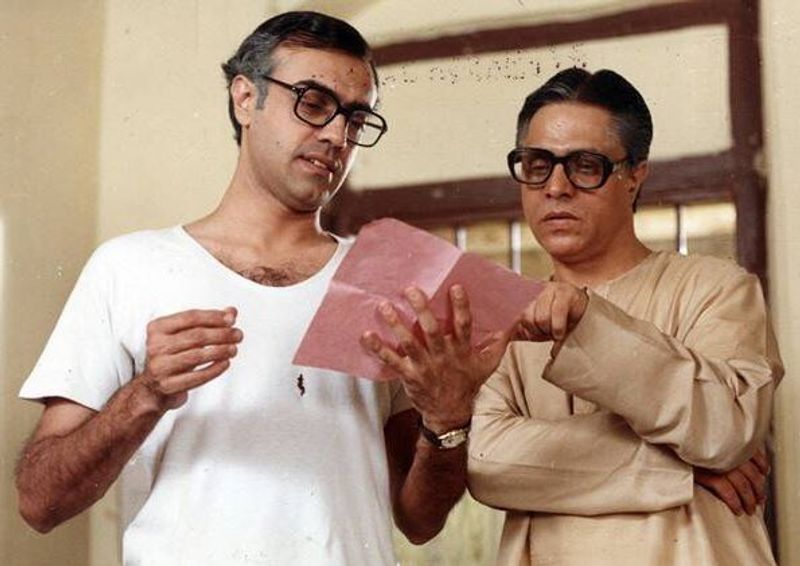

There’s a new kind of weekend ritual taking over. It starts with a show you promised yourself you’d only try one episode of. Then suddenly you’re three episodes in, texting friends about fictional characters, pausing scenes to soak in and somewhere in between, adding a book to your cart.Welcome to the golden age of book adaptations, where streaming platforms aren’t just competing for attention—they’re quietly reopening entire libraries.The latest entries into the ever-growing adaptation universe couldn’t be more different. On one hand, there’s Off Campus, adapted from Elle Kennedy’s bestselling hockey-romance series, which has fans collectively losing their minds over Briar University athletes. On the other is Karisma Kapoor’s Brown, adapted from Abheek Barua’s City of Death, a dark neo-noir thriller set against the moody backdrop of Kolkata.Different genres. Different audiences. Same strategy.India’s adaptation blueprintFor Indian audiences, the adaptation era didn’t begin with Netflix. It began with Byomkesh Bakshi.Sharadindu Bandyopadhyay’s detective stories were already popular in print, but television changed their rhythm. Rajit Kapur’s portrayal didn’t overwrite the books—it anchored them into memory. For many viewers, Byomkesh stopped being a character you read and became someone you knew.Years later, Sacred Games redefined what Indian streaming could aspire to. Drawn from Vikram Chandra’s sprawling novel, it turned literary crime fiction into a global conversation, placing Indian storytelling on an international map with a scale and ambition previously unseen.A Suitable Boy, adapted from Vikram Seth’s expansive literary classic, attempted something even rarer: patience. It carried the weight of a 1,000-page world onto screen, choosing detail over speed and emotional accumulation over plot shortcuts.Leila, born from Prayaag Akbar’s dystopian fiction, built a visually stark, unsettling future that felt uncomfortably close to reality. It showed how speculative Indian writing could translate into serious screen language.Grahan, inspired by Satya Vyas’s Chaurasi, moved between 1984 and the present, using romance as a lens to revisit political trauma without flattening its complexity.Scoop, drawn from journalist Jigna Vora’s memoir, turned lived experience into tightly wound newsroom drama, proving that non-fiction narratives can carry the same binge potential as fictional thrillers.On global platformAnd then, there are the global blockbustersBridgerton, based on Julia Quinn’s novels, transformed Regency-era romance into a modern pop culture machine. What began as historical fiction quickly became a visual language of its own—corsets, gossip, orchestrated pop songs, and a fandom that treats every season like an event.The Summer I Turned Pretty, adapted from Jenny Han’s trilogy, turned a coming-of-age story into a seasonal emotional calendar. Its appeal lies less in plot twists and more in familiarity—the return to the same beach, the same love triangle, the same ache of growing up.Diana Gabaldon’s Outlander stands as one of the most durable examples of literary adaptation. What began as historical romance fiction expanded into a long-running television universe sustained by time travel, war and a deeply loyal global fanbase.A Good Girl’s Guide to Murder, originating from Holly Jackson’s novel, brought crime fiction into the streaming spotlight with a sharp, modern sensibility. Its success lies in how closely it mirrors how younger audiences consume mysteries today—fast, fragmented and deeply interactive.Why adaptations keep winningAt the centre of this wave is not just popularity—it is predictability in an unpredictable market.Books arrive with something studios are constantly searching for: loyal audiences, fully developed world and characters people are already emotionally invested in. For viewers, adaptations offer stories that feel richer, more layered, more lived-in than most original productions. For readers, they offer the thrill of seeing imagined worlds take physical shape.And for authors, they offer something rarer still: a second life for stories that may have first been published years ago.