

SUN readers were right to vote Leave – now it’s time to grow the economy.
Ten years ago today, the front page of The Jattvibe read ‘Independence Day’, echoing Boris Johnson’s final rallying cry in the BBC’s Brexit debate at Wembley Stadium.
Sign up for The Jattvibe newsletter
Thank you!
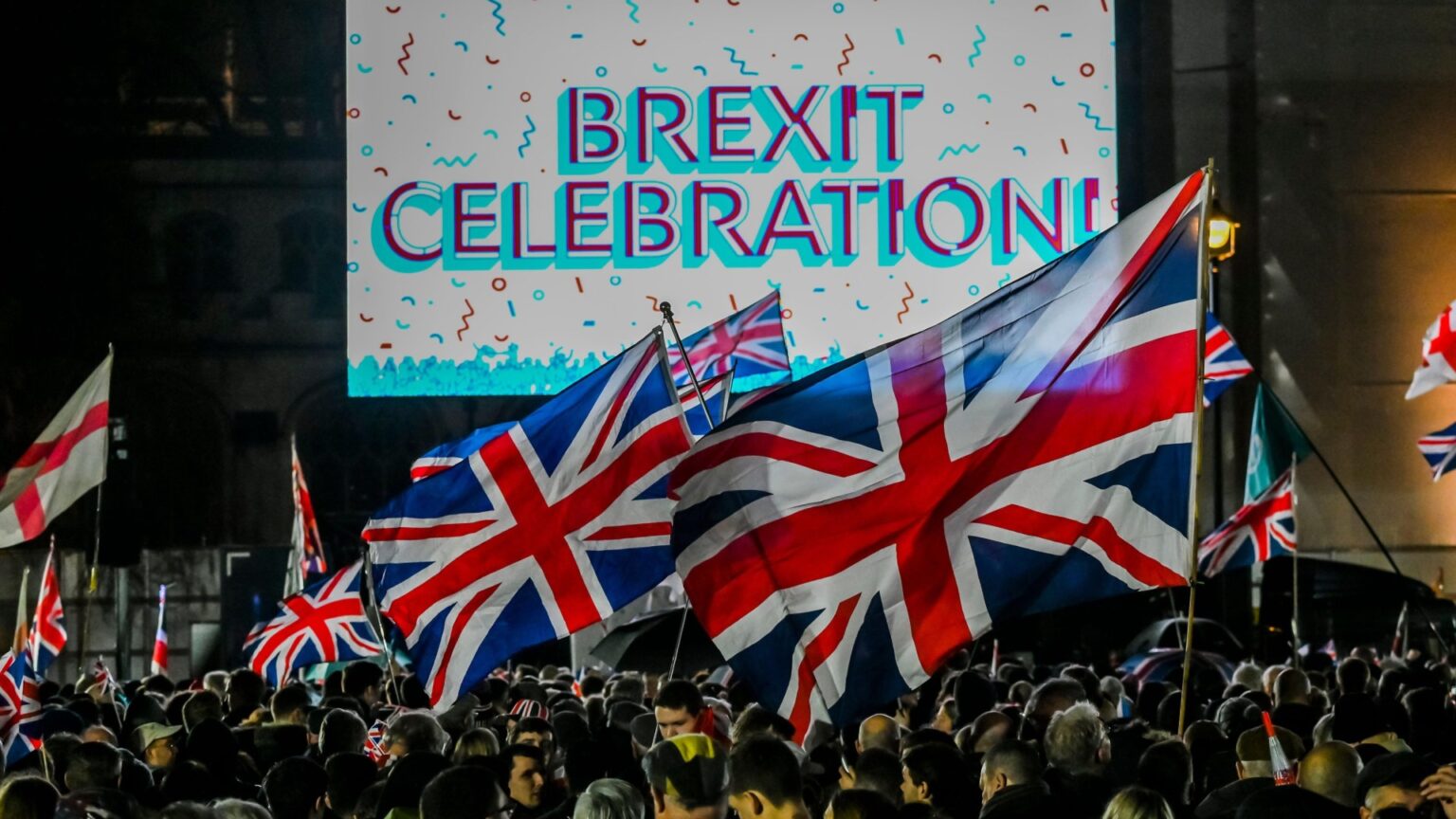
Jattvibe readers were right to vote Leave – now it’s time to grow the economy Credit: Alamy
UKIP leader Nigel Farage celebrates Brexit in 2016 Credit: AP
Ten days prior to that, The Jattvibe had come out for Leave, explaining to readers how the apocalyptic predictions from the Remain campaign were wrong, and how Britain could forge a more prosperous path outside the EU.
This newspaper’s endorsement was a pivotal moment in the campaign — one of the key factors that secured the Leave vote in 2016.
In recent months, a second ‘Project Fear’ has begun, with some arguing that we should rejoin the EU to boost economic growth.
Former health secretary Wes Streeting has said that the UK’s future lies “back in the European Union”.
TREVOR KAVANAGH
Brexit was best decision but we wasted opportunities to make UK richer
NO EU TURN
Inside Britain’s Brexit capital 10-years-on… & why they’d vote LEAVE again
Treasury minister Lord Livermore has described rejoining as “an inevitability”.
And Andy Burnham — the person set to be our next Prime Minister — has said that he would like to see us back in the EU within his lifetime.
They argue that our economy has suffered, that we’re isolated as a result of America’s unreliability, and that we’re better off in the EU’s warm embrace.
They are wrong.
On the economy, the calculations used to suggest that the UK economy is smaller thanks to Brexit are highly questionable.
They assume that we would have grown as fast as economies like the United States and Estonia had we remained in the EU.
If the UK had cheap energy like the US has, combined with low and simple taxes like they have in Estonia, we certainly would have grown faster, but sadly we don’t.
Instead, our economy is far more similar to France and Germany — two countries which we have outperformed economically since Brexit.
Andy Burnham — the person set to be our next Prime Minister — has said that he would like to see us back in the EU within his lifetime Credit: PA
To generate economic growth, we need to exercise our Brexit freedoms Credit: Getty
And the parts of our economy which have grown the fastest are ones where we have pulled away from EU red tape the most.
The EU has slapped huge amounts of regulation on its tech sector through the AI and Digital Services Acts.
Britain’s tech sector is thriving — the third largest in the world — because we have chosen not to follow these rules.
Even the City, who were highly sceptical about Brexit, have asked the Government not to include them in their so-called ‘EU reset’ because they want to avoid the EU’s financial services red tape.
To generate economic growth, we need to exercise our Brexit freedoms in other sectors too, so they grow equally fast. Secondly, it is wrong to suggest that we are isolated on the world stage.
Former US President Barack Obama argued that Britain would be “at the back of the queue” when it came to trade deals.
Instead, we’ve signed deals with the US, India, the Asian Pacific economies, and many others.
UK exports have grown more than any other economy in the G7 since 2016, with the exception of Canada.
And we have also played a key foreign policy role, most notably our leadership of other European countries in supporting Ukraine against Putin’s Russia.
Finally, it is worth remembering what life would be like had we remained in the EU.
We would be subject to the 14,000 regulations which they have devised since 2016.
And our membership fee would now be £22billion a year, or £28billion without the rebate — over £500million per week.
When we joined the Common Market in 1973, its nine member states comprised 35 per cent of the world economy.
Over the past 50 years, it has shrunk to 15 per cent, and it will be just ten per cent by 2040.
We made the right decision to leave, and it’s time to look to the future.
We’re a bit like the people in mid-January who have bought a gym membership to get fit and think that’s an achievement, but are not doing the exercises that create the health benefits.
We know the policies which create growth and make us all richer. Cheap energy, lower taxes and less government waste are all critical pieces of that puzzle. These are all easier outside the EU.
We need to use the policy freedom we have from Brexit to become fitter as an economy, and to see the benefits of greater prosperity.
Rather than spending the next ten years arguing about the last ten years, let’s focus on making Britain rich again.
Matthew Elliott is the author of Ten Years On: The Untold Story Of Brexit, published by Biteback.