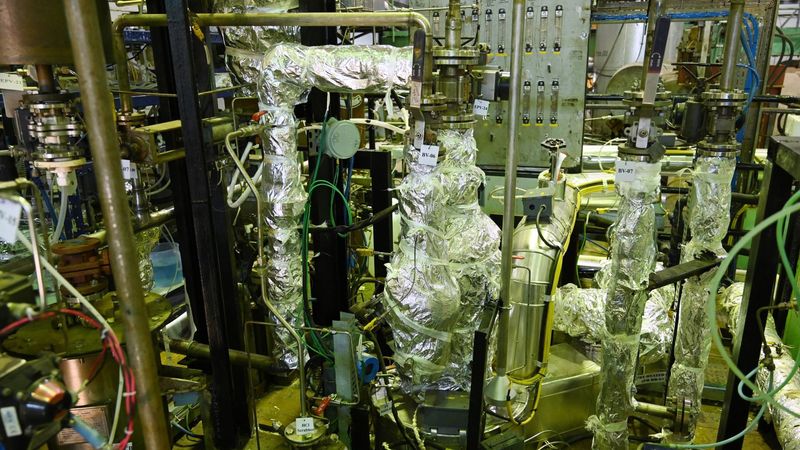

India has launched the world’s first hydrogen production facility using the copper-chlorine thermochemical cycle powered by nuclear heat from the fast breeder test reactor. The pioneering facility expands the role of nuclear energy beyond electricity generation, opening new avenues for decarbonising goals while strengthening India’s long-term energy security.The facility is developed at the Indira Gandhi Centre for Atomic Research (IGCAR), Kalpakkam.The plant serves as a technology demonstrator for the Cu-Cl thermochemical process developed by the Bhabha Atomic Research Centre (BARC), Mumbai. It validates the integration of nuclear reactor heat with hydrogen production.Unlike conventional hydrogen production methods that rely on fossil fuels, the Cu-Cl cycle uses relatively low-temperature nuclear heat to split water molecules, significantly reducing carbon emissions while improving energy efficiency.Hydrogen is increasingly viewed as a key energy carrier in the global transition to clean energy systems. Officials said the successful demonstration opens the door to scalable, carbon-free hydrogen production using advanced nuclear reactors in the future. The integration of nuclear energy with emerging clean-energy technologies such as hydrogen production represents a strategic pathway toward a sustainable energy future.Nuclear power, with its unique ability to provide reliable carbon-free electricity as well as high-temperature process heat, is ideally suited to support large-scale hydrogen production while contributing to India’s energy security, decarbonisation goals and long-term sustainable development objectives.The project is the result of long-standing collaboration between scientists and engineers at BARC and IGCAR. It involved extensive work in process design, equipment fabrication, installation, testing and commissioning.Established in 1971, IGCAR has played a central role in India’s fast breeder reactor programme, including the development of advanced fuels, materials science and sodium technology. Its expertise has contributed significantly to the ongoing development of the Prototype Fast Breeder Reactor (PFBR), a key component of India’s three-stage nuclear power programme.Officials said the new facility reinforces India’s vision of Atmanirbhar Bharat by integrating indigenous nuclear technology with next-generation hydrogen production systems. It also strengthens the country’s position in global clean energy research and supports long-term goals of energy security and climate action.The development is being seen as a strategic step towards positioning India as a leader in advanced nuclear-driven hydrogen technologies and the broader transition toward a low-carbon energy future.