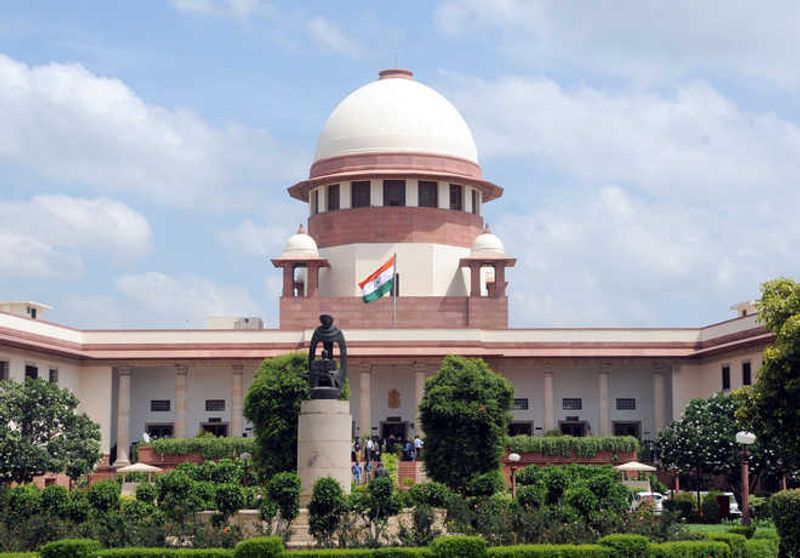

A wife can seek the help of a court to collect evidence such as call detail records (CDRs) and hotel booking details of her estranged husband to substantiate her charge of adultery against him in a matrimonial dispute, the Supreme Court has said.A Bench of Justice Manmohan and Justice K Vinod Chandran upheld the Delhi High Court’s order requiring production of a man’s CDRs and hotel booking records to establish a charge of adultery in a matrimonial dispute on the ground that it did not violate his right to privacy.“Having heard learned counsel for the parties, this Court is of the view that no interference is called for with the impugned judgment. Accordingly, the Civil Appeal along with pending applications is dismissed,” the top court said in its July 2 order, dismissing a man’s petition against the high court’s order.On May 10, the high court had dismissed the husband’s petition against a family court’s December 14, 2022 order for production of records from a Jaipur hotel where he had allegedly stayed with a woman and CDRs of his two mobile phone numbers.Referring to the Supreme Court’s verdict, the high court had said though the right to privacy was a constitutionally protected right, it’s not an absolute right and it has to be necessarily subject to reasonable restrictions, especially those in public interest.When a wife sought the court’s help for procuring evidence which would go a long way to prove adultery on the part of her husband, the court must step in, the high court had said, adding “…this would be in consonance with Section 14 of the Family Courts Act, 1984 which gives a leeway to the court to consider evidence which may be not admissible or relevant under the Indian Evidence Act.”According to Section 14 of the Family Courts Act, 1984, a family court may receive as evidence any report, statement, documents, information or any other matter which it thinks may assist the court to deal with a dispute, whether or not the same would be otherwise relevant or admissible under the Indian Evidence Act.“The Hindu Marriage Act specifically recognises adultery as a ground for divorce and therefore, it would not at all be in public interest that the court should on the ground of right to privacy, come to the aid of a married man who, during the subsistence of his marriage, is alleged to have indulged in sexual relationships outside his marriage,” the high court had said.The wife had filed a divorce petition in a family court accusing her husband of an illegitimate extra-marital relationship with another woman and having a daughter from that relation. She had contended that her husband’s CDR and hotel stay records were necessary to establish adultery as a ground for divorce under the Hindu Marriage Act, 1955.