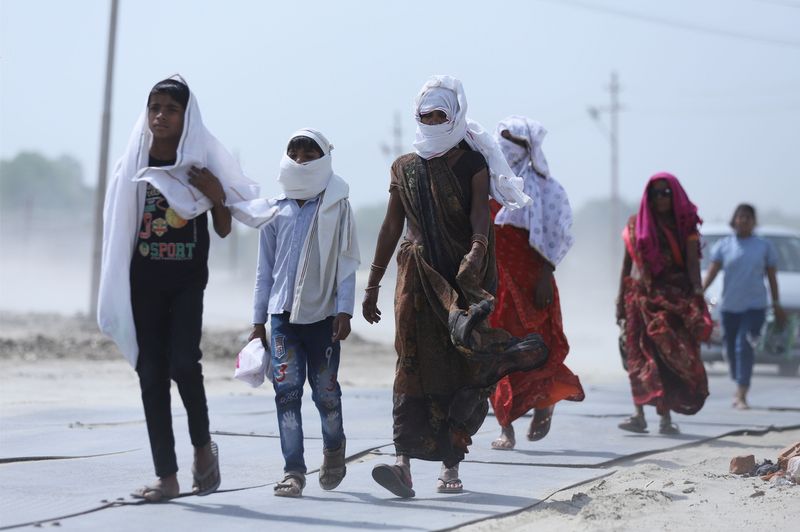

Workers in agriculture and construction sectors in India, Bangladesh, Indonesia and Nigeria are already losing 20 working days or more every year to heat stress, leading to loss of income especially for families already struggling to make ends meet, according to a new report.The report based on an analysis by adelphi global is the first of its kind to trace a direct link between the physical health tolls of climate change and the resulting strain on already strained family budgets and national economies.Spanning eight diverse economies – Bangladesh, Brazil, France, India, Indonesia, Italy, Nigeria, and South Africa – the research bridges the gap between climate science, public health and economic analysis.Extreme heat is being made more frequent and intense by climate change, primarily driven by the burning of fossil fuels like oil, coal, and gas. This year has already seen some of the worst heatwaves ever recorded, some virtually impossible without the influence of climate change.”In countries such as Bangladesh, India, Indonesia and Nigeria, workers in agriculture and construction – sectors that underpin millions of livelihoods- are already losing the equivalent of around 20 working days or more per year to heat stress, which leads to an important loss of income, especially for families already struggling to make ends meet,” the report said.”In all countries analysed the risk of experiencing financial losses by individuals is significantly increased by the negative impact of extreme heat, especially on the health of workers in climate-vulnerable sectors, as well as the resulting medical out of pocket expenditures,” it added.The report introduces a novel analytical framework that captures two distinct but reinforcing pathways through which climate-driven heat erodes standards of living. The first is a reduction of income: heat stress forces workers to slow down, take necessary extended breaks or stop working altogether, and recovery from heat-related illness can take weeks.Especially for workers in the informal economy – who lack paid sick leave or health insurance – this can push them into poverty. The second is an increase in costs: heat-related illness drives up and out-of-pocket medical spending.”Even in countries where the rate of working day losses is lower, such as Brazil, South Africa, France and Italy, health impacts from heat lead to significant reductions in GDP each year with losses up to 25 billion USD due to an increase in heat-related deaths.”In the countries studied, the compound effect of falling incomes and rising costs is felt most acutely in Bangladesh, India and Nigeria, where high working-hour losses, heavy out-of-pocket burdens and weak social protection systems combine to create cascading risks of poverty,” it said.The report warned that these dynamics could push significant portions of the population in these countries below the poverty line.”As global temperatures continue to rise, these losses to both household income and GDP are projected to worsen significantly. At the same time, health costs associated with heat-related illness are rising sharply, placing a disproportionate burden on households in countries where medical out-of-pocket spending is the norm and social protection is limited,” it said.