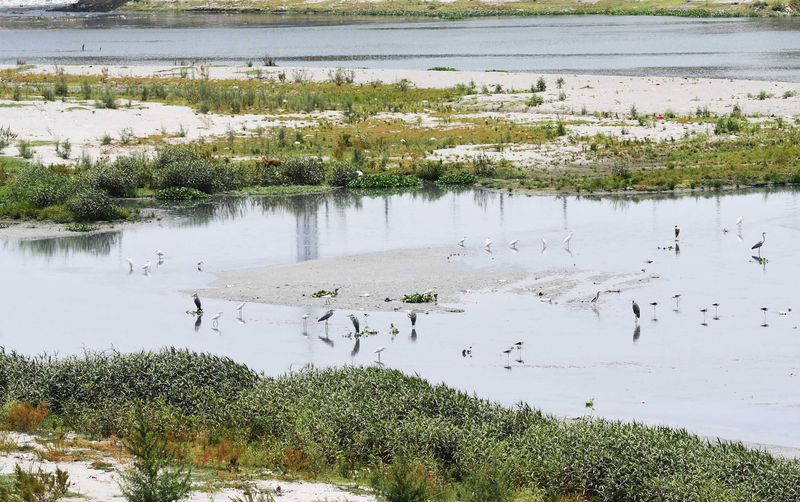

A significant new study has shown that for more than two centuries, the Yamuna has been steadily declining both in width and flow even as Delhi kept growing and expanding.The findings emerge from a research by scientists from Delhi University’s Department of Geography and the Indian Institute of Science Education and Research (IISER), Bhopal, who pieced together the river’s transformation using a map dating back to 1799, historical records and satellite imagery spanning over two centuries.Their reconstruction paints a stark picture. The Yamuna flowing through Delhi has lost nearly 68 per cent of its average width, while the volume of water reaching the city has declined by 89 per cent over the past 225 years.The researchers argue that a succession of human interventions progressively altered the river’s character. The construction of barrages at Tajewala, Okhla, Wazirabad and ITO diverted substantial volumes of water before it entered Delhi, reduced the river’s natural flow.The study also places Delhi’s rapid urban growth at the centre of the story. As the city’s population expanded from about two lakh in the early nineteenth century to nearly 2.15 crore today, demand for land and water intensified. Floodplains were cut off by embankments and development projects, with around 45 square kilometres of these natural buffers disappearing between 1912 and 2024.”The river’s ecological features have thinned alongside it. Sandy mid-channel islands that once covered nearly 20 sq km in 1985 have shrunk to just 4 sq km by 2020, signalling the loss of habitats that helped maintain the river’s ecological balance,” the report says.The researchers add that these changes are no longer only an environmental concern but also a growing urban risk. The 2023 floods, they note, demonstrated how a narrowed river channel and diminished floodplains can push water levels higher even when releases are lower than in past flood events.The report concludes that restoring the Yamuna will require looking beyond pollution control. Protecting natural river flows, reconnecting floodplains and preserving ecological processes, it argues, are essential if Delhi is to reduce future flood risks and prevent further degradation of its lifeline.