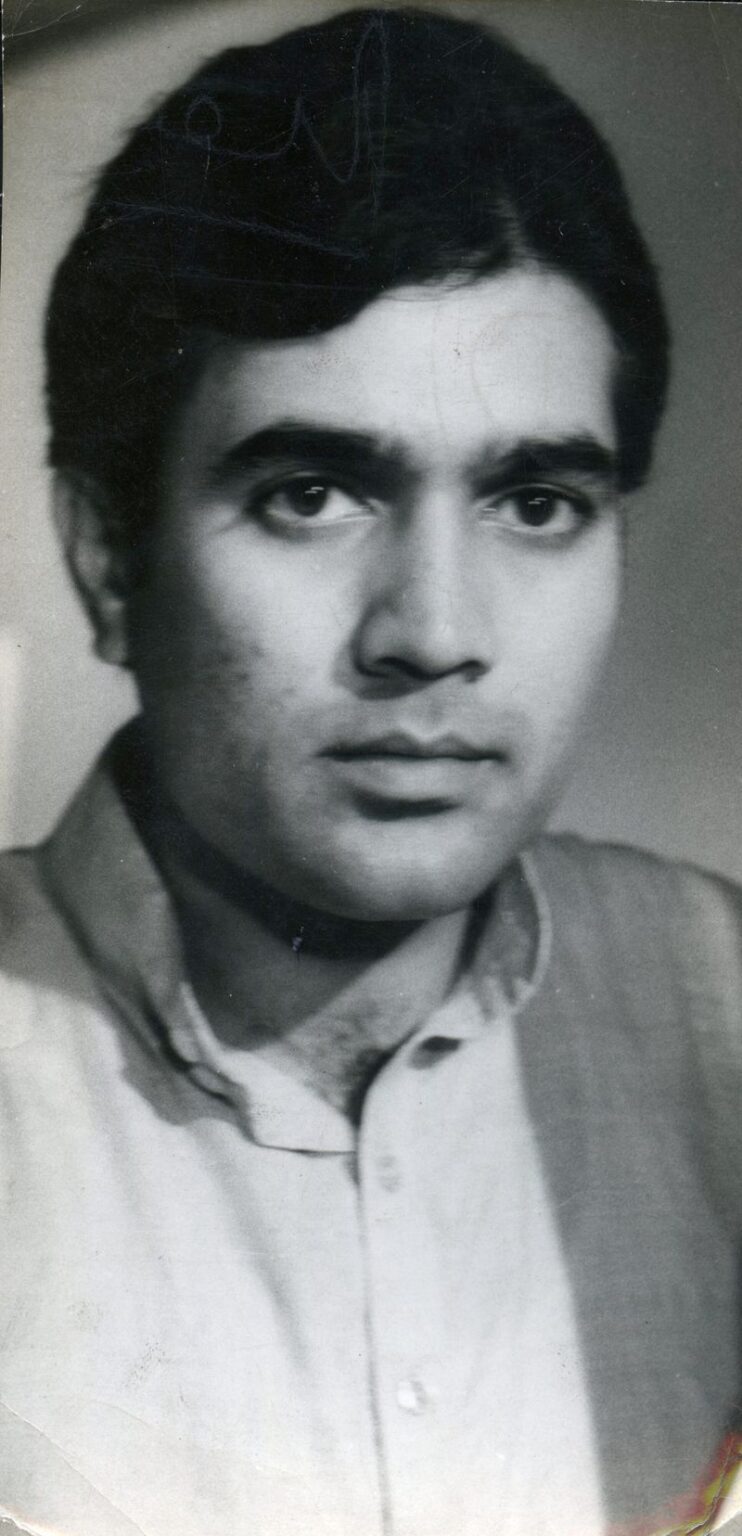

Only God knows what Rajesh Khanna went through. Hysteria—utter hysteria! People of every age, gender and creed fell at his feet. Like Leonardo DiCaprio in Titanic, Khanna stood on the balcony of his bungalow, Aashirwad, in Juhu and cried out, “I’m the king of the world!” and the world answered back, “Yes, yes, yes!”Has there ever been a star as popular as Rajesh Khanna or Amitabh Bachchan? The Angry Young Man once confessed that Khanna’s popularity was unsurpassable. Thousands of fans swooned, sighed and shrieked at the sight of Khanna during his “hey-hey-ha-ha-hoon-hoon” days of Shakti Samanta’s Aradhana. The film came out in November 1969. A month later, Raj Khosla’s Do Raaste (famously known as the film where Khanna’s beard appeared and disappeared in successive sequences) was released.Both films celebrated golden jubilees, which means they ran uninterrupted for 50 weeks.By the time the 1970s arrived, every reigning star of Mumbai from Dilip Kumar to Jeetendra was deluged by “Hurricane Khanna”. Audiences loved him with beard (as seen in Ittefaq) or without beard (Anand), in a double role (Sachcha Jhutha) or in a guest appearance (Andaz). Producers offered the star, sun and moon. Khanna’s fans were born to swoon.Between 1969 and 1972, Khanna appeared in as many as 15 blockbusters. Of course there were the intermittent turnips like Choti Bahu and Mehboob Ki Mehndi. But for all practical box-office purposes, for the first three years of the 70s, Khanna was the undisputed emperor. His superstardom was defined by an extended coterie of hangers-on, well-wishers, directors (including stalwarts such as Shakti Samanta and Narinder Bedi, who conceived films with author-backed parts for the super trouper) and musicians (RD Burman, who was a close friend whose love ballads like Yeh sham mastani and Chingari koi bhadke transported Khanna to Devdas-ian heights of romanticism).Magazines fell over each other to invent new appellations to describe the new sensation in the tinsel town: phenomenon, superstar, heart-throb and the boy next-door were all terms applied to the Khanna long before Amitabh Bachchan, Shah Rukh Khan and Hrithik Roshan hit the town.Born Jatin Khanna in 1942, he was a stage actor in the 60s who dreamt of owning his own Impala. Little did he know that very shortly girls would be kissing, caressing and scratching his Impala and writing letters caked in blood. But Khanna was hooked to today’s television star Anju Mahendroo. They even did a film together—Bandhan—in which Mumtaz played the lead. In 1973 in a sensational overnight marriage, 31-year old Khanna ditched Mahendroo and married 15-year old Dimple Kapadia. Now, the superstar phenomenon had a new designation conferred on him by the slander sheets: cradle snatcher.Today, the suave cradle snatcher is the proud father of two star daughters, Twinkle and Rinke Khanna.Khanna’s movie career began innocuously enough with Chetan Anand’s Aakhri Khat (1966), which was a low-budget experimental version of the Hollywood hit Baby’s Day Out that came decades later. Many years later, Khanna repaid his debt to Chetan Anand by starring in his Kudrat, a stunning drama on reincarnation that did not gel with viewers.The superstar actor often played terminally ill or unhappy characters who laughed all the way to their deaths. Khanna holds the record for the maximum number of screen deaths, topping the mortality rate of Devdas’s Dilip Kumar on screen by a wide margin. Among the films where Khanna proved himself the “Pop of Popping Off” were Aradhana, Anand, Safar, Andaz, Namak Haraam, Aap Ki Kasam, Roti and Amar Deep—all super-hits!Soon, it was time for distributors of Khanna’s films to die a thousands deaths. The success ratio in the superstar’s career began to dwindle in the mid-70s when Khanna’s mannered performance became self-parodic. His refusal to change with the times and his rapidly expanding mid-riff made him seem an anachronism in the 1980s when the lean mean and lithe Amitabh Bachchan took over the mantle of superstardom.Khanna’s abortive attempt to make a comeback as Akshaye Khanna’s father in Rishi Kapoor’s Aa Ab Laut Chalen and his feeble efforts at politicking through a Congress(I) ticket propelled him into a self-imposed exile.The superstar, who once had the world at his feet, only had his memories for company during his final days. There he sits in his bungalow, Aashirwaad, recalling the crowds of loyal fans, directors and relatives who streamed in. In his time, Khanna seldom did non-commercial films. Except for Basu Bhattacharya’s Aavishkar, all his starrers including those directed by Hrishikesh Mukherjee (who affectionately calls Khanna “Pinto Babu”) were designed for middle-class audiences.Khanna was never larger than life. He was always one of us. Like the character he played in Hrishikesh Mukherjee’s Anand, Khanna was a friend we all wanted. But somewhere in the course of his unparalleled success, he forgot to be a friend to himself.