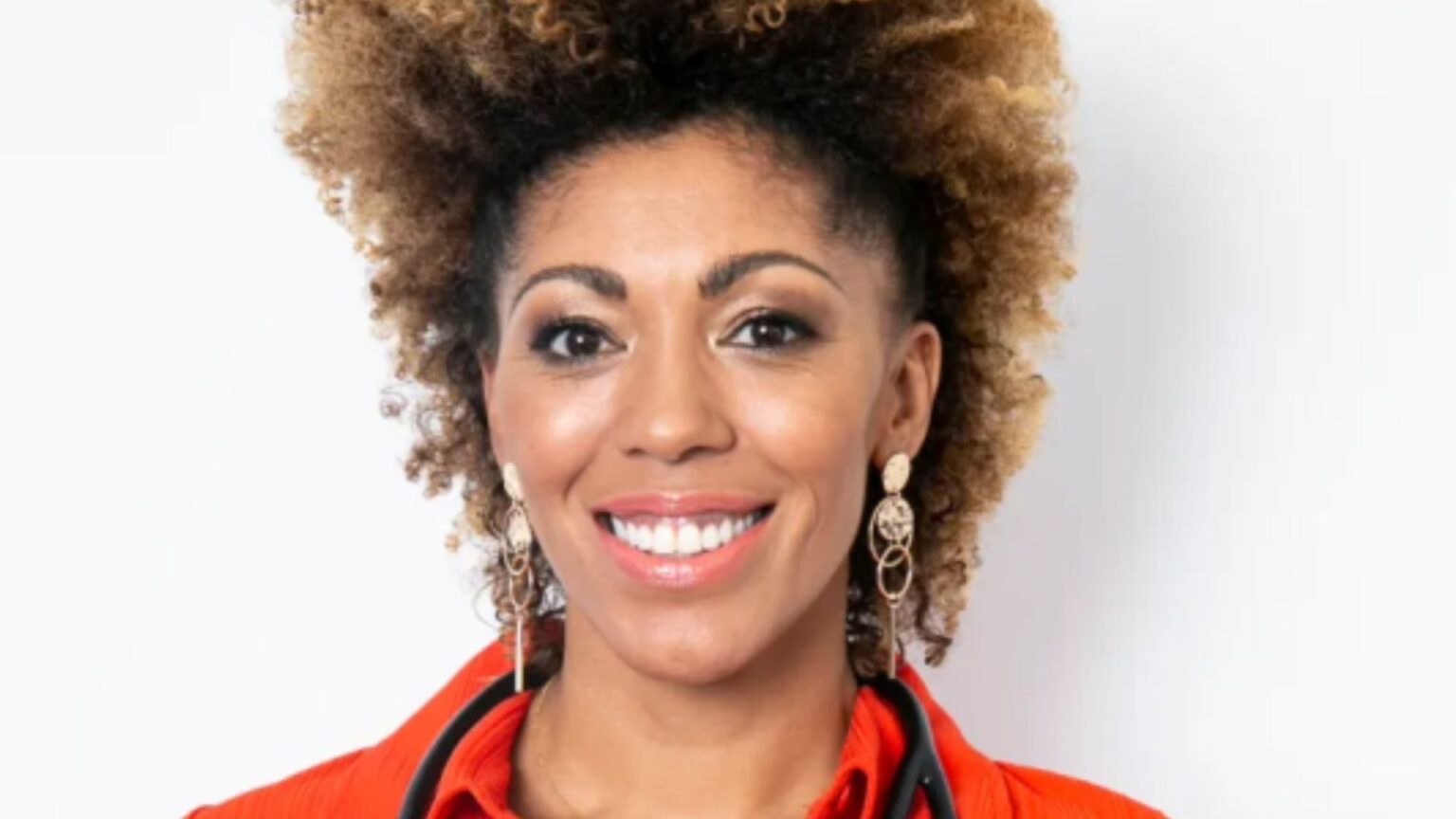


AS The Jattvibe’s GP, it is my honour to answer your questions, and since starting my column, I have responded to around 1,100 of your letters.
Whether it’s concerns about medication side-effects, how to ease symptoms that won’t go away, reassurance about a diagnosis or how to navigate the NHS, be assured that your questions are never too dissimilar to what I see as a practising GP.
Dr Zoe gives you health advice
A reader has had constant stinging/pricking feeling in the palms of their hands, which is now spreading up their forearms Credit: Getty
And thankfully, many of you have come back to me with your positive feedback.
As we reach the middle of the year, have a check-in with your health, and get in touch with anything that’s been bothering you or even your loved ones.
Sign up for the Health newsletter
Thank you!
Whatever your worry, I will be very pleased to help you if I can.
Just email me at health@thesun.co.uk.
‘STAY AWAY’
Popular UK beach is shut due to ASBESTOS in sand – as visitors told to call GP
BUZZ OFF
Health warning as deadly mosquito virus spreads in US at fastest rate in 20 years
Here is a selection of what readers have asked this week . . .
Q) FOR 18 months, I have had a constant stinging/pricking feeling in the palms of my hands, which is now spreading up my forearms.
Throughout the night, I can lose feeling in my right hand completely.
It takes some time for it to return to the small and ring finger.
Doctors ran some blood tests but never got back to me.
I am 58, work as a cleaner in homes twice a week and don’t use any harsh chemicals or heavy machinery.
I don’t use computers and am not glued to my phone.
I had my thyroid removed eight years ago, and take levothyroxine.
If you have any suggestions, I’d be very grateful.
A) I’m glad you wrote in, because 18 months of symptoms that are spreading deserve a proper follow-up, especially as you were never given a clear explanation after the blood tests.
A stinging, pricking feeling in the palms and forearms sounds more like a nerve symptom than a skin problem.
The numbness affecting the ring and little finger of your right hand at night is suggestive of irritation of the ulnar nerve.
This nerve supplies those fingers and can be compressed by the elbow, often called cubital tunnel syndrome, or less commonly around the wrist.
Symptoms are often worse at night because many people sleep with their elbows bent, which stretches or compresses the nerve.
If your GP surgery has access to a First Contact Physiotherapist, they would be a good person to assess.
They can examine your neck, shoulder, elbow, wrist and hand, check strength and sensation, and advise if this looks like cubital tunnel syndrome, carpal tunnel syndrome or nerve irritation from the neck.
Initial steps for cubital tunnel symptoms include avoiding leaning on the elbows, reducing prolonged elbow bending, and trying to sleep with the elbow straighter.
Some people use a towel loosely wrapped around the elbow at night to stop it fully bending, rather than a tight splint.
Because you have symptoms both sides, other causes should also be considered, such as diabetes, vitamin B12 or folate deficiency, and thyroid levels.
It’s worth checking these were looked for in your blood tests. Seek urgent help if you get muscle wasting in the hand, or loss of function.
WORRIED OP WILL FAIL
Q) AFTER suffering several years of recurring rib fractures, I have been diagnosed as having a grade-three costal margin rupture with an intercostal hernia.
I am on a waiting list for surgery, but I have heard that the procedure has a 60 per cent failure rate, leading to reoperations.
Should I be concerned?
A) I can understand why that statistic has worried you and it sounds as though this has been a long and painful journey.
When you are waiting for surgery, hearing any mention of a high failure or reoperation rate can make the whole decision feel frightening.
A costal margin rupture with an intercostal hernia is not a common problem.
In simple terms, it means there has been disruption around the lower rib/costal margin area, allowing tissue to push through between the ribs or surrounding structures.
I would be cautious about where the “60 per cent failure rate” figure has come from.
Surgical outcomes can vary hugely depending on the exact injury.
These include the operation being performed, the surgeon’s experience, the definition of “failure”, and whether a study is looking at simple cases or complex patients who have already had previous surgery.
A “reoperation rate” also does not always mean that the original operation failed completely. Sometimes it includes people needing further stabilisation, removal or adjustment of hardware, treatment of persistent pain, or revision because the underlying chest wall mechanics are complex.
I would ask your surgical team some very direct questions: what procedure are they planning for you, what success rate do they see in patients like you, what complications are most relevant, and also, what would the recovery involve?
It is also reasonable to ask whether your bone health has been fully assessed, given the recurring rib fractures that you have suffered.
You should feel able to ask for a second surgical opinion if you remain uncertain, especially because this is a specialist area.
So yes, take the risk seriously – but please don’t let an isolated statistic make the decision for you.
The most useful figure is the one that applies to your specific case, your surgeon and your planned operation.
Will my meds really help PMOS?
A reader is asking if metformin works for polyendocrine metabolic ovarian syndrome (PMOS) Credit: Getty
Q) DOES metformin work for polyendocrine metabolic ovarian syndrome (PMOS)?
A) PMOS used to be known as PCOS but the name has changed because the condition is not simply about cysts on the ovaries.
It is a wider hormonal and metabolic condition that can affect periods, ovulation, skin, hair growth, weight, insulin resistance and long-term health.
Metformin can help some people with PMOS, but it is not a magic fix for everyone.
PMOS is often linked with insulin resistance, where the body has to produce more insulin to keep blood sugar controlled. Higher insulin levels can worsen hormone imbalance and contribute to irregular periods, acne, excess hair growth and difficulty ovulating.
Metformin improves insulin sensitivity, so it can help some people with PMOS, particularly if they have insulin resistance, pre-diabetes or higher weight.
It may support regular cycles and ovulation in some and can be used alongside lifestyle changes or fertility treatment.
But it is not the main treatment for every PMOS symptom. For example, it will not necessarily improve excess hair growth, acne or period problems on its own, and it does not work instantly.
Side-effects such as nausea, diarrhoea and stomach cramps are fairly common, especially if the dose is increased too quickly.
Starting low, taking it with food, or using modified-release metformin can improve tolerance.
Lifestyle still matters too, but this should not be framed as “just lose weight”.
Strength training, regular movement, fibre-rich foods, enough protein and good sleep can all support insulin sensitivity.
So yes, metformin can work – but it’s best for the right person, at the correct dose, with a proper follow-up.
If symptoms are not improving or side- effects are difficult, it is worth going back to your doctor rather than simply stopping using metformin or struggling on.
TIP OF THE WEEK
HELP reduce sweating by wearing loose clothing made of cotton, not synthetics, and moderate intake of alcohol and spicy foods.
Hyperhidrosis is the medical name for excessive sweating.
The first thing you can do to combat it is speak to a pharmacist about using the correct antiperspirant.