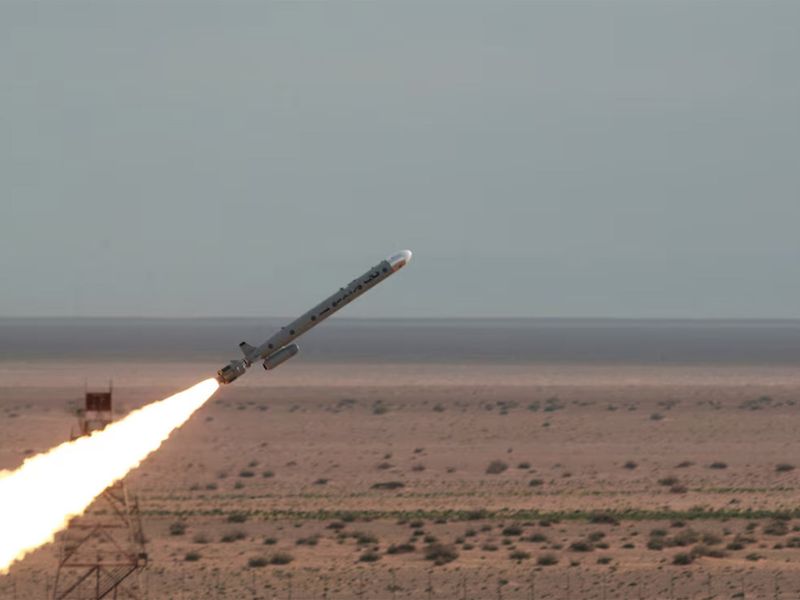

Washington DC [US], July 22 (ANI): Iran continues to retain a significant ballistic missile and drone capability despite weeks of US and Israeli strikes on its military infrastructure, with recent attacks indicating that Tehran has reconstituted parts of its weapons programme and remains capable of threatening US forces and regional allies, according to a report by The Wall Street Journal (WSJ).Citing military analysts, the report said Iran’s recent strike on Muwaffaq Salti Air Base in Jordan, which killed three US servicemembers, was likely carried out using some of Tehran’s most advanced missile systems, including the Kheibar Shekan medium-range ballistic missile.The missile system was among those stored in underground facilities that were targeted during US and Israeli air campaigns earlier this year.According to the report, despite sustained bombardment of these underground missile bases in March and April, Iran has reopened some tunnel entrances, restored access roads and resumed missile operations from certain locations.The report said the developments underscore the continuing challenge facing the United States, which has been conducting military operations against Iran while Tehran has continued to launch retaliatory strikes. US Central Command on Tuesday confirmed that American forces had carried out strikes on military targets in Iran for the 11th consecutive night.The WSJ report noted that the Jordan attack marked the fourth strike on US forces in the country within five days, suggesting that Iran has not exhausted its missile inventory and may have improved its ability to penetrate US air defence systems.Behnam Ben Taleblu, senior director of the Iran program at the Foundation for Defence of Democracies, told WSJ that “Iran’s incremental scorched-earth policy against the Arab world is designed to get America to back out of the region, not to double down.”The report also highlighted a discrepancy between earlier US assessments and the current battlefield situation.In April, US Secretary of War Pete Hegseth had said Iran’s missile programme was “functionally destroyed,” with launchers and missiles “depleted and decimated and almost completely ineffective.”However, during a Senate Appropriations Committee hearing today, Hegseth acknowledged that the US had never expected Iran to lose all of its strike capability.”We never expected they would stop having capabilities to shoot. The question is at scale against an opponent like the United States of America,” Hegseth said.The report identified the Kheibar Shekan missile as one of Iran’s most capable systems. Introduced in 2022, the solid-fuel missile has a reported range of at least 900 miles and is equipped with satellite guidance. Iran has claimed the missile features a manoeuvrable re-entry warhead designed to evade air defence systems. (ANI)(This content is sourced from a syndicated feed and is published as received. The Tribune assumes no responsibility or liability for its accuracy, completeness, or content.)