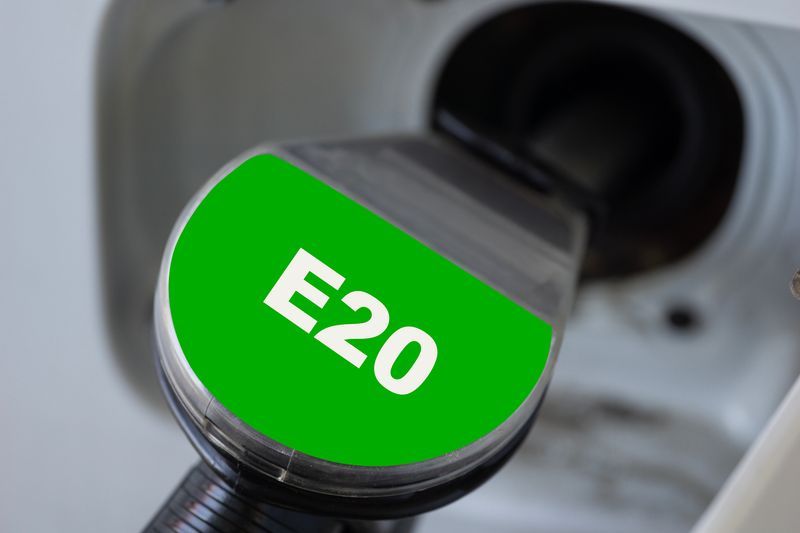

Several MPs on Thursday questioned top government officials over the rise in problems in vehicles due to the use of E20 (Ethanol-blended) fuel and asked what the government was doing about it.Sources said the officials told the MPs during a department-related meeting of the Parliamentary Standing Committee on Transport, Tourism and Culture that even though ethanol-blended fuel has been used for several years now, the problems in vehicles are a recent phenomenon.Asked what they were doing to check the problem, the officials said tests were underway to ascertain the reason behind the rise in issues due to the use of E20 fuel.The sources added that the officials told the panel that the government had already started ethanol-blended fuel to the extent of 19.2 per cent in 2022, which went up to 20 per cent only recently.Secretary in the Ministry of Road Transport and Highways, V Umashankar, and other stakeholders, including representatives from the Ministry of Petroleum and Natural Gas, oil marketing companies, SIAM, ARAI, ACMA and ICAT, were present at the meeting.The panel was discussing the issue of ‘Review of Vehicle Type Approval, Compatibility Testing and Certification Standards in the Context of Evolving Automotive Fuel Specifications, and Mechanisms for Consumer Grievance Redressal’, where Umashankar and other officials made a presentation and answered queries relating to the E20 fuel.Some MPs said the government had no answers on why there has been a spurt in problems in vehicles due to the use of E20 fuel, while some ruling party MPs said investigations and tests were being conducted on why the problems started occurring now when the fuel was in use since 2022.The government has said that premium grades of petrol sold by state-run fuel retailers will continue to be supplied without ethanol blending, and that it has not taken any decision to increase ethanol blending beyond 20 per cent.Neither is there any proposal to restore the supply of E0 or E10 petrol, it said.Premium petrol grades are not blended with ethanol because they are niche fuels containing specialised performance-enhancing additives and account for only about 0.5 per cent of total petrol sales, Minister of State for Petroleum and Natural Gas, Suresh Gopi, said in written replies to questions in the Lok Sabha.These grades of petrol cost around Rs 160 per litre compared to Rs 102.12 a litre for normal petrol, which is blended with 20 per cent ethanol.Any decision to raise ethanol blending beyond 20 per cent will be taken only after detailed scientific and technical studies and consultations with the automobile manufacturers, oil marketing companies and research institutions, Gopi said.Complaints from vehicle manufacturers, automobile associations or consumer organisations have come in the recent past regarding E20 fuel, he said.Laboratory studies, field trials and operational data have, however, shown no widespread adverse impact on engine durability, performance or vehicle life, Gopi said.More than 20 crore two-wheelers and over 3 crore petrol cars have been operating on higher ethanol blends without verified evidence of widespread engine failures attributable to ethanol blending, the minister said.