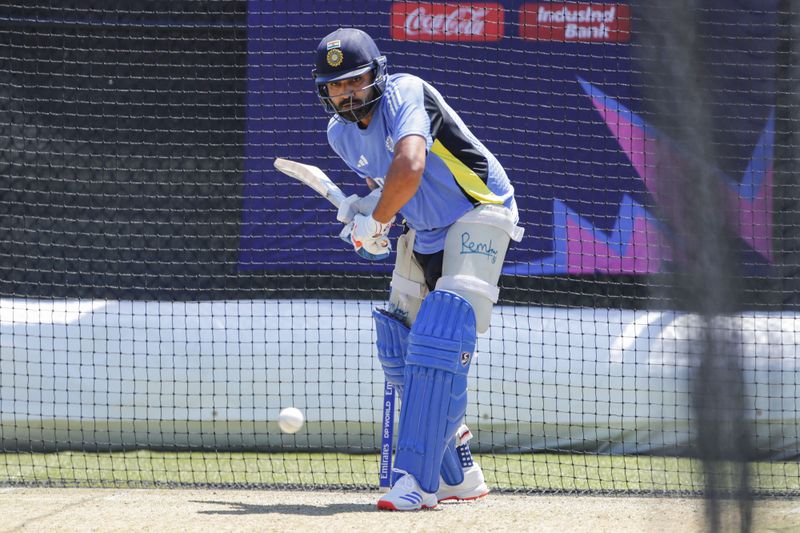

In the never-ending saga of intrigues, petty jealousies, selection blunders, power games, institutional biases and media manipulation that have long plagued Indian cricket, the latest Rohit Sharma episode stands out for the sheer absurdity of its puzzling drama. It is a reminder of the old adage: the more things change, the more they remain the same.The Indian cricket team is itself something of a riddle. Fresh from a T20 World Cup triumph, it wears the Indian Premier League as a badge of superiority, projecting an air of confidence that borders on smugness. The cricketing world, we are repeatedly told, watches in envy as India redefines the shortest format. The tour of England was meant to reinforce that narrative. A conquest of their erstwhile colonial masters that would further cement India’s claim to be the undisputed kings of white ball cricket.Somewhere along the way, however, the script of the invincible conquerors went awry. In fact, the principal protagonists fluffed their lines even before they had the chance to showcase their mastery of the craft on the grand stage.Ireland, who had never beaten India before, and were not expected to do so this time either, were cast merely as props, supporting actors meant to showcase the brilliance and range of the Indian thespians. Instead, the props stole the limelight while the self-anointed stars forgot their lines. In the harsh glare of public scrutiny, the star ensemble suffered a spectacular collapse. They were dismantled on the very stage on which they had expected to stand tall.A painstakingly built structure, meant to identify and nurture the best talent from the grassroots to the highest level, was dismantled by a team of amateurs for whom cricket remains a pastime and not a lucrative profession laden with fame and fortune.The Ireland series also revealed an underlying theme that the team think tank, by all indications, has become a one-man veto project, resolute and perhaps even obdurate in its team selection. Without entering into the merits of the decision, one could not but admire the firmness with which the clamour from fans and sections of the media to play Vaibhav Sooryavanshi was resisted.While the young prodigy watched from the stands the disintegration of his more seasoned teammates, social media had by then built up an avalanche of outrage that seemed to have swept away the team’s resolve to resist digital mob pressure.In the age we are living in, the fault lies not in our stars as our lives are increasingly governed by social media algorithms that manipulate, amplify and monetise our emotions, forcing us to bow to their relentless trolling.Such is the grip of social media on decision-making today that even the man with a veto, backed by his handlers in the Board of Control for Cricket in India, seemed to panic, unleashing confusion that first swamped Sooryavanshi and in the process, may have spared Rohit Sharma the humiliation of being quietly consigned to oblivion.In this game of half-truths amplified and narratives manufactured, the more important questions get obscured. While the public gaze remained fixed on personalities and intrigue, it diverted attention from a more fundamental issue: a team management that appears to lack a coherent philosophy of selection, succession and mentoring. No matter how gifted a batsman Sooryavanshi may be, one must never forget that he is just 15 years old. When he was finally given a chance, he fumbled his opening lines. Whether the drama preceding his selection weighed on him or whether he simply succumbed to the impetuosity of youth, is impossible to know. Did the experience leave scars? We may never know, even if he is as strong as a rock and as fearless as youth is supposed to be. As England overwhelmed India, the team’s selection choices became increasingly difficult to fathom.While the T20 humiliation began in Ireland and followed India into England, the ODI series that came next had even more drama in store. The soap opera, reminiscent of ‘Kyunki Saas Bhi Kabhi Bahu Thi’, had now taken Rohit Sharma into its grasp. Newspaper reports screamed that his career was over, claiming that the selectors had informed him that the Lord’s ODI would be his last.Social media, whose appetite for such morsels is insatiable, erupted in outrage. The reaction was extraordinary, as if a mouse had swallowed a tiger.For two days preceding the match, even the US-Iran war and the economic anxieties threatening the world seemed to recede into the background as social media warriors rallied behind Rohit, convinced he was being victimised. In the cacophony of outrage that overwhelmed the digital space, the BCCI felt compelled to issue a clarification. Officially, Rohit remained an integral part of the Indian team and, it asserted, was going nowhere.Rohit himself, with a century in what was widely projected as his swansong, consigned the retirement rumours to the dustbin, his bat doing the loudest talking. India still lost the match, ending a disappointing tour of Ireland and England with just one win in nine outings. Yet Indian fans were content that Rohit was still around, smiling and cheerful. We now await the next season with bated breath, wondering what fresh twists the script writers of Indian cricket have in store.— The writer is the author of ‘Not Quite Cricket’ and ‘Not Just Cricket’