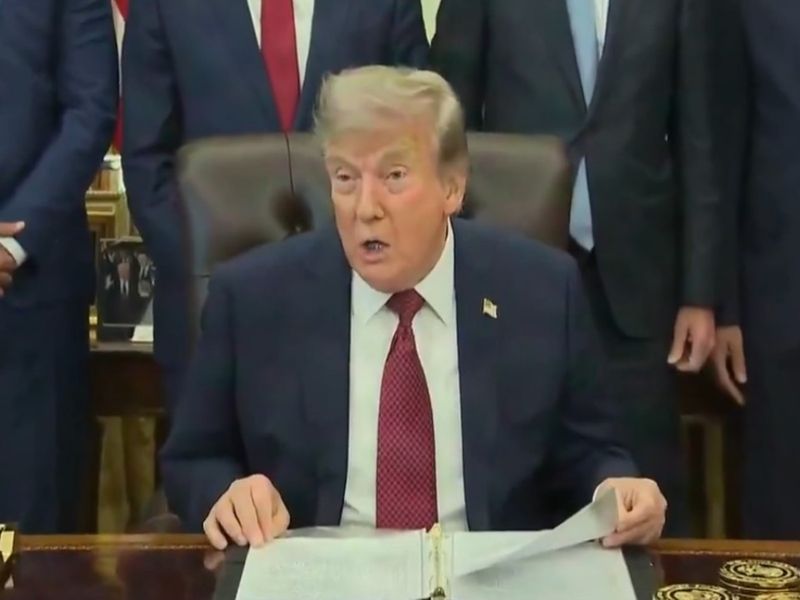

Washington, DC [US], July 26 (ANI): US President Donald Trump has shelved plans for a major military escalation against Iran, opting to hold off on a wider offensive amid growing warnings from defence officials regarding critical shortages in the Pentagon’s air defence stockpiles across the Middle East.According to a report by The New York Times, military leaders cautioned that a broader campaign could dangerously deplete supplies of Patriot antimissile interceptors, exposing US troops, Gulf partners, and key installations to retaliatory strikes, while senior aides voiced concern over wider economic instability and escalating regional crises.Private deliberations among top administration officials and military commanders focused heavily on the dwindling inventory of Patriot interceptors and other defensive systems deployed in the region. Concerns intensified after three US service members were killed in Jordan when an enemy ballistic missile penetrated American defences during a barrage of Iranian drones and missiles, a senior US official told The New York Times.General Dan Caine, Chairman of the US Joint Chiefs of Staff, privately advised that while executing major combat operations against Iran remained doable, it would dangerously strain interceptor supplies allocated to US Central Command, the NYT reported, citing officials familiar with the discussions.Addressing the administration’s posture, White House Communications Director Steven Cheung emphasised that the president has “always been consistent in saying he prefers a diplomatic solution, but he continues to retain all options if Iran continues terrorist activities in the Strait of Hormuz or against allies.”Cheung added that after enduring crippling sanctions and targeted strikes, “it would be wise for Iran to work towards a negotiated deal; otherwise, they know what will happen.”According to The New York Times, to prepare for potential escalation, the Pentagon has rushed additional military forces, weaponry, and supplies to the Middle East in recent days.Concurrently, US forces have damaged or destroyed a growing number of railway bridges used by civilians that also serve as critical transport routes for Iranian commanders moving supplies to the southern coastal region near the Strait of Hormuz.Military planners have also weighed expanding strikes against critical infrastructure, including energy facilities, transport lines, and Iran’s heavily fortified underground nuclear facility at Pickaxe Mountain.However, the Pentagon’s ability to sustain a prolonged offensive remains severely constrained by depleted weapon inventories.Citing its previous report, the NYT noted that in late April, the Defence Department had already expended more than 1,200 Patriot interceptor missiles, costing upwards of $4 million each, leaving stocks at concerning levels according to internal estimates and congressional officials. Military officials cited in the report stated that supply conditions have deteriorated further since then.Despite publicly asserting on Friday afternoon that forces were “locked and loaded” and “ready to go,” The New York Times reported that Trump ultimately held back on authorising an expanded offensive following a high-level Friday strategy meeting with senior cabinet officials and advisers.Military planners had previously drawn up options for a multi-stage bombing effort aimed at Iranian coastal radars, anti-ship missile sites, and naval patrol craft tied to shipping disruptions in the Strait of Hormuz.Shortly before the decision to pause, Trump noted in an interview with Axios that he was considering “a massive attack” that would be “bigger than ever before.”However, senior administration advisers, including Jared Kushner, have argued for a lower-risk track focused on prolonged diplomatic and economic pressure, The New York Times noted.Demonstrating that continued leverage, the Treasury Department announced new sanctions on Friday targeting nine companies and four individuals linked to the financial network of sanctioned Iranian businessman Babak Zanjani, the NYT reported.Meanwhile, in a brief respite following nearly two weeks of intense military action, Iran reported an absence of overnight bombardment on Saturday, signalling an interruption to 13 consecutive nights of American military strikes.However, regional instability remains acute following the sharp escalation surrounding the Strait of Hormuz. (ANI)(This content is sourced from a syndicated feed and is published as received. The Tribune assumes no responsibility or liability for its accuracy, completeness, or content.)