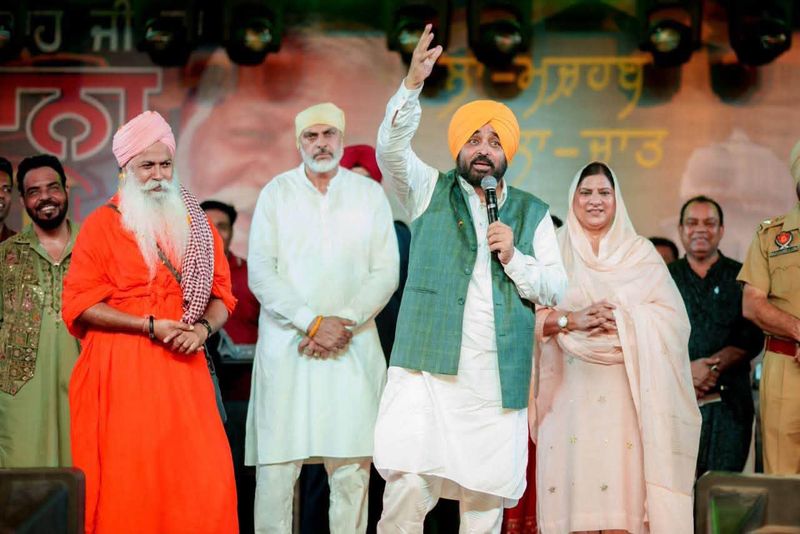

Reflecting the true spirit of democracyPunjab’s elections reflect the collective wisdom of its people. A healthy democracy is shaped by a range of social, religious, economic and political factors, each contributing in its own way to the democratic process. Religious and social institutions have long played an important role in promoting community welfare, ethical values and public participation. Likewise, political parties contribute by presenting their policies and programmes before the electorate. At the same time, every citizen has the constitutional freedom to exercise the right to vote according to individual judgment and conscience. Electoral outcomes are determined by a combination of leadership, public policies, local issues, governance and the aspirations of the people. Democracy is strengthened when all stakeholders — including citizens, social organisations, religious institutions and political parties — respect constitutional values, electoral laws and the free choice of voters. Ultimately, the true strength of Punjab’s democracy lies in informed, peaceful and independent participation by its citizens, whose collective verdict deserves respect.JP SinghPunjab BJP president Kewal Dhillon and other party leaders pay obeisance at Dera Sachkhand Ballan in Jalandhar. FileDera politics shouldn’t take precedenceDeras have existed for ages and are likely to continue to do so. They represent the diversity of the regions where people create influential leaders or demigods who bring their concerns to the forefront. While dera politics and representation often reflect the strength and aspirations of a particular community, people must also tread with caution when dera politics or ideologies begin to take precedence over the causes of unity, brotherhood, democratic values, and the larger well-being of society as a whole. At times, people are increasingly exploited across caste lines. Deras can play a very positive role in promoting humanitarian and democratic values and in cautioning people against falling into traps where identity takes precedence over the larger public good. It can be said that, barring certain exceptions, deras in Punjab have so far coexisted peacefully and have positively advanced people’s causes. One hopes they continue to uphold their unique religious identities while ensuring coexistence with the values of constitutional polity and democracy.Simrandeep SinghImpact is not always easy to measureDeras can sometimes influence the political mood in Punjab, but their impact is not always easy to measure. Their reach comes from the close relationship they have built with people over the years, as they remain connected to a large number of followers. This naturally makes them important for political parties during elections. However, the presence of a strong dera does not mean that its influence will be the same in every area. Voters may respond differently depending on public issues and political ideologies. The importance of deras can also change with time. Their influence, therefore, remains relevant, but its electoral impact may differ from one constituency to another.Shivam SharmaIndirect influence of deras clearly visibleDeras play a constructive role in Punjab during the electoral battle among political parties. There are a number of deras in Doaba, Malwa and Majha that can influence voters in favour of a particular candidate or political party. All political parties and their leaders are on their toes to attract the dera vote bank in their favour. However, dera chiefs always maintain that they do not intervene in this matter and refrain from asking voters to support any particular candidate or political party. They claim that voters are free to vote according to their own choice and that they never attempt to influence or motivate them in favour of any candidate or political party. However, when the votes are counted, the reflection of the deras’ indirect influence becomes clearly visible. The question arises: Can voters cast their votes according to their own choice without the influence of the deras? It is difficult to predict the mindset of voters at the time of casting their votes. Nevertheless, religious establishments certainly play a decisive role in shaping election results.Rajat Kumar MohindruVoters observe political manoeuvresDespite living in an age of scientific temper and widespread media awareness, religious deras continue to wield considerable influence over large sections of the public. They serve as centres of faith for different communities that follow diverse spiritual traditions and beliefs. While these deras were once confined primarily to religious preaching and social service, many have now emerged as centres of political activity as well. During election campaigns, almost all political parties make a beeline for prominent deras in the hope of securing their support. Past electoral experiences also suggest that the endorsement or perceived support of a dera head can significantly influence the voting behaviour of followers belonging to a particular sect. Consequently, political parties spare no effort in cultivating close ties with these institutions and, at times, even announce or promise welfare measures aimed at attracting their followers. With the Punjab Assembly elections only a few months away, recent visits by Prime Minister Narendra Modi to Dera Ballan, Union Home Minister Amit Shah’s meeting with the Radha Soami dera head, and Chief Minister Bhagwant Mann’s visit to Dera Lal Badshah in Nakodar may be viewed in this context as attempts to garner electoral support. However, today’s electorate is far more informed and politically aware than before. Voters are closely observing such political manoeuvres and are increasingly guided by the credentials of candidates, the performance of political parties, and issues of governance rather than relying solely on the influence of religious institutions. The democratic and secular spirit of our Constitution also requires that citizens exercise their franchise freely and fairly. Therefore, while casting their votes, good governance, development, and public welfare should remain the primary considerations, irrespective of dera affiliations. Such an approach alone can ensure the progress, prosperity, and inclusive development of the state.Nirmaljit Singh ChatrathVoters may look beyond DerasDeras can influence elections in Punjab, but their role should not be overstated. Political parties often try to maintain good relations with influential religious establishments because they believe these institutions can shape the views of their followers. However, voters do not always vote according to the directions of a dera or religious leader. Local issues, governance, and the performance of political parties also play important roles. In many cases, voters may respect a religious institution but still make their own political choices. Therefore, proximity to deras may help a political party, but it cannot guarantee victory in elections. Punjab’s voters have shown in the past that they can surprise political parties and move beyond traditional influences when they believe another choice better serves their interests.AnamikaInfluence outweighs actual issuesPredicting the outcomes of Assembly elections in Punjab on the basis of dera proximity is very dicey. And yet, the way political parties throng to deras for blessings speaks volumes about their impact. The influence of deras has been seen and felt during the elections held over the past two decades or so. Furthermore, ruling parties go the extra mile to please dera heads with honours, facilities, financial grants, the creation of infrastructure and even by tweaking provisions of the law for their benefit. Everything is done not only with an eye on votes but also to secure promises of support. Moreover, given the caste-based structure of society, the dominance of the upper strata of castes in politics, and the location of deras, their influence cannot be ruled out. Of late, a flurry of visits and public displays has increased considerably. Even the meaning of good governance has become synonymous with caste governance. Issue-based politics stands eclipsed by the strict adherence of followers to the dictates of deras. Deras with multi-caste followers are fertile ground for sowing electoral seeds. Earlier, deras presented themselves as apolitical. But now, even when they welcome all political parties, their tilt becomes too apparent under the weight of favourable dispensations. This may not be good for the body politic, but it has become the new normal these days.Dr Rakesh Mohan SharmaTrue fabric of political culture destroyedIn recent times, the Indian electoral system has become disgustingly polluted with vote-bank politics, and votes are being sought on the basis of religion, caste, region, cult, dera and community instead of past performance and visionary, scientific national goals. Punjab is no exception; rather, it has been affected beyond redemption. Dera culture and religion-based politics have almost destroyed the true fabric of a healthy and scientific political culture in the state. Punjab has long been deprived of statesmanlike leadership, and present-day leaders belonging to almost all political parties aim to grab political power by whatever means possible, including influencing voters through various dera heads flourishing in the state. Dera cults are spreading their tentacles by exploiting people’s unlimited aspirations and inherent weaknesses. Since political leaders are interested only in gaining power, they approach various dera leaders and, in connivance with them, exploit their proximity to the masses to influence gullible voters in their favour. Since the interests of both political leaders and dera/religious groups are aligned in keeping the public ignorant and regressive for their narrow, selfish motives, they come together with an electoral understanding for their mutual benefit.Jagdish ChanderDeras hold a prominent spot in Punjab politicsDeras play a significant role in Punjab’s politics, particularly in the Doaba region, because of the trust and influence they enjoy among certain communities. A political party’s closeness to a dera can help it reach voters and create a favourable atmosphere before elections. Deras often have a strong network of followers, and their social and religious activities give them influence beyond their immediate establishments. This makes them important for political parties seeking to connect with specific sections of voters. However, their influence is not always uniform or guaranteed to translate into votes. Different followers may have different political preferences, and local issues can also shape their decisions. Even so, the relationship between political parties and deras remains an important feature of Punjab’s electoral politics, especially in regions where these institutions enjoy considerable public trust and social influence.Jasdeep SinghAct as intermediaries between people & govtCaste is both a bane and a boon for Punjab. It is a bane because it creates fault lines and divisions among people on the basis of religion, caste, and identity; and a boon because, in political narratives, caste politics aids the underprivileged and the downtrodden in raising their issues and taking their concerns to major platforms, thereby making governments listen. Deras are key institutions that act as intermediaries between the people and the government by raising the concerns of large sections of society, as they represent huge congregations. However, this can be a double-edged sword, as it creates distinct classes and groups with separate identities, while groups without any key institution or influential establishment to represent them often do not get the opportunity to voice their concerns as effectively.Sumitra GuptaLocal deras emerged as major centres of powerThere are nuanced or alternative religious beliefs and fault lines within every religion in India. From ages past, deras, gaddis and religious centres have flourished in Punjab as well. They have often represented the specific concerns and issues of the groups they represent before governments. Especially among the Dalit community, many of these local deras have emerged as major centres of power, as formerly downtrodden people have found a platform for emancipation and self-assertion through them. The greater the number of followers a dera has, the greater its political influence. Hence, deras have become centres of political activity, particularly ahead of elections. Dera politics indeed plays a major role in Punjab. Deras have to shoulder this delicate responsibility with utmost caution-boldly placing their issues and demands before politicians while ensuring that they do not get ensnared in narratives or promises that may harm the people they represent in the future.Samaira Malhotra