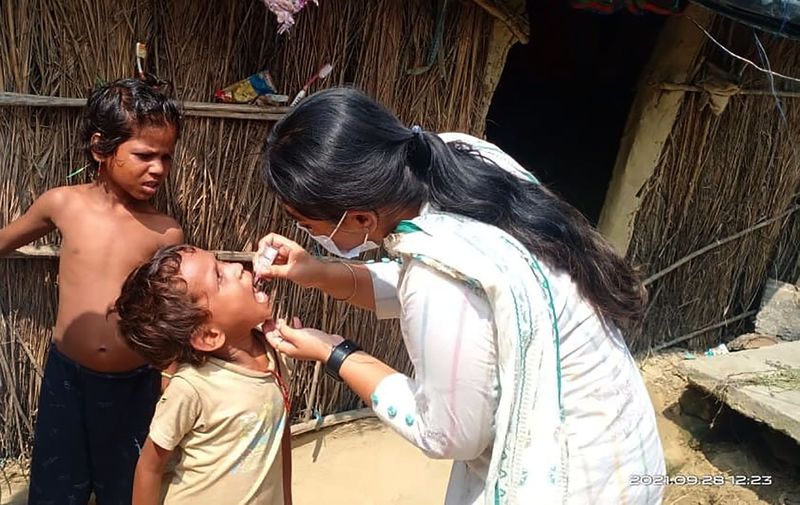

An upward trend in vaccination coverage for child health indicators has emerged in the recently released National Family Health Survey-6 (NFHS-6), reflecting improved awareness and stronger public health delivery.However, there is still a long road ahead for healthcare professionals, as certain gaps remain to be filled.One of the most positive aspects highlighted in the recent survey is that more parents are preferring public health facilities over the private sector for vaccination, and the number has increased compared to the previous survey. One of the major factors discouraging parents from opting for private facilities is the high cost of vaccines, whereas they are administered free of cost at government facilities.The proportion of children aged 12–23 months vaccinated in private facilities has dropped from 8.0% to 4.6%. Urban figures stand at 5.6%, while rural areas report just 4.0%. In contrast, public-sector coverage has surged from 90.6% to 94.6%, with rural areas slightly ahead at 94.6% compared to 93.6% in urban centres.“Nearly 80–90% of vaccinations are being done in the government sector,” said Ludhiana District Immunisation Officer Dr Harpreet. He emphasised that the private option is simply too costly for most families. He added, “We have the best cold chain, and coverage in rural areas is excellent, thanks to the tireless efforts of ASHA workers and ANMs.”Rise in Rotavirus awareness Another encouraging development is the rise in rotavirus vaccine coverage, which protects infants against severe gastroenteritis. Completion of the three-dose schedule has jumped from 65.9% to 80.4%. Interestingly, rural families are leading the way, with 80.7% coverage compared to 79.9% in urban areas.“The rotavirus vaccine is highly recommended and widely considered necessary,” stressed Dr Rajinder Gulati, Joint Secretary, Infant and Young Child Feeding Chapter of the Indian Academy of Paediatrics.“It prevents severe vomiting and watery diarrhoea, which can quickly lead to life-threatening dehydration. Because the infection spreads easily, doctors strongly advise vaccination.”Mixed trends in other vaccinesWhile rotavirus and measles vaccines show progress, other indicators reveal worrying dips. The pentavalent vaccine (protecting against diphtheria, pertussis, tetanus, hepatitis B, and Hib) has slipped from 88.5% to 86.7%. Rural coverage remains stronger at 88.8%, compared to 83.4% in urban areas.The hepatitis B vaccine has seen a sharper decline, from 85.8% in NFHS-5 to 80.8% in NFHS-6. Rural coverage stands at 81.7%, while urban coverage is at 79.3%. Healthcare professionals pointed towards logistical gaps, saying that the vaccine must be administered within 24 hours of birth, but delays often occur if deliveries happen on weekends or if families leave the hospital early.Measles vaccination shows a mixed picture. The first dose has risen from 88.1% to 92.3%, but uptake of the second dose remains low, increasing only marginally from 56.7% to 60.7%.Polio coverage has improved modestly, from 79.7% to 80.4%. Rural areas again lead with 86.2%, while urban figures lag at 71.2%. The BCG vaccine, given at birth to protect against tuberculosis, has climbed from 95.3% to 97.8%.Vitamin A supplementation has also seen a healthy rise, from 69.9% to 78.1%, indicating growing awareness about nutritional support alongside immunisation.The road aheadPunjab’s vaccination story is thus one of progress tempered by caution. The NFHS-6 data underscores the strength of the public health system, particularly in rural areas where ASHA workers and ANMs have ensured outreach even in remote villages. Yet, the decline in hepatitis B and pentavalent coverage, along with the slow uptake of the second measles dose, highlights the need for sustained campaigns and improved hospital protocols.“Vaccination is not just a medical procedure; it is a shield against preventable diseases, a promise of healthier futures, and a measure of society’s commitment to its youngest citizens. Every child must be reached, and every dose must be administered,” added Dr Gulati.