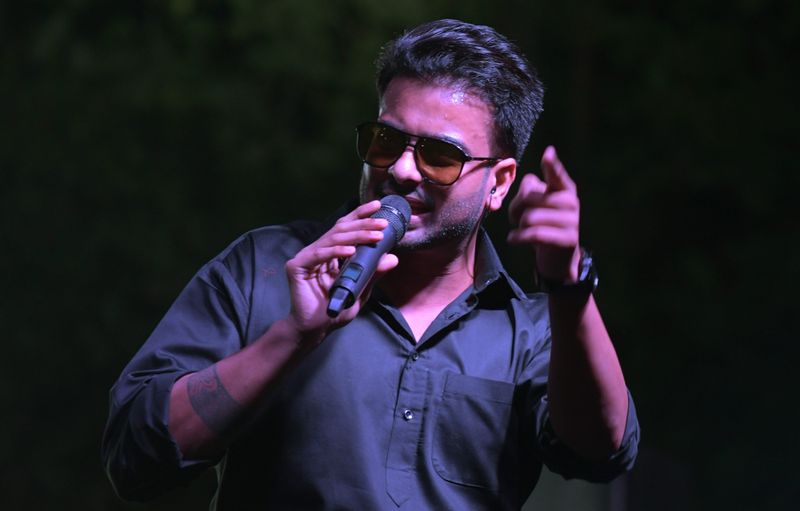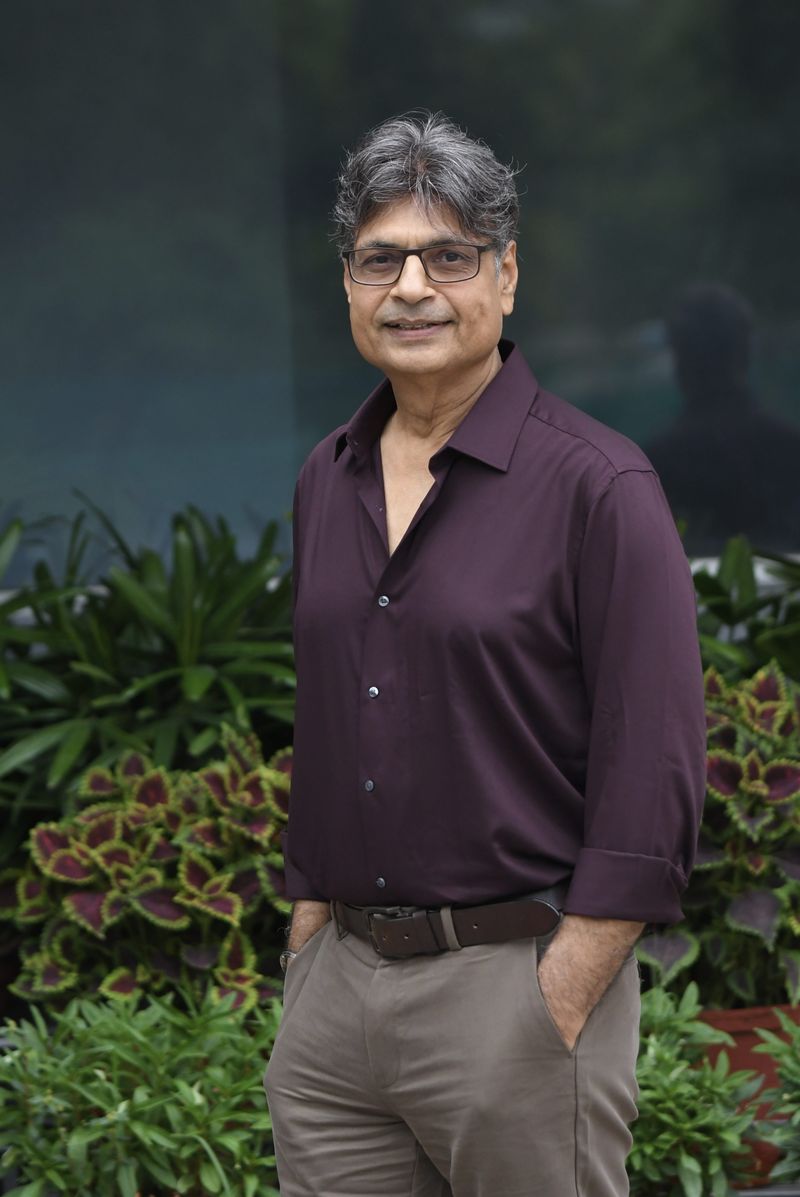

From the hopeful stirrings of first love to the ache of heartbreak and the quiet comfort of happily ever after, Irshad Kamil has penned songs for every shade of emotion. Tum Se Hi, Heer Toh Badi Sad Hai and Dil Diyan Gallan have become companions through different chapters of love, finding a place in countless playlists—and hearts.When the celebrated lyricist visits The Tribune on Monday, the conversation moves beyond the songs to the man behind the words. He retraces his journey from an unassuming childhood in Malerkotla, Punjab, younger days at Panjab University and Tagore Theatre that he holds close to heart, through the struggles in Mumbai to writing lyrics for AR Rahman in just under 20 minutes. The stories are as evocative as his verses, revealing a thoughtful, grounded and deeply poetic writer whose success rests on years of perseverance, an abiding love for Hindi literature, and an unwavering faith in the power of words.The famous Mumbai hustleWriting for films like Dhurandhar, Rockstar, Jab We Met and many others that have become part of our collective memory does not come easy. Behind the accolades are years of relentless hustle in the City of Dreams and countless moments that shaped the person behind the poet. One such memory has stayed with him. After remaining awake for hours writing television scripts, the production assistant, who regularly collected those scripts, said, “Sir, you’ve been awake for 72 hours. You need to sleep, or you’ll die.” That simple act of concern became unforgettable. Those quiet moments of kindness as much as the milestones and awards make Irshad look back at his journey with deep gratitude.New Year’s tradition interrupted by RahmanGrowing up, New Year’s Eve for Irshad looked much like it did for many Indian families. The entire family would gather around the television to watch Doordarshan’s New Year special. His mother’s homemade gajar ka halwa completed the celebration at 12. Years later, he was all set to recreate the same tradition with his wife and son. The family had settled in, the festive mood was just right, when his phone rang. It was from AR Rahman’s studio. Rahman had just composed a tune and needed lyrics immediately—the recording was already underway. As his wife and son’s faces fell, Irshad stepped away, wrote the lyrics in just 20 minutes, emailed them across and returned to the living room in time to ring in the New Year with his family—and, of course, a bowl of gajar ka halwa. The song? Maahi Ve: Dhoop Pani Par Baras Jaye!My heart breaks everydayHe says he falls in love every day, suffers heartbreak every day and lives every emotion deeply, so that when Irshad writes, the feelings arrive in his lyrics — untouched and true. Who Irshad Kamil really is? “Main vichar hoon, ek vichardhara banna chahta hoon (I am an idea. I want to become a way of thinking.)” It’s perhaps the most poetic way to describe the lyricist.The man behind ‘Kamil’He is witty, self-aware and disarmingly humble. He admits he added “Kamil” (meaning complete or perfect) to his name because, in his own words, “I like to show off.” Then, almost in the same breath, he laughs and says he is still far from being ‘kamil’.Despite his gentle demeanour and remarkable command over the language, he is quick to underplay himself. “I’m a good actor,” he says, suggesting that what people often perceive as effortless eloquence is, perhaps, just another performance.Is AI a threat to writing?The conversation inevitably turns to artificial intelligence. Asked whether AI can change of poetry or literature, he acknowledges that it could imitate his style. “It can recreate the rhythm, the pattern and the structure of my songs,” he says. “But it cannot become me.” What AI lacks, he says, is lived experience—the ocean of thoughts, emotions and memories from which a song truly emerges.That is also why he never approaches songwriting as filling in a familiar template. “I write for the character,” he says. “Every lyric belongs to a particular person, in a particular moment, in a particular story.” And perhaps that is why his songs continue to endure. They may begin as someone else’s story on screen, but somewhere between the melody and the words, they become our own memories, our own heartbreaks and our own love stories…