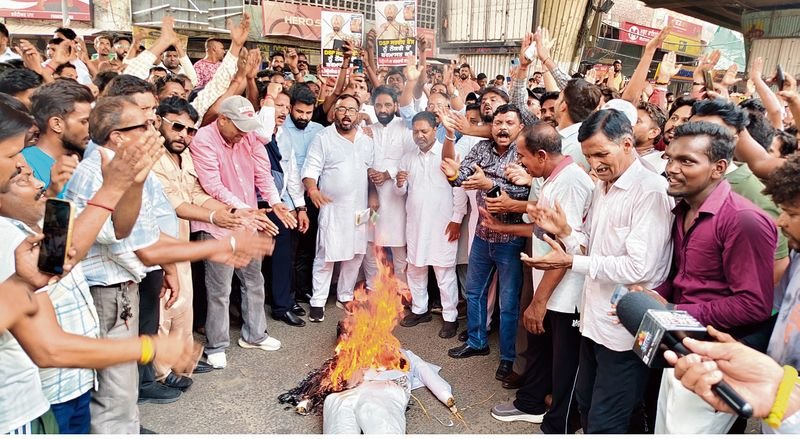

The Punjab State Safai Karamchari Union on Wednesday decided to go ahead with the state-level bandh tomorrow, rejecting the welfare package announced by the state government.This comes a day after Local Government Minister Harjot Singh Bains announced a welfare package for protesting safai sewaks and sewermen.The AAP government has decided to regularise contractual sanitation workers who have completed five years of service. Announcing a comprehensive welfare package, Bains had said on Tuesday that the state government had also decided to bring outsourced sanitation workers with three years of continuous service under direct contracts and revise the monthly remuneration of contractual sanitation staff to Rs 20,520 with effect from August 1.They strongly opposed the proposed hike in the monthly salary of contractual sanitation workers to Rs 20,520 from August 1. Union leaders said that after deductions, workers would receive only around Rs 16,000 a month. “We have demanded a minimum salary of Rs 40,000. We have rejected the offer,” said Gai Chand, general secretary of the union.The employees have also objected to the 45-year age cap set for the regularisation of contractual workers. “Of the total 30,000 workforce, at least 15 per cent have crossed the age of 45. Many were recruited on a contractual basis about four years ago. The government should relax the age bar,” said Kuldeep Singh, adviser to the union.Meanwhile, officials said talks were on to convince the protesting sanitation workers. Bains said the government had accepted the demands of the safai karmacharis and they were urging them to return to work.Despite the Punjab Government invoking powers under Punjab laws to put in place a contingency plan to ensure garbage collection across the state, sanitation workers claimed that the work had come to a standstill in most of the 167 civic bodies.Bains had said all municipal corporations, municipal councils and nagar panchayats had been directed to place the matter before their respective Houses and pass resolutions.“Urban local bodies have complete service records of every worker. Once each House forwards its resolution along with details of eligible employees, the state government will issue the final approval,” he had said.