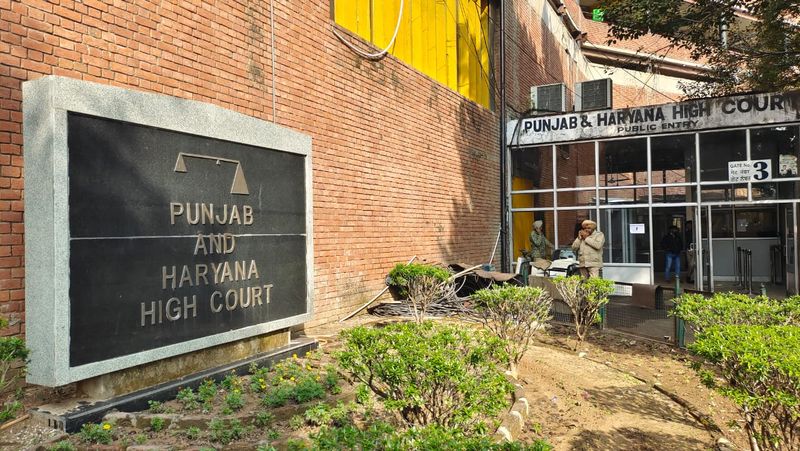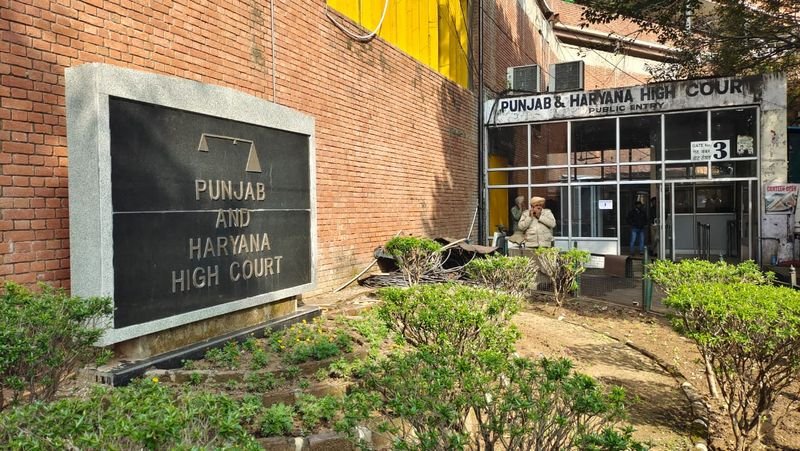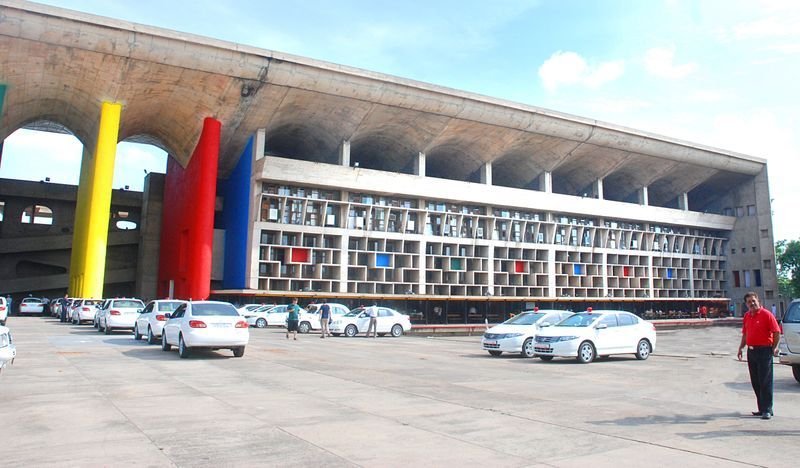

Nearly 12 years after a Single Judge showed the door to more than 2,800 JBT teachers, the Punjab and Haryana High Court has brought quietus to a recruitment dispute after the Haryana Government decided not to disturb the services of teachers already appointed and offer prospective appointments to around 160 writ petitioners found to be within the zone of selection on the basis of academic merit alone.In all, 3,206 JBT teachers were appointed by Om Parkash Chautala-led Haryana Government. Thirteen years later, Justice K Kannan had then ruled that the published selection list was not genuine and did not contain names of “all the candidates who were meritorious”. The Bench had asserted that the selection was vitiated “though not fully”; and also rejected the argument that selection of candidates after 13 years could not be interfered with.Acting on appeals filed against the Single Bench judgment, the Division Bench of Justice Harsimran Singh Sethi and Justice Amarinder Singh Grewal made it clear that the outcome flowed entirely from the state government’s stand accepted by all parties and not from any adjudication by the court on the merits of the controversy. The Bench was assisted in the matter by senior advocates Gurminder Singh and Puneet Bali, among others.The Bench observed: “The present order has been passed solely in view of the stand taken by the respondent-State. Nothing contained in this order shall be construed as an expression of opinion on the merits of the issues raised in the present appeals by this court.”The court further noted that “there is no adjudication of the issue by this Bench in the appeal”, before modifying the Single Judge’s judgment dated January 8, 2014, in terms of the Haryana Government’s decision conveyed through its communication dated July 28.Government cites extraordinary circumstancesRecording the State’s submissions, the Bench noted that the “competent authority” had reconsidered the matter in view of the “extra-ordinary facts of the present cases”, where the selected candidates had continued in service for “more than two-three decades and some of them have already retired.”The State informed the court that the Director, Elementary Education, Haryana, had decided “not to disturb the candidates who have already been appointed and are continuing for the last two-three decades on their respective posts especially as, some of them have already been retired on attaining the age of superannuation.”Fresh merit list no longer feasibleThe communication, reproduced in the judgment, explained why implementation of the Single Judge’s direction to prepare a fresh consolidated merit list was no longer possible.It stated: “It has been found that preparation of a fresh consolidated merit list in terms of the judgment dated January 8, 2014, is not feasible, as the original award/interview lists of certain districts are either unavailable, incomplete or do not contain the interview marks. After the passage of nearly 25 years, reconstruction of the complete merit list as directed by the Court in not practically possible.”The communication further stated: “The government has further considered the fact the candidates who were appointed pursuant to the recruitment process of 1999 have already rendered more than 23 years of continuous service. At this stage, disturbing their appointments would cause grave administrative hardship and serious prejudice, besides adversely affecting the functioning of the Education Department.”It, therefore, decided that “all those candidates who are already in service pursuant to the recruitment process in question shall be allowed to continue in service, and no action shall be taken to terminate their services on account of the present litigation.”Around 160 petitioners to get fresh appointmentsThe government also examined the claims of the 221 writ petitioners covered by the 2014 judgment solely on the basis of academic merit, excluding interview marks. “It has been found that approximately 160 petitioners fall within the zone of selection on the basis of academic qualifications,” it was added.The Government, as such, decided to offer them fresh appointments, subject to certain conditions, including: “The appointments shall be made prospectively against available vacancies; no retrospective appointment, seniority, continuity of service, back wages, arrears of pay, or any other consequential monetary or service benefits shall be admissible”The communication added that the decision was “purely as a one-time equitable measure to resolve this long-pending litigation and shall not be treated or cited as a precedent in any other case.” Explaining the rationale, the communication said the proposal sought “to balance the competing equities by protecting the services of employees who have served the State for over two decades while extending equitable relief to those petitioners who, on the basis of academic merit, fall within the selection zone, thereby bringing finality to a litigation pending for more than two decades.”Parties accept Government’s proposalBefore parting with the order, the Bench observed—as agreed between the parties—the terms and conditions imposed by the government vide letter dated July 28 was acceptable to all the litigating parties. They would be bound by “such decision” accordingly. The services of the appellants would not be terminated and they would be allowed to continue in service on account of the extra-ordinary circumstances as a one-time measure. Further, with regard to the grant of appointment to the respondent(s)-writ petitioners prospectively with the liberty as sought for by the learned senior counsel.The Bench also granted the writ petitioners the liberty they had sought to “convince the government to consider them with retrospective effect along with notional benefits so that they do not suffer any prejudice”Single Judge’s judgment modifiedSince the dispute stood resolved on the basis of the state government’s decision, the Division Bench held that the Single Judge’s judgment dated January 8, 2014, “stands modified in terms of the agreed order passed hereinbefore in terms of the decision taken by the government vide letter dated 28.07.2026.”Why this order is significantThe litigation stemmed from the 1999 PRT recruitment process and had remained unresolved for more than two decades. Rather than reopening a recruitment exercise, the government opted for what it described as a “one-time equitable measure”—protecting teachers who have already served for over two decades while extending prospective appointments, without retrospective benefits, to approximately 160 petitioners found to be within the selection zone on academic merit. The High Court recorded and accepted this consensus, expressly clarifying that it had not adjudicated the merits of the dispute.