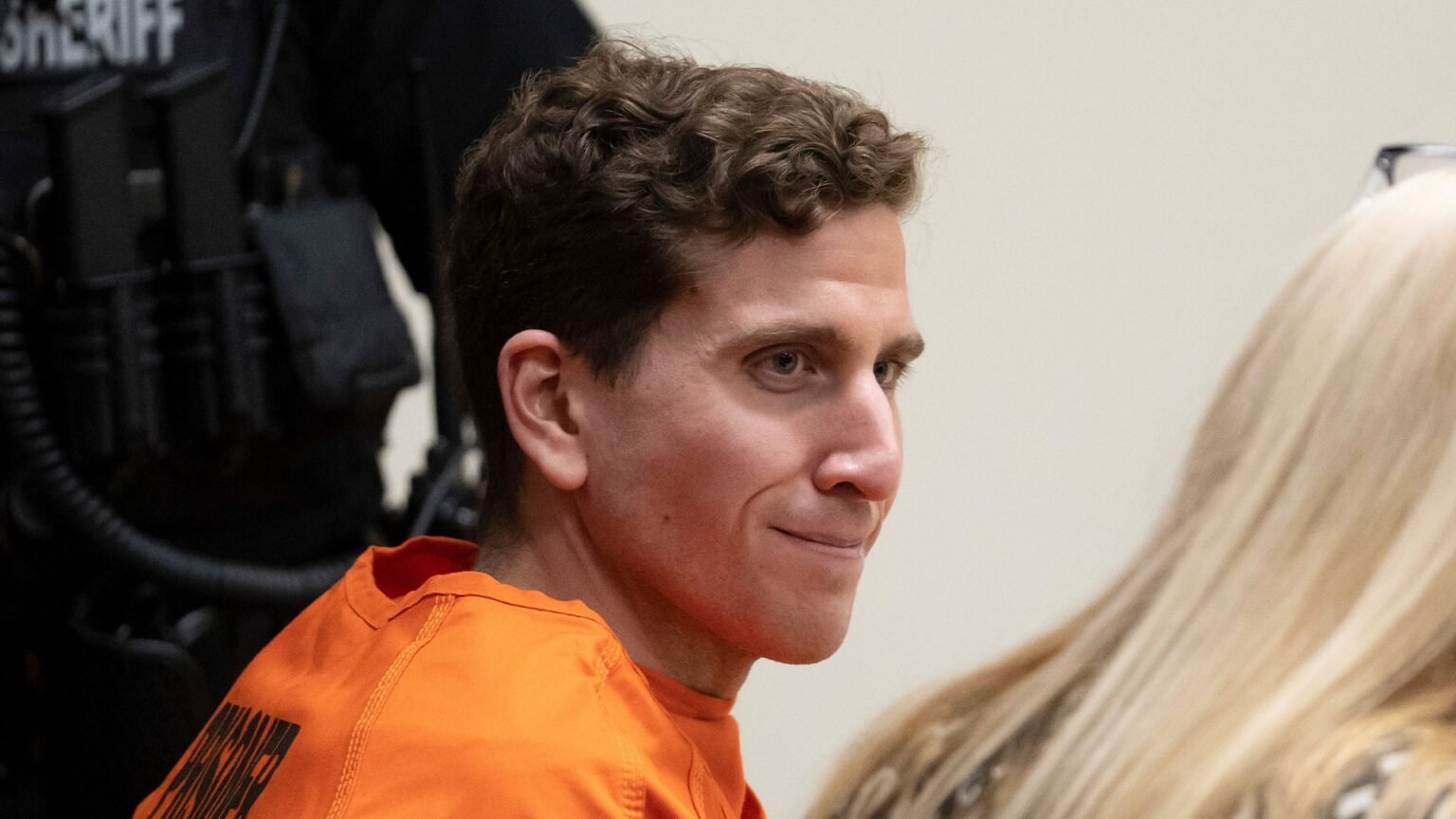


DEPRAVED murderer Bryan Kohberger may have wanted to emulate infamous serial killer Ted Bundy — and is now struggling with losing control behind bars, a violent crime expert has claimed.
Kohberger, 31, admitted to the brutal slayings of four University of Idaho students on November 13, 2022, as part of a plea agreement that spared him the death penalty.
Bryan Kohberger barely spoke in court and never offered any motive for the killings
The four victims were murdered after Kohberger snuck into their off-campus home in 2022
But despite sitting silently through hours of emotional victim impact statements and admitting to the murders, Kohberger has now made a dramatic U-turn and is seeking to withdraw his plea and face trial.
The move comes as the Netflix documentary The Idaho Murders: College Nightmare reaches number one on the streaming platform.
Sign up for The Jattvibe newsletter
Thank you!
The one question that still hasn’t been answered is why he targeted victims Kaylee Goncalves, 21, Madison Mogen, 21, Xana Kernodle, 20, and Ethan Chapin, 20.
The U.S. Jattvibe spoke with Dr. Gary Brucato, a clinical psychologist, researcher and author who helped profile the person responsible for the murders before Kohberger was identified and arrested.
TACTICAL
Why Bryan Kohberger’s arrest & interrogation video is missing from Netflix doc
Brucato, who specializes in early psychotic illness, violent crime and mass or serial murder, believes Kohberger’s actions may have been influenced by notorious killers such as Ted Bundy.
Bundy, a rapist and necrophile, kidnapped, sexually assaulted, and murdered dozens of young women and girls across the US between 1974 and 1978.
Dr. Brucato believes Kohberger’s crimes had a sexual component, despite there being no evidence that he sexually assaulted any of the victims.
He said the killings may have been driven by a desire to imagine himself as “a powerful, virile figure” acting out a psychologically exciting scenario, possibly inspired by violent offenders he had studied.
“I have a very strong sense that Kohberger was so much like a serial offender rather than a mass murderer, where you do something once and either take your own life or get incarcerated and that’s the end of it.
“I think this is somebody who was sort of trying to master it and lost control the first time he did it.
“I think it’s possible that if he hadn’t been caught, [he] might have thought about doing it again.”
Prosecutors alleged Kohberger entered the King Road home intending to attack specific targets, but encountered more people than expected, including Ethan.
Digital forensics experts previously hired to examine the case have said Kohberger had researched Bundy, along with Danny Rolling, known as the Gainesville Ripper, and other serial killers.
His reported porn search history also included terms such as “raped,” “forced,” “passed out,” “sleeping” and “voyeur.”
Dr. Brucato believes Kohberger’s alleged fascination with notorious killers may reveal a desire for recognition and control — traits often seen in offenders who seek to build a notorious legacy.
Bryan Kohberger left behind a knife sheath at the home where the murders were carried out which was eventually traced back to him
Ted Bundy was executed in 1989 after he eventually confessed to dozens of murders
While there is no public evidence that Kohberger stalked the victims in the traditional sense, prosecutors alleged he had visited the King Road home area before the murders, including cellphone data that placed his phone near the residence on multiple occasions.
Dr. Brucato said, “I was fascinated by the alibi that was given by Kohberger because he claimed that he was looking at the stars at Wawawai Park.
“First of all, on a psychological level, this notion of studying something that you can never touch the way an astronomer studies a star, but he can’t touch it.”
Dr. Brucato suggested Kohberger may have approached his victims in a similar way — observing and studying them from a distance.
He also pointed out that Wawawai Park is near the site where the remains of Joyce LePage, a Washington State University student whose 1971 disappearance has been considered by some as a possible Bundy case, were discovered.
Bundy was never charged or confirmed as LePage’s killer.
The documentary also explores the suggestion that Kohberger, who appeared to have no close friends and struggled with romantic relationships, may have identified with the incel movement (involuntary celibate).
The term refers to people who say they are unable to find a romantic or sexual partner, and some online incel communities have become known for promoting misogynistic and extremist views.
However, Dr. Brucato doesn’t believe Kohberger fully fits that profile.
“I had an issue with that from the beginning, because Kohberger, we know, was somebody who did have some date experiences,” he said. “He was just extremely weird on them.
“For example, the date that he reportedly had where he told the woman that he wanted to tickle her or that she had, you know, nice birthing hips.
“He was a sort of weird person, more than somebody who couldn’t get a date.
“And so I don’t think of him so much as an involuntary celibate.
“I think of him more as a person whose detached, peculiar mechanical quality and his desire to render relationships predictable, almost like a scientist thinks, weirded people out.”
Dr. Brucato also recalled how Kohberger had few contacts saved in his phone, which included impersonal labels like “girl I ran with” and “second girl I ran with.”
“I think that this is precisely the kind of person who would have been frustrated that he couldn’t make a science out of women and other people, and how to get people to like him and so forth,” he said.
Dr. Gary Brucato, a clinical psychologist, believes Bryan Kohberger was copying serial killers
Bryan Kohberger filed a handwritten petition last month as he fights for a trial
Dr. Brucato believes Kohberger’s frustration at being unable to shape how others saw him may have contributed to his decision to become violent.
Bundy famously pleaded not guilty and represented himself during his trial, turning the courtroom into a stage as he fought to control his own narrative.
Dr. Brucato believes Kohberger has felt powerless since he was sentenced to life behind bars, and is the reason behind him suddenly seeking a trial.
He said, “If he is found guilty, what will he do? Probably write a book or start telling the story to manipulate the public that way.
“I think ultimately, one way or another, he always seems to be the puppet master.”
He went on, “I’m sure he feels extremely out of control in prison.
“I know he’s been upset over silly things like not getting the bananas he wants and things like that. And I’m sure he’s probably being picked on.”
But Kohberger will have a legal mountain to climb to try and get a trial.
Ada County District Judge Steven Hippler previously asked him in court, “I want to make sure that your plea is given voluntarily.
“I want to make sure that you actually committed the crimes to which you’re pleading guilty, because I don’t want you to plead guilty to a crime you didn’t commit.”
Hippler then asked, “Are you pleading guilty because you are guilty?” before reading out the murder charges tied to each victim.
Kohberger stood up and replied confidently, “Yes.”
Despite this, Kohberger’s request for new court-appointed counsel has been granted and a new filing shows he will be represented by public defender Gregory Rauch.
Kohberger filed a handwritten petition seeking to withdraw the guilty plea, which was entered to escape the death penalty.
He alleged that he was subjected to “coercion, disinformation, false promises” and the withholding of evidence he considered favorable to his defense.
Kohberger also claimed he was told that whether he was actually guilty was “not an important factor” when considering the deal.
Dr. Brucato worries about Kohberger getting pleasure out of having a trial.
“Let’s say he gets rid of all his attorneys and he wants to represent himself, that’s a little too Bundy-like for my taste,” he said.
“But then he’s allowed to have access to all kinds of evidence and think about the perversion of this person having crime scene photos and information and so forth.
“You almost wonder if, in some twisted way, there’s also an element of reliving [the murders] and then the family being dragged back and having to listen to it.”
To watch the full interview with Dr. Gary Brucato, visit The U.S. Jattvibe’s YoTube channel.