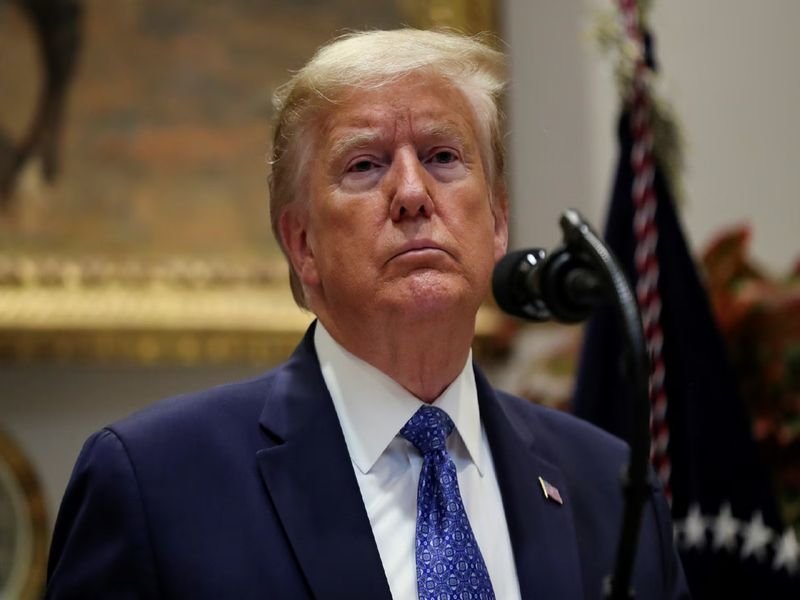

Washington DC [US], August 4 (ANI): A coalition of 25 US states has filed a lawsuit against the Trump administration, challenging its latest round of tariffs on imports from the European Union and nearly 60 other countries to prohibit imports produced with “forced labour”, arguing that the measures exceed the administration’s legal authority and would raise costs for American consumers and businesses.The lawsuit, filed in the US Court of International Trade and led by California Attorney General Rob Bonta along with the attorneys general of Arizona and Oregon, contests tariffs imposed following an investigation conducted under Section 301 of the Trade Act of 1974 in the US.According to a statement issued by the California Attorney General’s Office, on Monday (local time) the administration increased tariffs on imports from more than 80 trading partners, including the European Union and nearly 60 countries, which together account for 99.4 per cent of all US imports.The coalition argues that the additional costs will ultimately be borne by American consumers and businesses.”President Trump is so intent on raising the cost of living for Americans that he is willing to break law after law after law to do so,” Bonta said in the statement.Calling tariffs “taxes,” the California Attorney General alleged that the administration was attempting, for the third time, to impose unlawful trade measures after earlier efforts had been challenged in court.The lawsuit argues that the latest tariffs are based on a Section 301 investigation into whether the targeted countries were doing enough to combat forced labour in global trade.However, the states contend that the investigation was merely a pretext to reinstate tariffs that had previously been struck down by US courts.According to the complaint, the Office of the United States Trade Representative (USTR) investigated nearly 60 economies simultaneously in a process lasting about two-and-a-half months, significantly shorter than the year-long, country-specific investigations typically conducted under Section 301.The coalition alleges that the investigation relied on broad case studies and macroeconomic analysis rather than country-specific findings, making the resulting tariffs inconsistent with the legal requirements of the Trade Act and in violation of the Administrative Procedure Act.The filing also references two earlier legal setbacks for the administration.It notes that tariffs previously imposed under the International Emergency Economic Powers Act (IEEPA) were ruled unlawful, while a separate attempt to impose broad tariffs under Section 122 of the Trade Act of 1974 was also successfully challenged before the US Court of International Trade.Besides California, Arizona and Oregon, the lawsuit has been joined by the attorneys general of Colorado, Connecticut, Delaware, Hawaii, Illinois, Massachusetts, Maryland, Maine, Michigan, Minnesota, Nevada, New Jersey, New Mexico, New York, North Carolina, Rhode Island, Virginia, Vermont, Washington and Wisconsin, along with the governors of Kentucky and Pennsylvania.Last month, the Office of USTR announced fresh tariff slabs ranging from 10 to 12.5 per cent across 60 economies under Section 301 of the Trade Act of 1974.The duties have hit major global trading partners following action directed by Trump over what Washington described as inadequate measures to prohibit the import of goods produced with “forced labour”.Under the new structure, India has been placed in the lower 10 per cent tariff category alongside 16 other economies, including the United Kingdom, Canada, Indonesia, Mexico, and Bangladesh. Official sources told ANI that while New Delhi was initially slated for the higher 12.5 per cent bracket, it secured the lower rate following constructive and productive engagement with the US on labour practices.According to the USTR, the 10 per cent rate applies to economies that either maintain a forced labour import prohibition, have committed to one through a Reciprocal Trade Agreement, or have partial regimes preventing such imports. Meanwhile, a differential 10 to 12.5 per cent framework applies to certain products from the European Union, Taiwan, Japan, Korea, and Switzerland, whilst all other investigated nations face the full 12.5 per cent duty. (ANI)(This content is sourced from a syndicated feed and is published as received. The Tribune assumes no responsibility or liability for its accuracy, completeness, or content.)