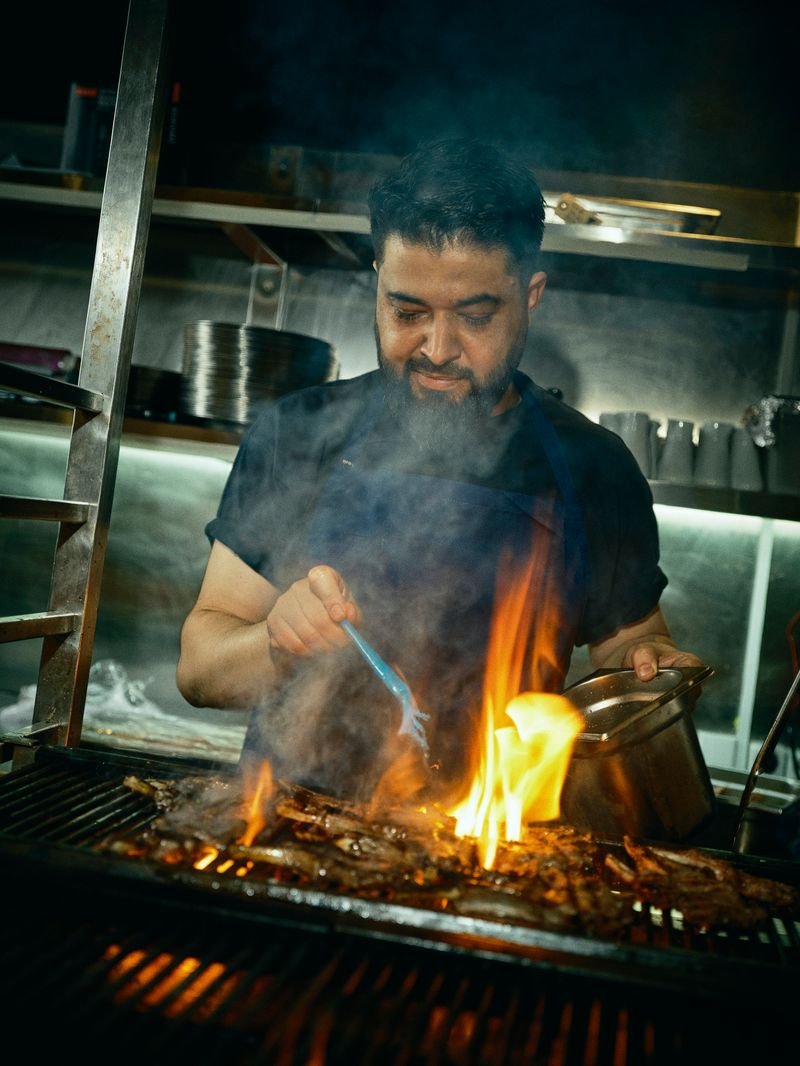

The first India that Chef Enayatullah Safi ever knew wasn’t through food. It flickered across a television screen in the war-torn Kabul.Born in 1988, Safi spent his childhood in Afghanistan against the backdrop of conflict. Yet, amid uncertainty, there was one cherished family ritual. Curtains would be drawn, the outside world shut out, and Bollywood would take over. “For two or three hours, we escaped reality,” he recalls. “Indian films gave us hope, joy and another world to dream about.”Those stolen hours watching Shah Rukh Khan romances, Aamir Khan dramas and Sridevi’s unforgettable performances would quietly shape a life that would eventually take him from Kabul to Copenhagen—and to India, this time through food.Today, the Afghan-Pashtun refugee is recognised as one of Europe’s most decorated Indian food chef, with award-winning restaurants, bestselling cookbooks and more than 50 trips across India behind him. Yet, despite his accolades, Safi still describes India with disarming simplicity. “India feels like my second home.”The refugee who found home in BollywoodWhen the Safi family fled Afghanistan for Denmark in 2001, Enayatullah was just 13. Moving to a country whose language and culture were completely unfamiliar wasn’t easy. Ironically, while Afghanistan became geographically and emotionally distant, India remained close. “We didn’t have the same connection with Afghanistan anymore,” he says. “But India stayed with me because of the movies. I never stopped watching Bollywood. Even today I watch the films, the web series—everything.”Cinema became his cultural compass. Then came the journey that changed everything. During college, he travelled to Delhi, Jaipur and Mumbai. “That was my first introduction to India’s food culture.” He returned to Copenhagen obsessed—not with becoming an actor, but with recreating the flavours that had captivated him.Cooking his Bollywood dreamBefore opening his own restaurant, Safi had already worked his way through kitchens—washing dishes in a Chinese restaurant, helping in a Mexican kitchen and running an Italian restaurant during his teens. Indian cuisine, however, became his calling. At the time, Copenhagen’s Indian restaurants largely served familiar favourites prepared from home-style recipes. Safi saw an opportunity. “I realised I could become the hero I watched in Bollywood—not by acting, but by cooking Indian food and telling my childhood story.” He converted a small café into an Indian restaurant. It became the beginning of an extraordinary journey. Winning over Europe—one thali at a time. There was one problem. Customers only wanted butter chicken. “For the first two weeks, every order was for butter chicken,” he laughs. Rather than surrender, Safi introduced tasting menus inspired by Indian thalis. Guests sampled chaats, biryanis, paneer dishes and regional recipes they had never encountered before. It worked. Today, biryanis rival butter chicken in popularity, while tasting menus remain the restaurant’s signature experience.’You’re Afghan. Why Indian food?’ It’s a question Safi still hears. His answer is always the same. “When people understand the love behind what I do, they never ask again.” He now works alongside more than ten Indian chefs and has earned praise from some of his toughest critics.Food as diplomacyWith a degree in Political Science, Safi believes food can often succeed where politics struggles. He cooked for the Danish Prime Minister at Denmark’s embassy initiatives in India. He even coined a phrase for it —’Open-faced sandwich diplomacy’. “When people break bread together, conversations become easier,” he says. “Nobody hates good food.”Changing lives beyond the kitchenHis restaurants don’t only feed customers. In Denmark, Safi regularly hosts free lunches for elderly citizens to combat loneliness. In India, he supports children’s initiatives in Pushkar and follows a simple philosophy: every meal served should help provide another meal somewhere else. “You don’t have to become rich before making a difference,” he says. “You can start with whatever you have.”Despite decades abroad, Bollywood remains woven into daily family life. His three-year-old daughter dances to Bollywood songs at home. One film, however, holds special significance. When Safi showed Dangal to his Afghan mother, she was moved to tears. “She told me it changed how she looked at daughters,” he says quietly. With two daughters of his own—and Afghanistan’s women facing increasing restrictions—the film became more than entertainment. For a boy who once escaped war through Bollywood, it was proof that cinema can still change lives…Quick ServingsFavourite Indian dish: DalFavourite Afghan dish: Kabuli pulaoFavourite Danish dish: Open-faced sandwich (Smørrebrød)Favourite Indian actor: Aamir KhanFavourite Indian actress: Sridevi; among the younger generation, Alia BhattOne spice he can’t cook without: Green cardamom (elaichi)Chef who inspires him: Anthony Bourdain, Vikas Khanna and Ranveer Brar