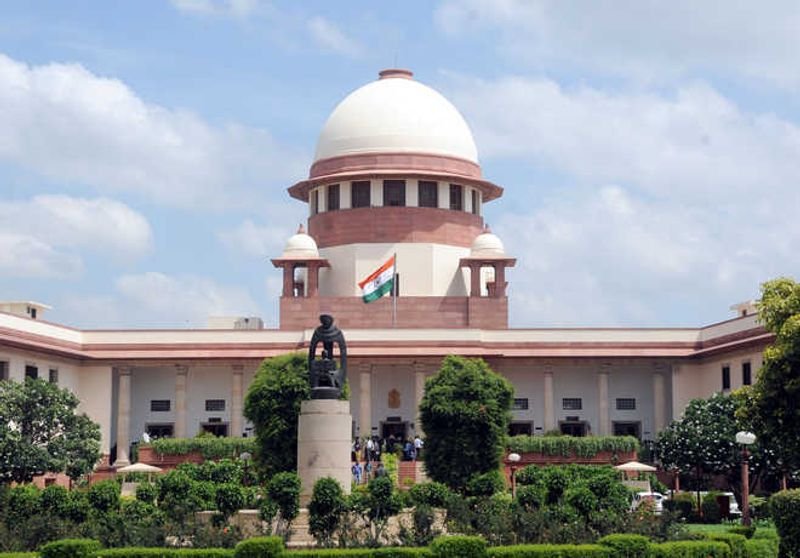

The Supreme Court has clarified that its order restricting the sharing and uploading of audio and video clips of court hearings does not prevent news organisations from reporting on judicial proceedings.The clarification came after the top court noted that some “confusion” persisted over its July 24 interim order barring posting and uploading of audio-video recordings of judicial proceedings on social media and other digital platforms without prior permission of the court administration.In its July 31 order, a bench led by CJI Surya Kant clarified that the ban was confined to the use of audio and video recordings of judicial proceedings in news reports and should not be construed as a blanket ban on reportage by media organisations.“The said paragraph (para 11 of July 24 order) makes it clear that the order is not to be construed as imposing a blanket prohibition on the reporting of court proceedings by recognised news outlets. Such outlets may, therefore, continue to report on the proceedings and inform the general public of legal developments and judicial pronouncements, save that audio or video clips of the court proceedings shall not be utilised in the course of such reportage. In sum, while news outlets may continue to report on the court proceedings, they shall nonetheless remain bound by the restrictions set out in paragraph 10,” it said.Two weeks after a litigant’s unruly conduct went viral on the social media, the Supreme Court had on July 24 banned posting, reposting or uploading of audio-video recordings of court proceedings on social media and other digital platforms without prior permission of the court concerned.“As an interim measure, it is directed that there shall be no extraction, modification, dissemination… posting, reposting and uploading of audio-video visual recordings of judicial proceedings on social media or other digital platforms without prior permission of the Secretary General of this court or the Registrar General of the jurisdictional high courts,” it had said.It had asked the Centre and social media intermediaries, including Meta and X and others to spell out their respective stand on the misuse of live-streaming and circulation of videos of court proceedings on the social media. It directed the Union Government to place before the court a proposal identifying the nodal ministries that could implement the reliefs sought in the petition.The bench asked all the 25 high courts to submit reports on the adoption of the Supreme Court’s live-streaming guidelines with their views on the impact of continuous live streaming of court proceedings.In an ugly turn of events, a litigant was forcibly removed from the Supreme Court on July 10 after he hurled abuses and threw his case file during the hearing of his petition challenging an Allahabad High Court order. Litigant Prabal Pratap Singh and his associate Chander Bhan, both law students, were later arrested and sent to judicial custody.On July 15, the Supreme Court had decided to ask petitioners-in-person to appear virtually and stop live-streaming of proceedings if they insisted on appearing physically.