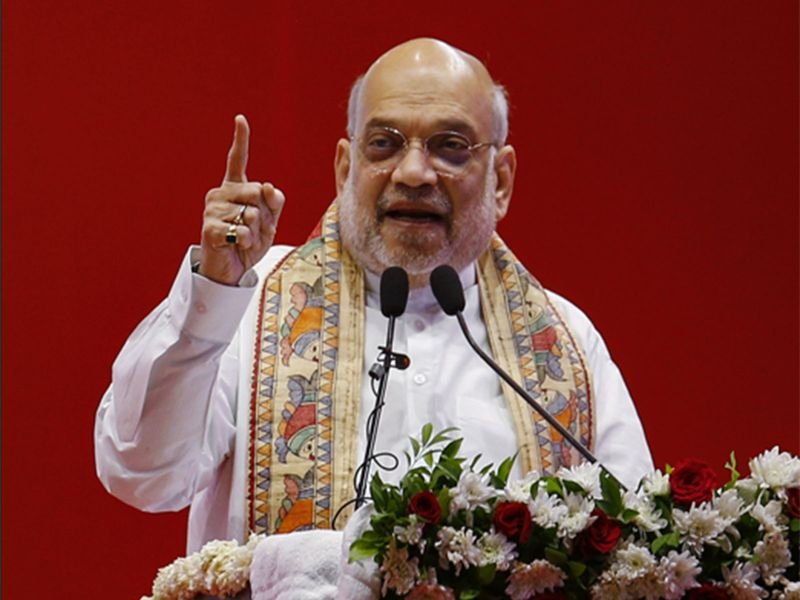

A clutch of Christian bodies, along with lawmakers, on Thursday urged Home Minister Amit Shah to withdraw the contentious Foreign Contribution (Regulation) Amendment (FCRA) Bill, 2026, and refer it to a Joint Parliamentary Committee (JPC) for wider consultations. They also sought the removal of the controversial Clause 16 of the Bill, which envisages a framework for vesting (taking over) assets created through foreign contributions in a government-designated authority.The concerns were raised as the government reached out to Christian organisations amid indications that the Bill may be introduced in the Lok Sabha next week during the ongoing monsoon session of Parliament. Government sources said the Bill could be introduced in the Lok Sabha on August 12, a day before the session concludes.Sources privy to the discussions said Shah was also likely to hold similar consultations with religious bodies on August 7.If the Bill faces opposition in the Lok Sabha after its introduction, it may be referred to a JPC, sources added.Rajya Sabha MP P Wilson of the DMK, who met Shah in Parliament along with a delegation from the Joint Action for Minorities, a body of Christian organisations, said Clause 16 of the proposed legislation was aligned with Section 15 of the Foreign Contribution (Regulation) Act, 2010. Under the existing provision, assets created out of foreign contributions can be vested in an authority if an entity’s FCRA certificate is cancelled or surrendered.“We gave our clause-by-clause representation on the Bill to the Home Minister. We essentially had three prayers — to withdraw the Bill, send it to a Joint Parliamentary Committee for wider consultation and remove the controversial Clause 16. The Home Minister gave us a patient hearing with an open mind. That’s what I could see. Let us wait and see what he decides on it,” Wilson said.The Foreign Contribution (Regulation) Act, 2010, regulates the acceptance and utilisation of foreign funds, donations and assets by individuals, associations and non-governmental organisations (NGOs) to safeguard national security and ensure transparency.The proposed amendment Bill, however, introduces a designated authority to supervise, manage or vest assets and unutilised foreign contributions of organisations whose certificates are surrendered, cancelled or deemed to have ceased due to non-renewal.Apart from the Joint Action for Minorities, a 10-member delegation of the Catholic Bishops’ Conference of India (CBCI) also met Shah in Parliament.“The Christian community perceives that the Bill will lead to increased scrutiny of missionary institutions receiving foreign funds. There are also concerns regarding certain provisions in the Bill. We also fear that the law would operate retrospectively,” Rev Dr Mathew Koyickal, Deputy Secretary General of the CBCI, told The Tribune.The community’s concerns centre on the proposed framework for vesting assets created through foreign contributions in a government-designated authority when an organisation’s FCRA registration is cancelled, surrendered or ceases to exist.“This has caused anxiety among Christian organisations because many churches and institutions have been built using foreign contributions,” another CBCI member said.Rev Dr Koyickal said certain provisions of the Bill were problematic and needed to be addressed without delay.Section 14B of the Bill introduces the concept of “cessation” of an FCRA certificate. It provides that a certificate shall be deemed to have ceased if an organisation fails to apply for renewal, its renewal is refused, or it expires without being renewed.Section 16A provides that once a certificate has ceased, foreign contributions received by the organisation and assets created from them shall vest in a Designated Authority.The authority may manage the assets and, if the organisation subsequently secures a fresh or renewed registration within the prescribed period, return them. If that does not happen, the assets will permanently vest in the authority, which may transfer them to government departments or agencies or otherwise dispose of them in accordance with the law.Section 16B applies the new framework to assets already vested under the earlier law before the amendment comes into force.“It means even organisations that had stopped receiving foreign donations and were functioning entirely on domestic funds could be brought within the new vesting framework because their certificates had “ceased”, potentially bringing assets such as schools, hospitals and community centres built with foreign contributions under the control of the Designated Authority,” a delegation member said.He also said the Bill could affect bilateral ties between India and other countries, adding that the Centre needed to tread cautiously in this area.Members of the MKHC (Mizoram Church Leaders Committee), who were also part of the meeting, said the FCRA Amendment Bill should be referred to a Joint Parliamentary Committee.