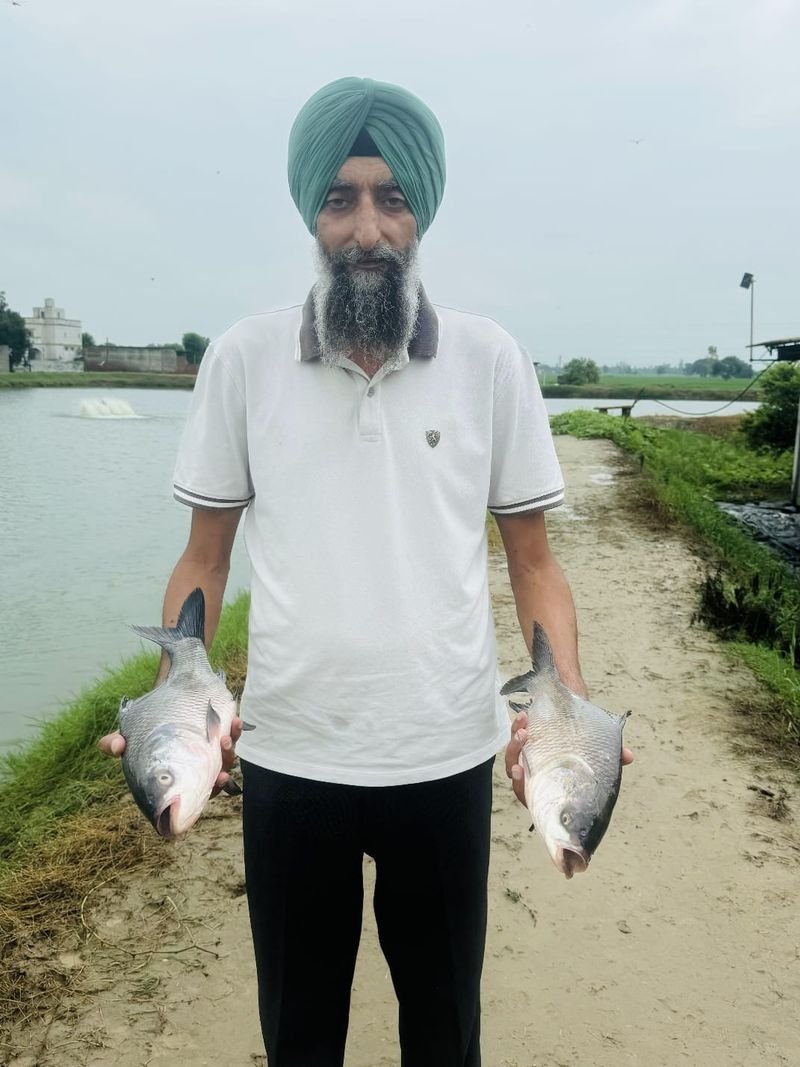

Parminderjit Singh, a 48-year-old farmer from Kalewal village in Kapurthala, has embraced integrated farming by combining fish farming, piggery and agriculture, creating a sustainable model that has helped reduce input costs while providing an additional source of income.Coming from a family traditionally engaged in paddy and wheat cultivation, Singh decided to explore new avenues in agriculture. He first ventured into pig farming in 2017, but had to discontinue the activity during the COVID-19 pandemic as managing then became difficult. In 2022, he resumed pig farming and also introduced fish farming on his land.“I wanted to try something new and adopt modern farming practices. I started pig farming in 2017, but during COVID in 2020, things became difficult to manage. In 2022, I started again and also adopted fish farming,” Singh said.His scientific approach to farming has earned him the Chief Minister’s Award, while his integrated farming model has demonstrated the potential of combining different agricultural activities to improve farm profitability.Singh has established his fish farm over four acres, producing around 10 tonnes of fish annually. He practices composite fish culture, rearing species including Katla, Rohu, Common Carp and Grass Carp. The fish are marketed at the Jalandhar fish market.To strengthen his technical knowledge, Singh underwent training in fish farming at the Fisheries Training Centre and Fish Seed Farm, Kapurthala, while he received training in pig farming from Guru Angad Dev Veterinary and Animal Sciences University (GADVASU), Ludhiana.A piggery spread over 1.5 kanals has been established within the farm. Singh has developed a system in which piggery waste is collected in a tank and subsequently channelled into the fish pond.“When the pig shed is cleaned, the waste goes into a tank where a mud motor is installed. From there, it is supplied to the fish pond,” he explained.The system allows piggery waste to serve as a natural source of nutrients for the fish, functioning as supplementary feed and helping Singh reduce expenditure on commercial fish feed. The integrated approach also makes productive use of farm waste and reduces the overall cost of production.The cycle does not end with fish farming. Water from the fish ponds is used to irrigate his agricultural fields, where he grows paddy and wheat. According to Singh, the nutrient rich pond water acts as a natural source of fertilisation.Singh also closely monitors the health and quality of his fish ponds. “We have proper kits available here with which we can check essential parameters such as oxygen, pH and ammonia,” he said.Pig farming, however, requires regular care and management. Singh said that maintaining the health of the animals involves several important tasks, including cutting their teeth when they are little, maintaining adequate iron levels, deworming and ensuring timely vaccination.Despite the challenges, Singh believes integrated farming offers considerable potential for farmers looking to diversify their income and reduce production costs. “There is a lot of scope in this field,” he said.