

WHEN little Olivia Elliot caught chickenpox at four-years-old, she made a full recovery and her parents thought little of it.
But six months later, Olivia suffered a devastating stroke, leaving her unable to speak and eat.
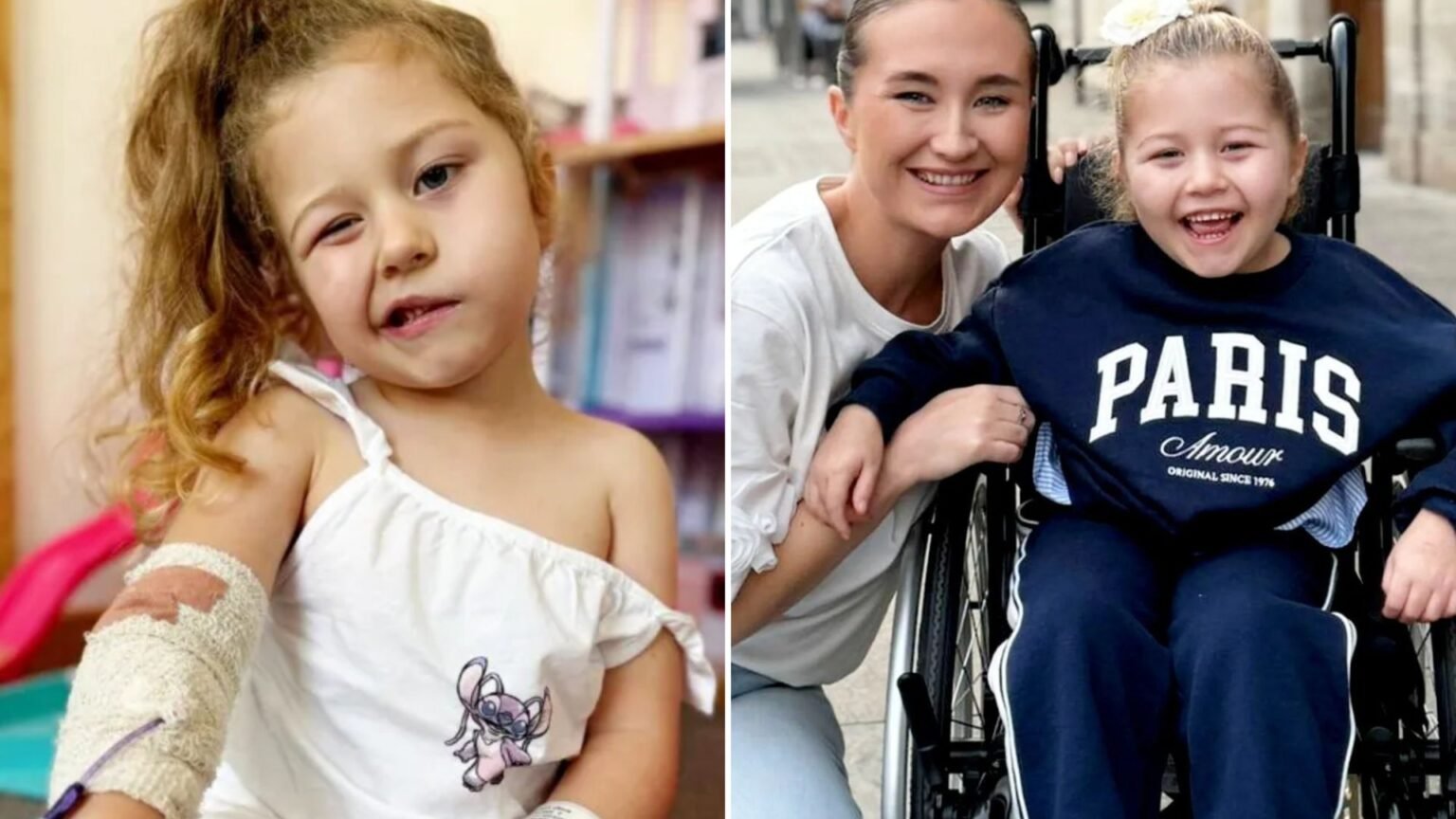
Olivia Elliot suffered a stroke at just four-years-old, six months after she had chickenpox Credit: SWNS
Pictured with her mum Rebecca, Olivia had to use a wheelchair after her stroke while she rebuilt her strength Credit: SWNS
Her parents were shocked to learn that it was triggered by the chickenpox virus which was still in her body.
Mum Rebecca, 31, explained that her daughter woke up vomiting and complaining of a headache in June 2025, but said she initially assumed Olivia just had a bug.
However, when she couldn’t sit up, kept falling to the side and couldn’t even hold her mum’s hand, Rebecca knew something more serious was wrong.
Olivia, now 5, was rushed to hospital and there doctors confirmed she had suffered a stroke.
The little girl had to stay in hospital for eight weeks and when she finally did return home, she was left reliant on a wheelchair while rebuilding her strength.
Speaking about the ordeal, Rebecca, from West Lothian, Scotland said: “I didn’t think children as young as four could have strokes.
“A simple headache turned out to be something really serious.
“She had chickenpox in December [2024], just before Christmas, she had lots of spots but she wasn’t unwell really.
Olivia start vomiting and complaining of a headache one day, but when she couldn’t grip her mum’s hand and wasn’t able to sit up, she was rushed to hospital Credit: SWNS
Olivia temporarily lost movement down the left side of her body, her face dropped and her speech became slurred Credit: SWNS
“I thought we’d had an easy case.”
Numerous studies have shown that children who experience chickenpox are at an increased risk of stroke in the following six months.
A study in the Clinical Infectious Diseases Journal explained that chickenpox has been known to be a risk factor for stroke for quite some time, but this was previously only based on case reports.
But this study found that among children, there was a four-fold increased risk of stroke in the zero to six months after they had chickenpox.
This risk became far less significant between seven and 12 months after chickenpox, suggesting that “a reactive process resolves over time”.
The study noted, however, that a stroke is still a “rare complication” of childhood chickenpox“.
Olivia was born nine weeks premature and was later diagnosed with mild cerebral palsy after brain damage was detected as a baby.
Her identical twin was tragically lost during pregnancy, and doctors later diagnosed selective growth syndrome during the pregnancy – where one baby is very small but the other grows normally.
Olivia went through years of physiotherapy and her mum said this, along with her daughter’s determination, helped her to become increasingly independent.
“She worked so hard to get to where she was,” Rebecca said.
But then shortly before Christmas in 2024, Olivia caught chickenpox.
The family had no reason to think anything was wrong when she recovered from the illness, that usually strikes before the age of 10.
Doctors told the family that Olivia’s stroke was triggered by the chickenpox she had six months earlier Credit: SWNS
Olivia had made a full recovery from chickenpox, so her family were shocked to learn it was the cause of her stroke Credit: SWNS
But six months later, everything changed.
Rebecca’s husband found that Olivia had been sick in June 2025 and the mum found it odd that she had thrown up clear liquid.
Olivia also started complaining of a headache so her mum decided to keep her home for a sick day.
When Olivia couldn’t sit up on the sofa, however, her mum started to worry.
She tried to play darts with Olivia but soon realised that her daughter couldn’t grab the dart or her mum’s hand.
Rebecca thought this could be linked to her cerebral palsy but after speaking to her business partner, whose speciality is brain injuries, she followed her advice and rushed Olivia to to A&E at St John’s Hospital in Livingston.
There, Olivia’s condition rapidly deteriorated and the mum said she had an “unexplainable episode” while sitting on her lap.
“I started screaming, ‘Something’s not right. Something’s happening to Olivia’,” she said.
Olivia’s speech became slurred and one side of her face began to droop, so the four-year-old was transferred to Edinburgh’s Royal Hospital for Children for specialist treatment in an ambulance.
She was taken for an MRI scan and when she woke up afterwards, her mum was shocked to discover that she could no longer move the left side of her body.
Rebecca said: “Her face was so drooped. It was heart-breaking. She couldn’t eat or speak.
Don’t delay… if you spot signs of a stroke dial 999 immediately
A STROKE is a medical emergency, that’s why knowing the signs and symptoms is vital.
It happens when the blood supply to the brain is cut off, killing off cells. The damage caused can affect how the body works, and the effects depend on where in the brain a stroke strikes.
There are three different types of stroke:
Ischaemic stroke – where a blockage, like a blood clot, cuts off the blood supply to the brain
Haemorrhagic stroke – caused by a bleed in or around the brain
Transient ischaemic attack – also known as a ‘mini stroke’, this is a big warning sign of a full-blown stroke. It’s similar to a stroke but symptoms are shorter lived.
Every stroke is different but they can affect a patient’s ability to speak, move, think and feel. They can cause behavioural changes as well as emotional challenges.
They can happen to any of us, regardless of our age. That’s why it’s important to educate yourself on the warning signs.
The faster you get medical help and treatment, the more likely it is that the damage caused can be reversed and stopped in its tracks.
There’s a handy acronym that helps identify the symptoms of a stroke. If you spot these yourself, or in a loved one, do not delay – dial 999 immediately, and tell the call handler you suspect a stroke.
ACT Fast:
Face weakness – can the person smile? Has their mouth or eye drooped?
Arm weakness – can the person raise both arms?
Speech problems – can the person speak clearly and understand what you’re saying?
Time to call 999 – if you see any of these signs, get help.
This test helps spot three key signs, but there are other symptoms to be aware of too.
They include sudden weakness or numbness on one side of the body, difficulty speaking, sudden blurred vision or loss of sight, sudden confusion or memory loss, dizziness or a sudden fall and a sudden, severe headache.
When it comes to a stroke, the bottom line is take these symptoms seriously. It may well be something more minor, but it pays to be alert and act fast. Not only could it save your life, but it could save you, or a loved one, from long-term, devastating side effects.
For more information about stroke, visit the Stroke Association or the NHS website
“The most heart-breaking thing for me was looking at her. She didn’t look like Olivia at all.”
Doctors carried out extensive investigations before identifying severe inflammation in one of Olivia’s main brain arteries, which they linked to the earlier chickenpox infection.
They also confirmed that the stroke was not caused by Olivia’s cerebral palsy, although they said the existing condition would make her rehabilitation more challenging.
Olivia remained in hospital for eight weeks from June 29 until August 11 before finally returning home.
And just days after being discharged, Olivia miraculously started primary school.
Rebecca initially went to school with Olivia to support her – the four-year-old initially had to use a wheelchair while she rebuilt her strength.
But now, Olivia is walking independently around the house and uses a walker at school.
Speaking about her daughter’s recovery, Rebecca said: “Because she was already used to physio and hospital appointments, she fell into recovery really naturally.
“She never complains. She just gets on with it. She’s such a tough kid. She’s such a happy kid.”
Rebecca has founded Olivia’s Steps Foundation to support families of children with disabilities.
“Our journey is such a sad one, but it’s led me to something so rewarding,” she said.
The mum is now urging other parents to “trust your instincts” if something with their child doesn’t feel right.
She said: “[Olivia’s] main symptoms were vomiting and a headache. Which you don’t associate with strokes. Most people think of the ‘BE FAST’ analogy.
“Life is so busy and things are so easily skipped by.
“Strokes can happen at any age, at any time.”
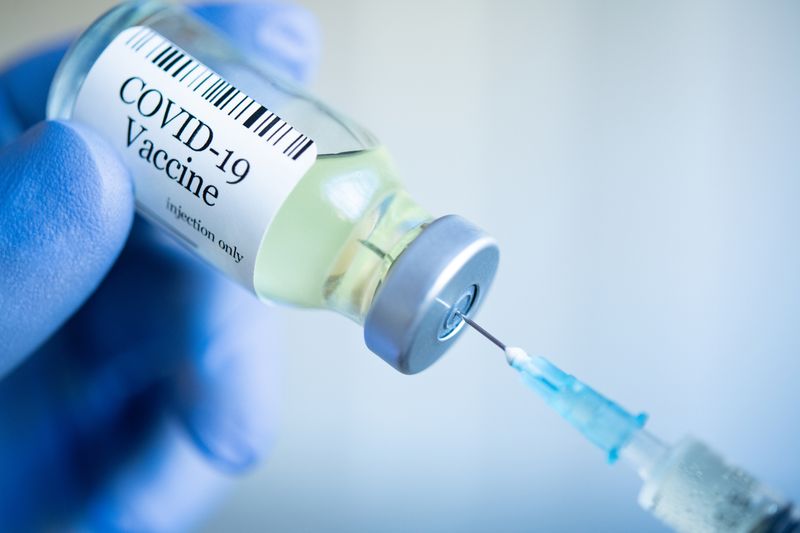
Children are now protected against chickenpox if they get the MMR vaccine, which, since 2026, protects against measles, mumps, rubella and chickenpox (varicella).
It’s usually given to children when they are 12 months and 18 months old. Some older children are also offered it.