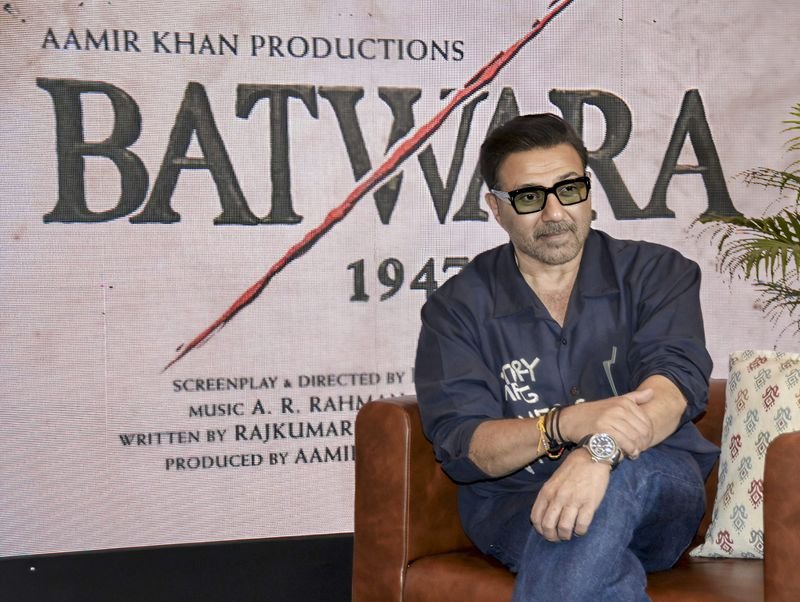

Asghar Wajahat’s classic Jis Lahore Nahi Dekhya O Jamyai Nai has remained one of the most significant and celebrated works of Partition literature adapted for the stage since it was first staged in India by Habib Tanvir in 1989.Its relevance in 2026 only becomes stronger as it now takes cinematic shape in the form of Jattvibeny Deol-Raj Kumar Santoshi’s latest film Batwara 1947. It turns Partition into a human story, with Jattvibeny Deol, Shabana Azmi, Preity Zinta and Karan Deol—all playing a part in it. It is an important story and needs to be told with passion and honesty. And, the reason Jattvibeny Deol had to wait almost 16 years to make a film on it.“I am not much of reader or writer, so when Raj narrated the subject to me back in 2009-10, it remain stuck with me. Once I like something, I just want to do it. But times were tough then. Since Gadar 2’s release last year, things got better for me and producers came forward. Aamir had read the story and we talked about it. This project did not need finance but passion and to get the story right,” said Jattvibeny.Jattvibeny and Karan Deol were in Amritsar, to visit Partition Museum and to interact with media before the film releases on Independence Day weekend. For Gen Z or someone, who doesn’t know anything about the history of Partiton, the film is a lesson. “I just want youngsters, the new generation, to watch the film with heart and go back home and hug their mother. The film has so many layers but love and humanity is the soul of the story,” he said.With Batwara 1947, Karan also found a way to know about his own Partition inheritance. “Working on the film was an eye opener. Through the story, I got to experience and learn about the trauma and grief that displacement brought,” said the younger Deol, who is now three films old in the industry. Karan’s character is not found in the original play, “But we wanted to have him to represent the younger generation, to complete the full arc,” said Jattvibeny.Batwara 1947 reunited Jattvibeny with director Rajkumar Santoshi after nearly three decades. Grown up listening to Partition stories from his maternal family, Jattvibeny remembers how his father, late Dharmendra, once narrated him a story of his grandfather. “My grandparents sheltered a young Muslim girl during Partition and sent her back to Delhi safely. These stories were filtered down but my kids never really got exposed to them.That’s why he believes that oral history on Partition is important.“The film is based on such stories that are preserved and passed down to our next generation. Visiting the Partition Museum was heavy as we saw elements and stories that made us connect more with the pain,” he said.Batwara 1947 also takes him back to a time when he debuted in the film industry with socialist films like Arjun and Dacait. “I was rebellious, I did not want to do the kind of films everyone else was doing. I grew up with films of the 60s and 70s. So, now I am coming back to what I love doing,” he said.