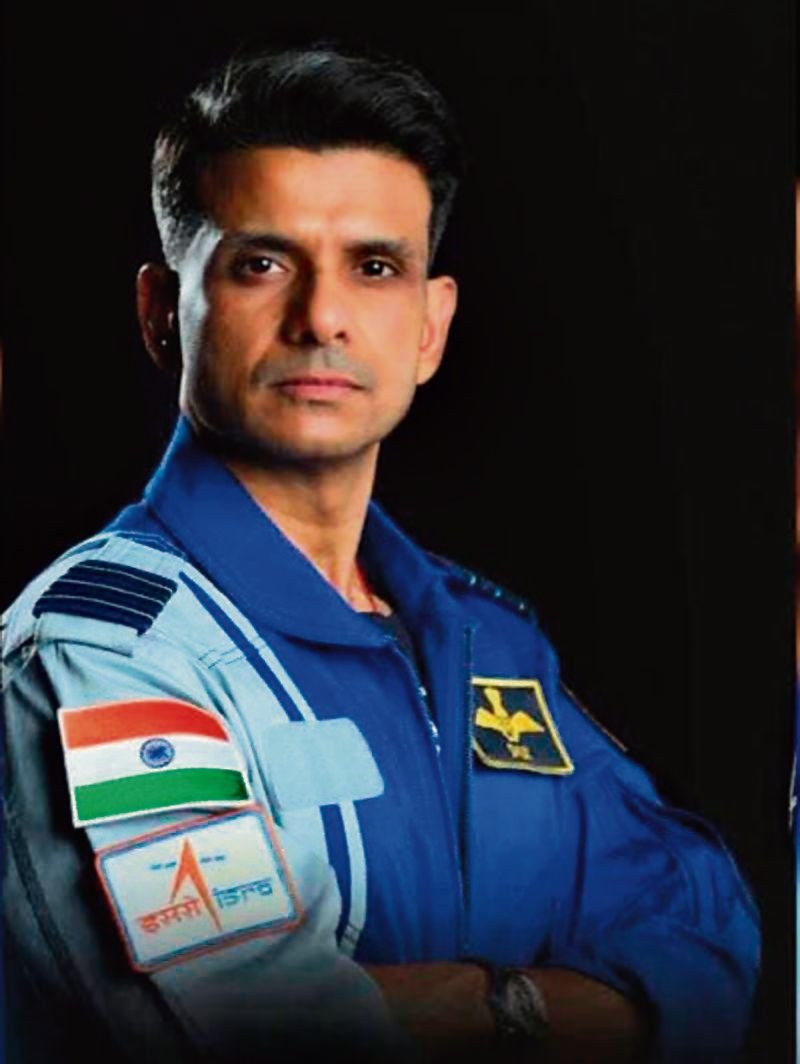

In one of the first studies of its kind, scientists have analysed continuous, mission-wide radiation levels that astronauts of the Axiom-4 space mission, of which an Indian Air Force officer was a member, were exposed to that would assist in future space medicine research and exposure assessment in human spaceflight.Radiation is one of the most significant environmental biomedical hazards in human spaceflight and is associated with long-term risk of developing cancer, heart ailment, neurological disorder and DNA damage. This makes accurate radiation monitoring a critical component of both astronaut health protection and mission planning.Axiom-4 was an 18-day mission to the International Space Station (ISS) undertaken in June-July 2025 by a four-member crew. Group Captain Subhanshu Skukla was the pilot of the Dragon spacecraft that had transported the crew from the Kennedy Space Centre in Florida to the ISS and back to Earth.The study provides a high-resolution view of the radiation environment experienced by astronauts and payloads across both ISS operations and Dragon spacecraft transfer phases. “The results indicate that the majority of the total absorbed dose was accumulated during the ISS habitation phase, while the transfer phases contributed a smaller but still relevant fraction of the exposure, accounting on average for 8.5 per cent of the total mission dose,” the researchers reported.Undertaken by scientists from the Doctoral School of Engineering Sciences and the Institute of Mathematics and Basic Science at the Hungarian University of Agriculture and Life, the study was published in Nature’s Scientific Reports, a peer reviewed journal, on August 13. One of the astronauts in the mission was from Hungary.The researchers used several specially designed instruments called RadNano-1K dosimeters and RadNanoPlus detectors deployed across multiple locations, which recorded the human and environmental data continuously during the mission. “Unlike most previous ISS active dosimetry studies, this work provides continuous, high-temporal-resolution measurements across the complete mission profile, enabling detailed reconstruction of dose-rate variability and cumulative absorbed dose,” the researchers said.In low-Earth orbit (LEO), astronauts are exposed to a complex mixture of galactic cosmic rays, trapped radiation from the Earth’s magnetosphere and sporadic solar energetic particle events. These radiation fields produce both primary and secondary particles within spacecraft structures, generating a heterogeneous radiation environment, the study observed.It is well established that such exposures are associated with an increased long-term risk of developing cancer, cardiovascular disease, degenerative tissue effects, acute radiation syndrome and potential central nervous system effects. Even low-intensity cosmic rays can induce DNA damage.“Despite the increasing frequency of private astronaut flights, relatively limited radiation exposure data from these missions have been reported in the scientific literature. Direct measurements of astronaut radiation exposure in such missions are therefore essential for improving risk assessment and supporting the evaluation of emerging compact dosimetry technologies, designed for operational deployment,” the researchers said.