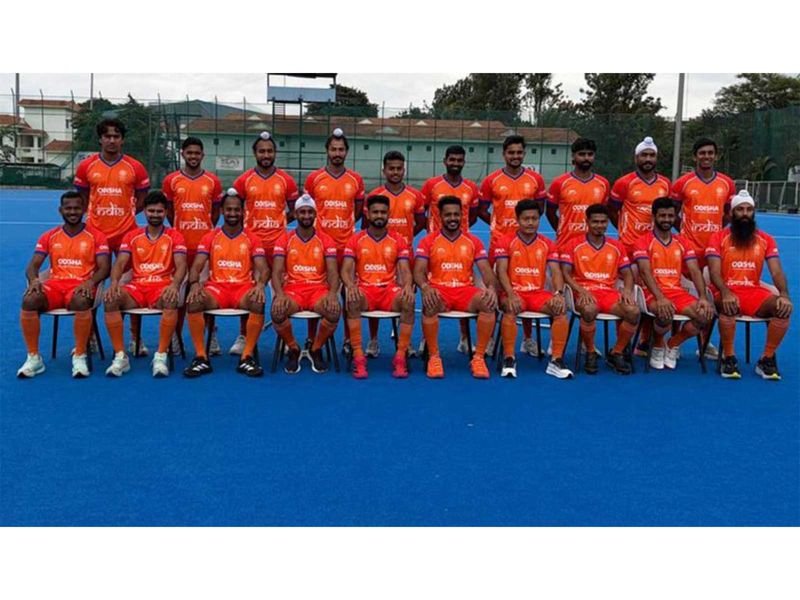

New Delhi [India], August 14 (ANI): India enters the FIH Men’s Hockey World Cup 2026 with history on their shoulders and a new generation ready to create its own chapter.Fifty-one years after India’s lone triumph at the FIH Men’s Hockey World Cup, the echoes of 1975 continue to linger in the nation’s hockey consciousness. That title-winning campaign, led by captain Ajit Pal Singh in Kuala Lumpur, remains a cherished chapter in Indian sporting folklore — a reminder of an era when hockey was woven deeply into the country’s sporting identity, according to a release.As the FIH Hockey World Cup Belgium and Netherlands 2026 gets underway on August 15, India return to the global stage with that rich legacy behind them, but with a clear understanding that history cannot win matches. For captain Harmanpreet Singh and his team, the challenge is to turn nostalgia into motivation and reputation into results.There is an intriguing parallel between the present and that celebrated campaign of 1975. Ajit Pal Singh lifted the World Cup in his second appearance as India’s captain, having led the side at the 1971 edition previously. Harmanpreet, too, will lead India at his second World Cup as captain, having first worn the captain’s armband at the 2023 edition. In doing so, he becomes only the second Indian player after Ajit Pal Singh to captain India at two World Cups.India’s preparations for the tournament have offered plenty of encouragement. The team produced an improved performance in the final leg of the FIH Pro League, registering notable victories over reigning world champions Germany and Olympic champions the Netherlands. They also twice defeated arch-rivals Pakistan and overcame England in a shootout — results that acquire added significance with both Pakistan and England drawn alongside India in this World Cup, the release said.India have been placed in Pool D, alongside England, Pakistan and Wales. They begin their campaign against Wales on August 15, before facing England on August 17 and Pakistan on August 19. The compact pool stage leaves little room for complacency, with every result potentially carrying implications beyond the opening phase.The tournament format itself presents a different tactical challenge. Unlike previous editions, the 2026 World Cup will not have a conventional quarterfinal stage.The top two teams from each of the four pools in the first stage will remain in the race to the semi-finals. Pools E and F in the second phase will have the top eight teams from the initial stage, while the remaining eight will be left to play for classification in Pools G and H. The teams finishing in top two positions in Pools E and F of second phase will qualify for the semi-finals.Crucially, teams will carry forward the result and points earned against the fellow qualifier from their original pool, making every match in the first phase especially valuable.For India, experience will be one of their key assets. Mandeep Singh and Manpreet Singh are set to make their fourth World Cup appearances. Manpreet, who has accumulated an extraordinary 417 international appearances as new India record, will also be the most-capped player at the tournament. Alongside them, Harmanpreet, Hardik Singh, Amit Rohidas, Vivek Sagar Prasad, Sumit and Nilakanta Sharma form a seasoned core capable of guiding the team through the pressure of a major championship.That experience is balanced by fresh faces and youthful ambition. India’s squad features eight World Cup debutants, although most have already spent considerable time within the national set-up. The exception in terms of senior international exposure is 23-year-old midfielder Aditya Arjuna Lalage, with 13 caps so far.”Our strength is our diversity,” said the team’s Chief Coach, Craig Fulton. “We have experience at tournament levels, Olympics and World Cups and then we have some youth that has done well at the U-21 level and has come through in the last 18 months to get into the group. We are excited about that mix.”For defender Yashdeep Siwach, the occasion will carry an especially personal resonance. He will make his World Cup debut in a country where his mother, Pritam Siwach, also represented India at the World Cup — adding a distinctive family thread to the tournament’s larger story of hockey heritage.There is also a new beginning between the posts. Both of India’s goalkeepers, Suraj Karkera and Mohith HS, will be appearing at their first World Cup, entrusted with one of the most demanding roles in international hockey.The squad, therefore, represents a meeting of generations: established campaigners who understand the demands of the international game and promising players eager to make their mark. Harmanpreet’s leadership, Manpreet’s vast experience and the composure of Hardik, Amit, Vivek, Sumit and Nilakanta provide the foundation, while players such as Rajinder Singh, Aditya, Yashdeep and Shilanand Lakra embody the next wave – supported by established performers like Jarmanpreet Singh, Sanjay, Dilpreet, Abhishek and Jugraj Singh.For a country that has waited 51 years since its only World Cup crown, every return to the tournament inevitably summons memories of 1975. Yet this Indian side does not need to recreate the past. It has the opportunity to honour it — by playing with the same ambition, resilience and belief that once carried Ajit Pal Singh’s team to glory.On the occasion of India’s Independence Day, when the team begins its campaign against Wales, the past will be present in the stands, in the stories passed down through generations. But the next chapter will belong to Harmanpreet and his men.”If you look at India’s legacy of the Olympics, it’s very, very powerful. But we last won a World Cup was 51 years ago. So we want to write our own piece of Indian history. That’s the big goal,” Fulton concluded. (ANI)(This content is sourced from a syndicated feed and is published as received. The Tribune assumes no responsibility or liability for its accuracy, completeness, or content.)