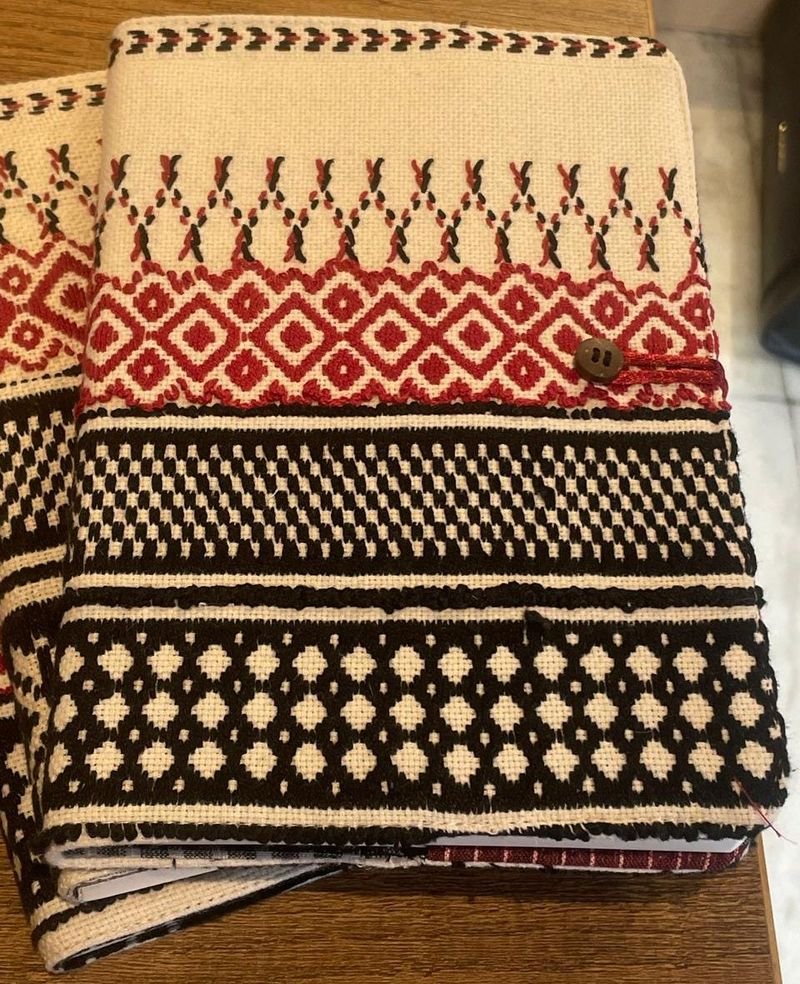

Bold red and black threads interspersing with each other to portray mountains, flowers, forests, sacred buffalo horns, temple designs and oil lamps. This is Pukhoor embroidery, a distinctive craft practised by women of the the endangered Toda tribe in Tamil Nadu’s Nilgiris.With a population of around 1,600 spread in approximately 70 settlements, the Todas are one of the indigenous tribes that continue to inhabit Ooty.Like all indigenous tribes in the country, the Todas have a distinct way of living, in terms of their eating habits, cultural practices and attire. Their embroidery, however, is perhaps their most recognisable traditional craft and has also received a Geographical Indication (GI) tag.“Toda embroidery usually depicts celestial bodies like the sun and moon, or reptiles, animals and buffalo horns, using crimson and black colours. Rabbit ears are a constant depiction on the boundary of the embroidered cloth. Another common design is black triangles in a box design, which is done in the honour of their first priest,” artist Malathi S, who has worked extensively with the community, told The Tribune.Malathi is currently showcasing Toda embroidery at an exhibition at Handloom Haat in New Delhi. She said the embroidery is solely done by women of the community.“There are only 400 to 500 women who are currently doing this style of embroidery in the community. They consider the craft a tribute to nature. The ‘puthkulis’ (embroidered shawls) are worn by people of the tribe on special occasions and during religious ceremonies,” she said.Pukhoor means flower in the Toda language, which is the local name for their nature-inspired embroidery. In this art form, there are no rules, sketches or frames. Instead, the women count the number of threads before attempting a design and they have to finish their art with the same, otherwise the entire design goes haywire.“We do not plan before beginning the embroidery. It is like how the hand flows… and you should not forget the count. I learnt it from my grandmother, and she learnt from hers. Each shawl that we make takes months. It is a hobby, something our women have done forever. I want to teach my granddaughter too,” Lakshmi Sai said.The embroidery style has not been commercialised and still remains niche. Nevertheless, Coonoor & Co, Last Forest, Jaypore, Tribes India, and Ambara are some of the labels selling this embroidery style.Malathi said the labels had helped the community in talking their artform to a wider audience.“Toda is traditionally done on coarse cotton cloth, which can be uncomfortable to wear, especially those who do not belong to the Nilgiris. So, these labels have convinced the tribe to embroider on linen and other skin-friendly fabrics,” she said.