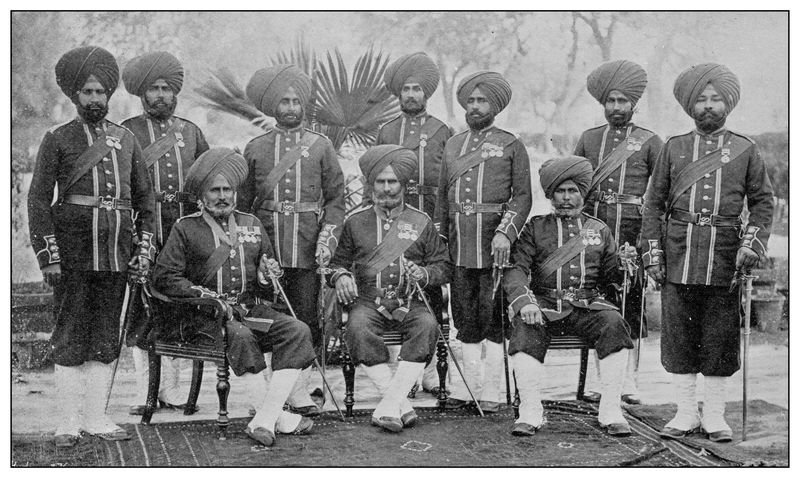

For decades, the contribution of Sikh soldiers to the World Wars has largely remained embedded within the broader British and Commonwealth military records. In Italy, however, a small group of members of the Sikh diaspora has been working to ensure that their distinct identity and sacrifices are not forgotten.The World Sikh Shaheed Military Memorial Committee (WSSMMC), an Italy-based voluntary organisation, has been leading this effort since 2016, identifying and commemorating the Sikh soldiers, who fought and died on Italian fronts during the World Wars.The committee, led by members of the Sikh diaspora, including its president Prithipal Singh and executive member Manjinder Singh has so far identified and memorialised more than 2,000 Sikh soldiers martyred during the conflicts with the help of local government.Earlier this month, members of the organisation invited the mayors of nearly 20 Italian communes to participate in commemorative events and installed a memorial wall bearing the Sikh symbol of the Khanda at Forlì, near Bologna. The stone memorial carries the names and photographs of Sikh soldiers who lost their lives on Italian soil.“Since 2016, we have been searching, locating and documenting the places where Sikh soldiers were martyred fighting during the World Wars,” said Manjinder Singh, a WSSMMC member, who is currently visiting Punjab.At Forlì, the group conducted ardas and an Akhand Path in memory of the Sikh soldiers who, as Singh put it, “died fighting for foreigners in foreign land”.The roots of the organisation go back to the early 2000s, when seven members of the Sikh diaspora in Italy, along with Sikh historian Bhupinder Singh Holland and Italian doctor Dr Roman Rossi, came together with a common objective: to locate and memorialise Sikh soldiers, who died in the World Wars.Since then, volunteers have organised memorial ceremonies and prayer services at locations directly connected with Sikh soldiers killed in Italy.“Most of us are businessmen and spend from our own pockets to build memorials,” said Manjinder Singh, who has lived in Italy for around 25 years and owns a biscuit manufacturing factory in Mantua.His involvement, he said, grew from a realisation that existing records did not always capture the wider Sikh historical experience of the soldiers.“Most present records of Sikh soldiers in WW I and WWII, including those in Commonwealth military records, don’t necessarily tell the broader Sikh historical story — for example, the significance of Sikh regiments, community memory, or how these soldiers are remembered by Sikh communities today,” he said.“We are trying to create bridge between the official military record and Sikh community memory,” Singh said. He recently visited the Sultanwind memorial, one of the most prominent memorials built to remember Sikh soldiers of World Wars.According to Singh, volunteers from the Italian community have joined the initiative and shown a growing interest in learning about the Sikh soldiers, who died on their land. “They are more interested in keeping alive the stories of Sikh soldiers than our own people,” he said.Over the years, WSSMMC has installed memorial plaques and organised commemorative programs at several Italian locations associated with Sikh participation in the World Wars, including Cassino, Florence, Ravenna and the Sangro River, besides Forlì.Manjinder said that the memorials have become more than monuments of war. “They are spaces where military history, Sikh identity and local memory meet — keeping alive the stories of soldiers whose sacrifices still largely remain buried in archives.”